What Vegetables Cook in Air Fryer: A Practical Guide
Discover which vegetables cook best in an air fryer, plus prep, temps, and timing tips for crisp, flavorful results. This guide from Cooking Tips covers choosing veggies, seasoning, avoiding soggy outcomes, and a handy data table for quick reference.


In the air fryer, most vegetables cook well in 8-15 minutes at 375-400°F, depending on size and density. Start with thoroughly dry veggies, toss with a light coating of oil, and shake halfway to promote even browning. Avoid overcrowding for crisp edges, and handle leafy greens carefully to prevent burning. This approach delivers reliable results across a variety of vegetables.
What vegetables cook in air fryer and why this method works
Air fryers rely on rapid hot air circulation to brown the surface while evaporating moisture from the vegetables. This combination creates a light, crisp exterior with a tender interior, often with a fraction of the oil you'd use in traditional roasting. So you may wonder what vegetables cook in air fryer and whether some are better than others. In practice, most vegetables with moderate water content and a sturdy structure respond well to this method, including broccoli, Brussels sprouts, carrots, cauliflower, green beans, and bell peppers. These vegetables benefit from uniform sizing and dry surfaces. The essential trick is to cut vegetables into uniform sizes and ensure they are dry before tossing with a small amount of oil. When you ask what vegetables cook in air fryer, you're really asking which textures you prefer: crisp-tender edges or a caramelized bite. According to Cooking Tips, dry prep and a light coat of oil are critical for crisp results.
Temperature and timing baselines
Starting points vary by vegetable density. The most reliable baseline is 375-400°F (190-205°C) with cook times generally ranging from 8 to 15 minutes. Lighter vegetables like zucchini or bell peppers finish on the shorter end, around 8-10 minutes, whereas denser root vegetables such as carrot coins or potato wedges may require 12-15 minutes. The key is to check for doneness early and adjust: if you want extra browning, add 1-2 minutes; for more tenderness, reduce time by 1-2 minutes. If your batch contains mixed vegetables, cut them to similar thickness to promote even cooking and shake the basket halfway through to promote uniform browning.
Preparation: drying, sizing, and coating
Preparation matters as much as heat. Dry vegetables thoroughly after washing to minimize steam and sogginess. Uniform sizing is essential; aim for pieces that cook in roughly the same time. A light coating of oil—about a teaspoon per cup of chopped vegetables—helps the surface brown and improves texture without making the dish greasy. Seasoning can be added before cooking or after, but pre-seasoning generally yields a more even flavor distribution. For a quick, clean finish, avoid thick batters or heavy breadings, which can trap moisture and prevent crisping. If you're not sure where to start, a simple blend of salt, pepper, garlic powder, and paprika offers a reliable baseline.
Best vegetables for crisp edges and reliable results
Some vegetables consistently deliver reliable browning and texture in the air fryer. Broccoli florets, Brussels sprouts, cauliflower florets, and green beans respond well to the method as long as they’re cut evenly and dried thoroughly. Bell peppers in strips benefit from a light oil to encourage browning along the edges. Carrot coins or batons provide a satisfying sweet edge when cut evenly and cooked at a moderate pace. Zucchini slices and squash ribbons work well if you keep coating light and ensure good air circulation. Leafy greens like kale can be crisped, but they often benefit from shorter times and a lower temperature to avoid burning. For best results, mix a few sturdy vegetables with one quick-cooking item in the same batch.
Seasoning and coatings for flavor without heaviness
The beauty of air frying is flavor without heavy fats. Keep coatings light and simple: a touch of olive oil, kosher salt, black pepper, garlic powder, and a favoring of paprika or chili powder can transform basic vegetables into a bright side dish. Fresh herbs added after cooking preserve brightness and aroma. For a crisper crust on denser vegetables, a light spray of oil during cooking can help without tipping into greasiness. Avoid thick batters or panko coatings that can overwhelm the delicate texture of vegetables and require longer cooking. If you prefer a glaze, brush it on at the end to keep the surface crisp.
Techniques for even browning: spacing, shaking, and turning
Air fryers rely on even airflow; overcrowding creates steam and uneven browning. Place vegetables in a single layer with space between pieces and avoid stacking. Shake the basket or turn vegetables halfway through cooking to promote even color and texture. For very dense veggies, you can start with par-cooking by microwaving briefly or blanching before air frying to shorten overall time and improve tenderness. Preheating the air fryer, if your model supports it, yields more predictable browning from the first minute of cooking.
Special cases: leafy greens, roots, and dense vegetables
Leafy greens—think kale or spinach—pop quickly in the air fryer and can become blistered or burnt if left unattended. Use short bursts of 2-3 minutes and remove promptly. Root vegetables like potatoes, sweet potatoes, and beets benefit from uniform dice or wedges and can caramelize nicely in 14-18 minutes when you keep pieces similarly sized. Dense veggies such as butternut squash require a two-stage approach: par-cook until tender and finish with a short air-fry for a crisp exterior. With very soft vegetables (tomatoes, mushrooms), keep times shorter and monitor moisture to preserve texture.
Quick-reference: practical tips you can apply tonight
- Start with 375-400°F and check at 8 minutes. Adjust up or down based on piece size and desired crispness.
- Cut vegetables to uniform sizes; smaller pieces brown quickly, larger pieces need extra time.
- Use a light oil spray or a teaspoon per cup to promote browning without greasiness.
- Never crowd the basket; air needs access to every surface of every piece.
- Season before cooking or after, depending on desired intensity.
Troubleshooting and common questions in practice
If your vegetables turn out soggy, check moisture on the surface and reduce the overall moisture by patting pieces dry and reducing oil. If browning is uneven, stop overcrowding and redistribute pieces for better air flow. If you are cooking mixed vegetables, remove those that finish early and return later or keep them separate for best texture. This approach helps you avoid guesswork and end up with crisp, flavorful air-fried vegetables every time.
Representative guide: common vegetables and how to air fry them
| Vegetable | Prep Tip | Cook Time (min) | Temp (°F) | Notes |
|---|---|---|---|---|
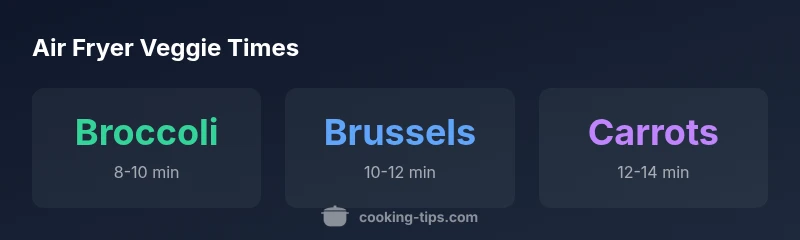
| Broccoli florets | Dry, toss with light oil | 8-10 | 375-400 | Crispy with even browning |
| Brussels sprouts | Halve large, pat dry | 10-12 | 375-400 | Crisp outer leaves |
| Cauliflower florets | Dry, oil lightly | 10-12 | 360-400 | Golden crust |
| Carrot coins | Slice evenly | 12-14 | 380-400 | Caramelized edges |
Quick Answers
What is the best temperature to air fry vegetables?
Most vegetables do well at 375-400°F. Start there and adjust based on texture desires. Avoid overcrowding to ensure crisp edges.
Try 375 to 400 degrees and cook in a single layer; shake halfway for best browning.
Can I cook frozen vegetables in an air fryer?
Yes, but pat dry if icy, and expect slightly longer times. Frozen pieces can steam a bit if crowded, so give them space.
Yes—cook from frozen, but avoid overcrowding and monitor moisture.
Do I need to preheat the air fryer for vegetables?
Preheating helps with quick browning on the first batch. If your model doesn't require preheating, you can start cooking right away and adjust times.
Preheating helps browning; if you skip it, just add a minute or two.
How can I prevent my vegetables from getting soggy?
Dry surfaces, avoid heavy coatings, and cook in a single layer with space between pieces. Shake halfway through to promote even moisture loss.
Keep pieces dry and spaced; shake halfway for consistent texture.
Which vegetables brown best in an air fryer?
Cruciferous veg like broccoli and Brussels sprouts, plus carrots and green beans, often brown best when cut uniform and cooked at moderate heat.
Cruciferous veggies and carrots brown nicely in the air fryer.
“Air frying is a versatile way to get crisp vegetables with minimal oil. With proper prep and spacing, most vegetables can achieve bakery-crisp edges in minutes.”
Top Takeaways
- Dry vegetables thoroughly before air frying.
- Keep pieces in a single layer for even browning.
- Start at 375-400°F and adjust by size.
- Shake the basket halfway for uniform texture.
- Leafy greens require shorter times; monitor closely.