How to Cook in an Air Fryer: A Practical Guide for Beginners
Learn how to cook in an air fryer with practical steps, prep tips, and troubleshooting to achieve crispy, flavorful results with less oil. Perfect for home cooks seeking quick, reliable weeknight meals.


Master air fryer cooking by learning how to preheat, season, load in a single layer, and adjust times for proteins, vegetables, and frozen foods. This guide covers essential tools, step-by-step methods, safety tips, and cleanup routines to help home cooks achieve crispy, flavorful results with less oil. Whether you're new to air frying or upgrading from a microwave or oven, you'll find practical tips, timing ranges, and troubleshooting to avoid soggy textures and uneven browns.
Why an air fryer is a kitchen game-changer
Air fryers use rapid air circulation to crisp foods with far less oil than traditional frying. According to Cooking Tips, modern models can produce bakery-crisp textures on chicken wings, potatoes, and vegetables in a fraction of the time, with much less cleanup. By circulating hot air around each piece, air fryers promote browning on the outside while preserving juicy interiors. This combination suits busy home cooks who want reliable results, a lighter oil footprint, and weeknight meals that still feel indulgent. In this guide, you’ll explore why air fryers are so popular, how they fit into everyday cooking, and how to choose a model that matches your kitchen needs.
How air frying works: the science behind the crisp
Air frying relies on convection: a heating element creates a stream of hot air that swirls around the food, while a fan distributes it quickly. The rapid airflow removes surface moisture, creating a thin barrier that crisps the exterior. The Maillard reaction—browning from amino acids and sugars—happens more readily when the surface is dry and the food is hot. Most foods crisp best between about 350°F and 400°F, with shorter times for smaller or thinner pieces and longer times for thicker cuts. Because the air fryer doesn't submerge food in oil, you’ll see a lighter finish with minimal grease, while flavors remain concentrated. This section helps you translate the physics into practical steps for reliable results every time.
Prepping foods for air frying
Prep sets the foundation for crisp, flavorful results. Start with dry surfaces: pat meats and vegetables dry with a clean towel to improve browning. Cut foods into uniform sizes so they cook evenly, and season or marinate ahead of time as needed. Lightly oil surfaces or use a spray to help browning, but avoid heavy coatings that trap moisture. If you’re aiming for a crispy crust, dust with a light coat of cornstarch or flour for a thin barrier. Remember to remove excess marinade that can steam instead of brown. Proper prep reduces sticking and uneven texture, making every bite consistent.
Preheating and batch loading for even results
Preheating is optional on some models but can significantly improve browning and speed. If your air fryer supports it, preheat to the target temperature for 1–3 minutes before loading. Load in a single layer with space between pieces to allow hot air to circulate; overcrowding causes soggy spots and uneven browning. For larger batches, work in two smaller batches rather than stacking pieces. This approach ensures every bite is crisp and evenly cooked, not just what sits on top.
Oils, coatings, and batter: what works in an air fryer
A little oil goes a long way in an air fryer. Use a light spray or brush to promote browning and flavor without pooling at the bottom. Dry rubs and seasonings stick better when the surface is barely oiled. For breaded or battered foods, opt for light coatings that stay crisp at high heat, such as a thin breadcrumb crust or cornstarch-based batter. Avoid heavy batters that dry out or break apart under rapid air movement. If you love a deep-fried feel, finish with a brief blast of high heat at the end to set the crust.
Step-by-step cooking guide: proteins
Proteins cook quickly in an air fryer, with thickness affecting timing. For tender cuts like chicken breasts, start at a moderate temperature and check doneness with an instant-read thermometer. For bone-in pieces, allow a bit longer and consider flipping halfway to ensure even browning. Fish fillets benefit from a shorter cook time and lighter oil; tofu and tempeh absorb flavors well with a brief marinate. When in doubt, start with a lower time and check for doneness, then add minutes as needed.
Step-by-step cooking guide: vegetables, grains, and starches
Leafy greens cook fast and can burn if not monitored, while root vegetables like potatoes take a bit longer but develop a satisfying crisp. Cut vegetables into uniform sizes, toss with a touch of oil and seasoning, and spread in a single layer. Potatoes respond well to a quick toss with starch coatings for extra crunch. For grains or starchy sides, dry-roast small portions to accent texture. Adjust temperature and time according to thickness and desired level of browning.
Step-by-step cooking guide: frozen foods and convenience items
Frozen items are popular air fryer staples. There’s no need to thaw most items, but you should shake baskets or flip items halfway through to ensure even browning. Start with the recommended time on the package, then reduce by a few minutes if needed depending on your model. For breaded items, a light spray of oil helps crisp the coating. Keeping these foods in a single layer prevents soggy spots and shortens overall cook time.
Safety, care, and cleaning
Always unplug and let the unit cool before cleaning. Remove the basket and wash with warm, soapy water or place in the dishwasher if allowed by your model. Wipe down the exterior with a damp cloth and avoid abrasive cleaners that can damage surfaces. Regularly check seals and gaskets for wear. Proper cleaning extends the life of your air fryer and keeps flavors fresh.
Troubleshooting common issues
If your food isn’t browning, increase temperature slightly or give it an extra shake mid-cook. If items are unevenly cooked, confirm you aren’t overcrowding and that pieces are uniform in size. Soggy textures usually mean moisture build-up or excess marinade; pat dry or reduce oil. Smoke can occur if cooking fatty foods at too high a temperature—trim excess fat and lower the heat.
Flavor boosters and finishing touches
Finish with fresh herbs, a squeeze of lemon, or a drizzle of finishing oil to brighten flavors. A sprinkle of flaky salt or a dusting of paprika can elevate taste just before serving. Experiment with spice blends or citrus zest to tailor dishes to your family’s preferences. These finishing touches make air-fried meals feel vibrant and restaurant-worthy.
Best practices and next steps
Practice makes perfect with air fryers. Start with simple recipes, observe how textures change with temperature and time, and scale up to more complex dishes. Keep a small notebook of times and temps for your favorite foods, so you can reproduce success consistently. Remember to clean promptly after meals to prevent buildup and odors from linger.
Tools & Materials
- Air fryer(Choose 3-6 qt for most households; ensure model supports preheating if you plan to use it.)
- Tongs(Non-slip and heat-resistant for safe turning.)
- Oil spray bottle(Light, even spritzes; avoid aerosol sprays near heating element.)
- Instant-read thermometer(Check internal temps to ensure doneness for poultry and pork.)
- Parchment liners or silicone liners(Makes cleanup easier and prevents sticking; ensure liners fit basket without blocking airflow.)
- Heat-resistant gloves(Protect hands when handling hot components.)
- Measuring spoons(Useful for precise seasoning blends.)
- Silicone spatula(For applying oils or turning delicate foods without damage.)
- Wire rack or silicone mat (optional)(Allows multi-layer cooking if your model supports it.)
Steps
Estimated time: Total time: 25-60 minutes depending on recipe and batch size
- 1
Gather ingredients and tools
Collect all ingredients, spices, and the air fryer accessories you’ll need. This minimizes mid-cook interruptions and helps you maintain a clean, organized workflow.
Tip: Have your thermometer and tongs ready before you start. - 2
Preheat the air fryer
If your model supports it, preheat to the target cooking temperature for 1–3 minutes to accelerate browning and ensure even cooking.
Tip: Preheating reduces total cook time and helps achieve a crisp crust. - 3
Prep foods and portion evenly
Dry surfaces, cut into uniform sizes, and season or marinate as desired. Even pieces cook more consistently and brown uniformly.
Tip: Pat dry after marinating to avoid steaming and soggy interiors. - 4
Lightly oil and season
Apply a thin layer of oil or spray to promote browning. Seasoning adheres better when the surface is lightly oiled.
Tip: Avoid heavy coatings that trap moisture and hinder airflow. - 5
Arrange in a single layer
Place pieces in a single layer with space between them so air can circulate freely.
Tip: Overcrowding causes soggy, uneven browning. - 6
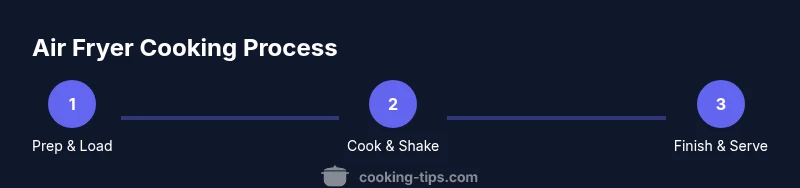
Cook, shake, and turn as needed
Cook per the plan, shaking the basket or turning pieces halfway for even browning and color.
Tip: Shake or flip for uniform texture on all sides. - 7
Check doneness and rest
Use a thermometer for proteins and allow a brief rest to redistribute juices.
Tip: Resting improves moisture distribution and flavor. - 8
Clean up and store
Let components cool before washing. Dry thoroughly before storage.
Tip: Wipe the exterior and basket to prevent residue buildup.
Quick Answers
Do I need to preheat an air fryer?
Preheating helps brown and speed up cooking on many models, but not all require it. Check your manual and preheat if you notice uneven browning.
Preheating can improve browning and reduce cook time; follow your model's guidance.
Can I use oil in an air fryer?
Yes, a light coating helps with browning and flavor. Use a spray or brush to apply just enough oil; avoid heavy coatings.
A little oil helps crispness—spray lightly and don’t soak the food.
Is air frying healthier than deep frying?
Air frying uses little or no oil, reducing fat and calories while delivering crisp textures comparable to frying.
Air frying usually cuts oil use, making it a healthier option for crispy foods.
What temperature should I use for most foods?
Most foods cook well between 350°F and 400°F; thinner items need less time, thicker cuts more. Always check doneness with a thermometer for proteins.
Start around 375°F and adjust based on thickness and result.
Can I bake or reheat in an air fryer?
Yes. Air fryers reheat leftovers to crispness and can bake small items. Adjust time based on the batch size and food type.
Yes, you can reheat and bake in an air fryer with careful timing.
How do I clean my air fryer properly?
Unplug, let cool, remove the basket, and wash with warm soap and water. Dry components completely before reassembling.
Let it cool, wash the parts, and wipe the exterior.
Watch Video
Top Takeaways
- Preheat when helpful to boost browning.
- Avoid overcrowding for even cooking.
- Shake or flip halfway for uniform texture.
- Pat dry and use light oil for crispiness.
- Clean promptly to maintain performance.