Can You Cook Bacon in an Air Fryer? A Simple Guide
Learn how to cook bacon in an air fryer for crispy results with minimal mess. This guide covers temps, timings, safety, troubleshooting, and helpful tips for perfect bacon every time.


Yes—you can cook bacon in an air fryer, and many home cooks prefer this method for crispy slices with less mess. You’ll need a functioning air fryer, bacon slices, and a little patience as you dial in time for your thickness and model. Try placing bacon in a single layer, check halfway through, and blot grease after cooking for crisper results.
Can you cook bacon in an air fryer? What you’ll achieve
According to Cooking Tips, air fryer bacon offers a crisp texture with less surface grease than pan-frying, and it cooks more quickly with less mess. The Cooking Tips team has tested common brands and thicknesses to provide practical guidelines you can trust for everyday breakfasts. If you’re curious whether this method improves texture or reduces cleanup, you’ll find clear steps, timing ranges, and safety notes here. This section explains what you can expect: even browning, minimal splatter, and a flexible approach that works with regular or thick-cut bacon. By the end, you’ll know how to choose bacon, set your air fryer, and finish with a delicious, crispy result.
How air frying bacon works
Air fryers cook by circulating hot air around the food, which crisps fat and proteins similarly to shallow frying but with far less oil. When you place bacon in a single layer, the fat renders and drains away from the meat via the basket design. The result is crisp edges and a tender center, with less splatter than on the stovetop. Because the air fryer confines the air and reduces contact with the sink or stove, you get a clean kitchen and a more predictable outcome. Keep in mind that the exact texture depends on bacon thickness and your specific model. In general, thinner slices crisp faster, while thicker slices require a few extra minutes. Consistency comes from spacing and avoiding overlap.
Choosing bacon and prep tips
Start with standard sliced bacon for best airflow and predictable results in most air fryers. Thicker-cut bacon can still work, but you’ll want to adjust time slightly to prevent undercooked centers. If you’re watching fat intake, choose center-cut or lower-sodium varieties. Before cooking, pat the slices dry with paper towels to remove surface moisture that can hinder browning. For even cooking, arrange bacon in a single layer, letting the pieces not touch. If you’re cooking more than a single layer, use two batches rather than stacking. Optional prep ideas include trimming long ribbons of fat or using a parchment paper liner to simplify cleanup, while ensuring you don’t block air flow.
Temperature and time guidelines
A practical starting point for most air fryers is 375°F to 400°F (190°C to 205°C). Cook thin slices for about 8–10 minutes, flipping once halfway through for even browning. If you’re using thicker-cut bacon, plan for 12–15 minutes total, checking progress at the 8–10 minute mark. Every model differs slightly, so consider starting a test batch if you’re unsure. The goal is to achieve crisp edges with a slightly chewy center, and you can tailor the time to your preferred texture by lightly extending or shortening the cook time. Always monitor the process the first time you try a new brand or thickness.
Preventing curling and grease management
Bacon curls as it bakes because the fat renders unevenly and the edges cook faster than the center. To minimize curling, lay slices in a single layer and avoid overlapping. If curling occurs, pause cooking and gently press flat with tongs or rearrange slices. A small rack inserted into the air fryer basket can help elevate bacon slightly for more even exposure to hot air. For cleanup, line the basket with parchment or use a nonstick liner and drain excess grease on paper towels after cooking. This simple setup reduces mess and makes cleanup faster.
Safety, cleanup, and serving
Always handle the air fryer basket with dry hands and use tongs to turn the bacon. The air fryer and its basket will be hot, so use insulated oven mitts when removing and inspecting. After cooking, transfer the bacon to paper towels to blot any extra fat. Let the air fryer cool before cleaning; wash the basket and tray with warm soapy water or place in the dishwasher if permitted. Serve the bacon immediately for best texture, or store leftovers in an airtight container in the fridge for up to a few days. Reheat using the air fryer for a few minutes to refresh a crisp bite.
Authority sources
- U.S. Department of Agriculture (USDA): Food safety guidelines and safe handling of pork products. https://www.fsis.usda.gov
- Nutrition.gov: Food preparation and nutrition basics relevant to meals like bacon-based breakfasts. https://www.nutrition.gov
- Extension (OSU): Cooking practices and kitchen equipment usage. https://extension.oregonstate.edu
Quick comparison: air fryer vs pan-frying
When you compare air-frying bacon to pan-frying, the air fryer uses hot convection to deliver crispiness with less added fat and fewer splatters. Pan-frying can yield similar crispness but requires more monitoring and cleanup due to grease splatter and a hot stove area. Air fryers are typically faster for small portions and linear cooking helps maintain consistency across slices. For family breakfasts, air fryer bacon can be a convenient method, especially when you want to cook multiple batches quickly with minimal cleanup. If you’re cooking on a special diet, you may also consider how fat renders and drains in the air fryer compared with pan-frying.
Troubleshooting common issues
If bacon comes out undercooked in the center, extend the cooking time by 2–3 minutes or slightly increase the temperature. If it’s too chewy, give it one more minute in the hot air, watching closely to avoid burning. If the slices stick or curl excessively, ensure they’re in a single layer with space between pieces, and try a light spray of oil on the underside to help browning. If grease accumulates on the bottom of the air fryer, carefully pour it off after the basket cools and wipe the interior with a paper towel.
Next steps and customization
Experiment with different bacon brands and thicknesses to discover your preferred texture. Try a short test batch with a warmer or cooler setting to dial in your preferred level of crispness, then scale to larger batches. For a savory twist, finish with a light sprinkle of black pepper, brown sugar, or paprika before cooking. You can also use maple syrup for a sweet glaze after cooking, or serve with eggs and toast for a classic breakfast plate. Remember, every air fryer model is a little different, so take notes on time and temp for your device, and maintain a simple rhythm for repeatable results. By applying the tips in this guide, you’ll master bacon in the air fryer and enjoy consistent, delicious results.
Tools & Materials
- Air fryer(Ensure it has a frying basket and enough capacity for your bacon batch)
- Bacon(Regular sliced bacon works best; adjust timing for thickness)
- Parchment paper or aluminum foil(Optional liner to ease cleanup; do not block air flow)
- Kitchen tongs(For turning bacon and safely removing hot slices)
- Paper towels(Blot excess fat after cooking)
- Meat thermometer(Optional for checking doneness, not required for bacon)
- Kitchen shears(Trim uneven edges if needed)
Steps
Estimated time: 15-25 minutes
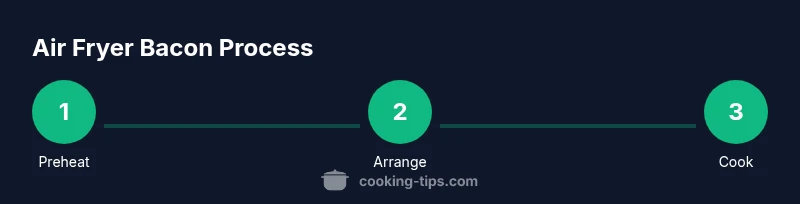
- 1
Preheat the air fryer
Preheat the air fryer to your target temperature (generally 375–400°F) for a minute or two so the first batch starts hot and browns evenly.
Tip: Preheating minimizes cold spots and produces quicker, more consistent crisping. - 2
Arrange bacon in a single layer
Place slices in a single layer without overlapping. Overlapping blocks airflow and can cause uneven browning.
Tip: If you’re short on space, cook in batches rather than stacking slices. - 3
Set temperature and time
Choose 375–400°F (190–205°C). Thin slices generally need 8–10 minutes; thicker cuts may take 12–15 minutes. Start at the lower end if you’re unsure.
Tip: Check halfway through to adjust time for your model and thickness. - 4
Flip halfway through
Turn each slice with tongs at the halfway point for even browning on both sides.
Tip: Flipping helps prevent one side from browning too quickly. - 5
Check for doneness and drain
Look for crisp edges and a slightly chewy center, then transfer to paper towels to blot fat.
Tip: Avoid overcooking; bacon can go from perfect to burnt quickly. - 6
Rest and serve
Let it rest 1–2 minutes on towels to finish draining. Serve immediately for best texture.
Tip: Resting helps set the crisp texture. - 7
Clean the air fryer
Cool the unit, remove the basket, and wash the tray and basket with warm, soapy water.
Tip: Clean promptly to prevent grease from hardening and sticking. - 8
Store leftovers
Store cooked bacon in airtight containers in the fridge for up to a few days; reheat in the air fryer for a quick refresh.
Tip: Reheating restores crispness; avoid microwaving if you want texture.
Quick Answers
Can I cook bacon in an air fryer without preheating?
Preheating is not always mandatory, but many air fryers perform best with a brief preheat to ensure even browning. If your model doesn’t preheat, set it to the target temperature and start cooking; you may need a minute or two longer.
Preheating isn’t always required, but a quick warm-up helps with even browning. If your air fryer doesn’t preheat, just start at the target temperature and monitor.
Is air fryer bacon healthier than pan-frying?
Air frying uses less oil and often produces crisper bacon with less greasy surface, but the meat remains bacon and high in fat. It’s a cleaner method with potential fat reduction in handling, depending on how you cook and drain it.
Air frying usually uses less fat than pan-frying and can be cleaner, but bacon is still bacon, so enjoy in moderation.
What thickness works best for air fryer bacon?
Regular sliced bacon is the easiest and most reliable for air fryers. Thick-cut bacon works too, but it needs more time and closer attention to avoid underdone centers.
Regular slices are easiest; thick-cut can work but may need longer cooking.
Why does my bacon curl in the air fryer?
Curling happens when edges cook faster than the center. Keep slices in a single layer, consider a rack, and avoid overlapping to minimize curling.
Curling happens when parts cook faster than others. Use a single layer and a rack if possible.
How should I clean the air fryer after cooking bacon?
Let the unit cool, remove the basket, and wash with warm, soapy water. Wipe the interior and rack dry to prevent residue buildup.
Let it cool, wash the basket and tray, and wipe the interior dry.
Can I cook frozen bacon in an air fryer?
Yes, but cook time will be longer and the texture may be uneven. Thawing first is preferable for even browning, but you can cook frozen slices with careful monitoring.
You can cook frozen bacon, but thawing first gives you more even results.
Watch Video
Top Takeaways
- Preheat and cook in a single layer.
- Monitor time to prevent burning.
- Use towels to blot excess fat after cooking.
- Clean promptly for best appliance longevity.
- Experiment with thickness for preferred texture.