Can You Cook Eggs in an Air Fryer? A Complete Guide
Discover how to cook eggs in an air fryer, with boiled, fried, scrambled, and poached methods. Includes temps, timing, safety tips, troubleshooting, and flavor ideas for reliable, tasty results.


Yes—you can cook eggs in an air fryer, but results vary by method (soft-boiled, hard-boiled, fried, or scrambled). The key is understanding safe handling, temperatures, and timing for your model. This guide explains how to air-fry eggs with clear steps, safety tips, and practical variations so you can get consistently good results.
Why eggs in an air fryer work
Air fryers rely on rapid hot air circulation to cook foods with little or no oil. When you ask can you cook eggs in an air fryer, the answer depends on the style you want: shells on for boiled eggs or shell-off for fried, scrambled, or poached preparations. The convection heat surrounds the egg in a way that can produce evenly set whites and a yolk texture that ranges from jammy to firm, depending on time and temperature. This method is popular with home cooks who value speed, reduced water boiling, and cleaner countertops. For many households, air-fried eggs offer a dependable option on busy mornings or when you’re cooking for a crowd. According to Cooking Tips, the secret is consistent preheating, even egg sizes, and avoiding overcrowding so the circulating air can reach every surface. Start with a simple in-shell hard-boiled approach to learn timing before moving to shell-off variants.
Safety considerations and handling
Egg safety matters as much here as in any kitchen task. Always store eggs refrigerated until use, avoid leaving them at room temperature for extended periods, and chill hard-boiled eggs promptly after cooking. When cooking eggs in an air fryer, use heatproof vessels (ramkins or silicone cups) if you’re not cooking them in shell. Handle hot dishes with tongs or oven mitts, and monitor the internal temperature of fillings if you’re adding cheese or dairy. If you’re unsure about doneness, check for an internal temperature around 160°F (71°C) for fully cooked egg whites and yolks. The less you open the basket, the more consistent the result will be. This section also touches on how eggs behave in a dry hot-air environment versus a water-based cooking method, which can influence texture and moisture retention.
Choosing eggs and prep before cooking
Size, freshness, and temperature influence air-fryer results. For hard- or soft-boiled in-shell eggs, choose eggs that are a bit aged (about a week older) for easier peeling after cooking. If you’re cooking shell-off, bring eggs to a near room temperature to reduce cracking from sudden temperature changes. Lightly oil the air fryer basket or the dish you’ll use, and consider using parchment or a silicone liner to prevent sticking. For shell-in methods, ensure eggs are placed in a single layer with space around each egg so they heat evenly. If you’re sensitive to odors, a quick rinse before cooking helps minimize any sulfur-like notes that can develop during high-heat cooking.
Boiled eggs in the air fryer: soft and hard variations
In-shell hard-boiled eggs in an air fryer use the basket’s dry heat to penetrate the shell and firm the yolk. Arrange eggs in a single layer and preheat to a moderate temperature. The general approach is a longer cook time for hard-boiled eggs and a shorter window for softer centers. After cooking, transfer to an ice bath to stop the cooking and ease peeling. For soft-boiled variants, aim for a slightly loosened white and a runny yolk by shortening the time and carefully controlling the temperature. Remember that every model has its own quirks, so you may need one or two trial runs to dial in exact timings. The result can be a convenient, do-not-boil-over method with minimal water usage.
Fried eggs in the air fryer: sunny-side up
Cracking eggs directly into the basket will often lead to uneven cooking. A small, greased ramekin or silicone cup helps create a neat fried-egg presentation. Preheat, then crack the egg into the dish and cook until the white sets around the yolk’s desired firmness. If you like a slightly crisp edge, give the rim a quick flip or edge contact with a spatula. Light oil or nonstick spray on the dish reduces sticking and makes cleanup easier. This method produces a classic fried-egg texture with minimal oil and no splatter on the stovetop.
Scrambled eggs in the air fryer: fluffy results
Scrambled eggs in an air fryer can be surprisingly fluffy when cooked in a greased dish or silicone cup. Beat the eggs with a splash of milk or water, along with salt and pepper for seasoning. Pour into the greased dish, then cook with a brief stir halfway through the session to encourage even curd formation. Depending on your machine, you may need two batches if you’re cooking for a crowd. This technique avoids the mess of a traditional skillet and yields creamy, aerated scrambled eggs with less constant attention.
Poached eggs in the air fryer: alternative method
Poached-style results can be achieved by using a small dish with a little water or broth to generate steam and a protected cooking surface. Crack the egg into the dish, then cover with foil or a lid to trap moisture. Cook briefly until the white sets and the yolk reaches your preferred doneness. This method mimics poaching while keeping the process contained in the air fryer, which some cooks prefer for texture control and cleanup ease.
Temperature, timing, and technique guidelines
Start with a controlled approach: preheat the air fryer, use a water-free environment for most shell-off recipes, and place eggs in a single layer. The exact times depend on egg size, starting temperature, and your air fryer’s wattage. A practical rule of thumb is to begin with shorter times and low-to-mid temperatures, then extend slightly if needed. Always check doneness with a fork or thermometer and let eggs rest briefly after cooking to finish carryover cooking. These guidelines help minimize overcooking and ensure a reliable texture across different models.
Troubleshooting and common issues
If whites remain rubbery, reduce cooking time or temperature and avoid overmixing in shell-off preparations. If yolks are too firm or chalky, shorten the cooking window or try a softer-start approach for shell-in methods. Cracked shells are often the result of temperature shocks; allow eggs to come closer to room temperature before cooking and avoid abrupt changes. If eggs stick to the dish, ensure a light coating of oil or parchment, or switch to a silicone cup. For peeling shells after hard-boiled results, allow a longer ice bath and a gentle tap to loosen the shell.
Flavor, finishing touches, and meal ideas
Eggs cooked in an air fryer pair well with bright herbs, a dusting of paprika, or a drizzle of hot sauce. Finish with a pinch of flaky salt or microgreens for a fresh contrast. For a complete meal, pair air-fried eggs with avocado toast, a quick salsa, or sautéed vegetables. You can also repurpose leftover eggs into egg salad or add them to grain bowls for a protein boost. The versatility of this method makes it easy to tailor to your weekly menu with minimal cookware.
Cleaning, storage, and leftovers
Let eggs cool completely before storing. Hard-boiled air-fried eggs can be kept in the refrigerator for up to 4 days in a sealed container. For best texture, store yolk- and white-separated or as a fully assembled dish if applicable. Clean your air fryer basket and any dishes promptly to prevent odor build-up and ensure your next batch cooks evenly. Wipe down the interior and basket with warm, soapy water after each use and dry thoroughly before the next run.
Authoritative sources
For safety guidelines and best practices, consult the following sources:
- https://www.fsis.usda.gov/food-safety/safe-food-handling-and-preparation/eggs
- https://www.cdc.gov/foodsafety/charts/safe-food-handling.html
- https://www.fda.gov/food/buy-store-serve-safe-food/egg-safety
Summary of key steps in quick reference
- Preheat, oil lightly, and choose your method (boiled, fried, scrambled, or poached).
- Use appropriate vessels to prevent sticking and ensure even heat distribution.
- Check doneness carefully and adjust times for your model.
- Finish with flavor additions and proper storage for best results.
Tools & Materials
- Air fryer(A standard countertop unit with a basket)
- Eggs(Large eggs recommended; consider a batch of 4-6)
- Nonstick spray or parchment paper(Lightly oil the basket or dish to prevent sticking)
- Small silicone cup or oven-safe ramekin(Helpful for fried or scrambled eggs)
- Tongs(For safe handling of hot eggs)
- Ice bath or cold water bowl(Useful when boiling eggs in-shell to stop cooking)
- Instant-read thermometer(Optional for checking doneness, especially in shell-off methods)
- Kitchen timer(Built-in timer on air fryer or external timer)
Steps
Estimated time: 15-25 minutes
- 1
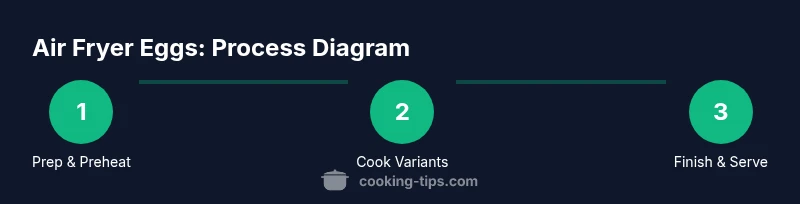
Preheat and prepare equipment
Preheat the air fryer to a moderate temperature and lightly oil the basket or dish you’ll use. This reduces sticking and helps heat distribute evenly. If you’re new to this, run a quick empty cycle to gauge how your unit manages eggs.
Tip: Preheating reduces overall cook time and promotes even texture across eggs. - 2
Choose your egg style
Decide whether you want hard-boiled, soft-boiled, fried, scrambled, or poached eggs. Each style uses a different vessel and timing, so have a plan before you start cooking. Gather any special tools you’ll need, like ramekins for shell-off methods.
Tip: Plan one batch with a single style to learn your model’s timing first. - 3
Cook hard-boiled in-shell eggs
Place eggs in a single layer in the basket. Start with a moderate heat and cook until whites are set and yolks reach your preferred doneness. Transfer to an ice bath for a few minutes to stop cooking and ease peeling.
Tip: If shells crack, reduce temperature slightly or elevate eggs with a rack. - 4
Cook soft-boiled in-shell eggs
Reduce cook time from the hard-boiled method to achieve a runnier yolk. Check after the initial window and pull when the whites are set but the yolk remains soft. Cool promptly to stop cooking.
Tip: Starting from a tested hard-boiled baseline helps you dial in softer centers more quickly. - 5
Fry eggs in a small dish
Grease a ramekin or silicone cup, crack the egg into it, and cook until the white sets and the yolk reaches your preferred firmness. Shake the dish gently or rotate for even cooking.
Tip: Use a tiny amount of oil on the dish to prevent sticking and make cleanup easy. - 6
Scramble eggs in the air fryer
Beat eggs with salt and pepper (and a splash of milk if desired). Pour into a greased dish and cook, stirring once in the middle to promote even curd formation. Remove when slightly creamy and set.
Tip: Stirring mid-cook yields a better, fluffier texture. - 7
Finish, rest, and serve
Let eggs rest briefly after cooking to finish carrying over heat. Serve with toast, greens, or a protein for a complete meal. If saving for later, store in a sealed container in the fridge.
Tip: Resting helps achieve a consistent texture and easier slicing if you’ve cooked sliced eggs.
Quick Answers
Can I cook eggs in an air fryer without oil?
Yes. You can cook eggs in an air fryer without oil, especially when using a nonstick dish or parchment. A light spray can help prevent sticking if your dish tends to cling.
Yes, you can cook eggs in an air fryer without oil by using a nonstick dish or parchment; a light spray can help prevent sticking if needed.
Is it safe to cook eggs in the air fryer with shells on?
Shell-on eggs are commonly cooked for hard or soft-boiled results in air fryers. Use caution with hot shells, and avoid overcrowding. If cracking occurs, reduce heat slightly and monitor closely.
Shell-on eggs can be cooked for boiled textures; watch for cracking and avoid overcrowding.
Do air fryer eggs taste different than traditional boiled eggs?
Air fryer eggs can have a slightly different texture due to the dry heat, often with a firmer white and yolk that can be creamier if cooked softly. Flavor is similar, with texture as the main variation.
They taste similar, but the texture may differ because of the dry heat; whites can be firmer and yolks creamier if cooked gently.
What’s the best method to soft-boil eggs in an air fryer?
Start with a shorter cook time at a moderate temperature, then adjust by testing a batch. Keep the whites set while the yolk remains runny, and use an ice bath to stop cooking after removal.
Try a shorter cook time at moderate heat, then test and adjust. Use an ice bath to stop cooking after removing.
How do I peel hard-boiled air-fried eggs easily?
Cool eggs quickly in an ice bath, then gently crack and roll to loosen shells. Start peeling from the wider end, where there’s usually a pocket of air.
Cool in ice water, crack, then peel from the wide end where there’s air.
Can you cook eggs in an air fryer with any pan or dish?
Most oven-safe silicone cups or small ramekins work well. Make sure the dish fits your air fryer basket and is heat-safe for the chosen method.
Use oven-safe silicone cups or small ramekins that fit your air fryer and handle the heat safely.
Should I preheat the air fryer every time I cook eggs?
Preheating helps achieve consistent results and shorter cook times, especially when moving between different egg styles. If your model heats quickly, a brief warm-up may suffice.
Preheating can help with consistency; if your unit heats fast, a brief warm-up might be enough.
Top Takeaways
- Know your egg style before cooking to pick the right method.
- Preheat and oil lightly to ensure even cooking and easy removal.
- Adjust times by method and model; document your results for consistency.
- Taste and textures vary; practice with a small batch to dial in perfect timing.
- Finish with fresh toppings for best flavor and serve immediately.