Air Fryer Cooking Times: A Practical Guide for Home Cooks
Master air fryer cooking times with practical baselines, tips for accuracy, and model considerations to deliver crisp, juicy results every time.


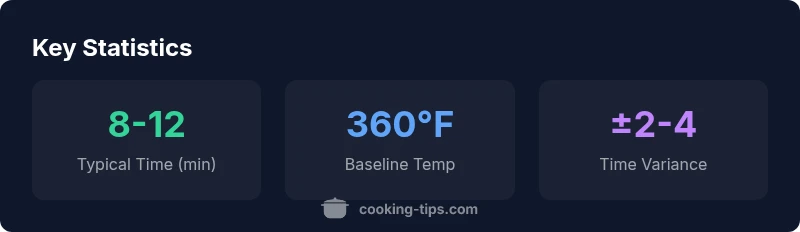
Air fryer cooking times vary by food type, size, and model, but you can rely on concise baselines to plan meals. For most proteins and vegetables, expect 8-12 minutes at 360°F (182°C) with a shake or flip halfway. The Cooking Tips team finds that preheating often saves 1-2 minutes.
Understanding Air Fryer Cooking Times
Air fryer cooking times are not universal; they depend on food type, batch size, thickness, and the model's wattage. The phrase air fryer cooking times describes the window foods need to reach doneness and become crisp. According to Cooking Tips, treat times as baselines rather than fixed deadlines. Start with a standard range, such as 360°F (182°C) for many items, and adjust based on thickness and surface area. For thinner slices and small nuggets, use less time; bone-in pieces or larger roasts require more. The aim is a light browning on the outside with a juicy interior. In practice, build a small notebook of go-to times for your favorite foods and note how your particular unit responds.
Baseline Timings by Food Category
A practical way to approach air fryer cooking times is to map foods into baseline ranges. Here are representative starting points, which you can refine after testing with your specific machine:
- Chicken breast (boneless): 8-12 minutes at 360°F
- Salmon fillet: 7-9 minutes at 360°F
- Small vegetables (broccoli, Brussels sprouts): 8-10 minutes at 360°F
- Frozen items (fries, veggie nuggets): 14-18 minutes at 360°F
- Potatoes (cubed or wedges): 12-16 minutes at 360°F
Remember to shake or flip halfway to ensure even browning, and adjust times by ±1–2 minutes for size or batch differences.
The Role of Preheating, Size, and Spacing
Preheating can shave minutes off your cook time, especially for dense proteins or larger batches. Space matters: overcrowding traps steam and slows browning, so work in a single layer with a bit of breathing room. For larger items, cut pieces into uniform thickness; for vegetables, aim for similar sizes to prevent uneven doneness. If you’re cooking multiple items, consider starting with the items that take longer and adding quicker items later, stacking your workflow efficiently to minimize total time.
How Different Models Affect Air Fryer Cooking Times
Different air fryer models can vary in wattage and performance, which affects cooking times. Higher wattage units tend to cook faster, with practical differences often in the 10-20% range. Always start with the lower end of the recommended time and verify doneness before serving. If you notice frequent under- or over-browning, consult your user manual for model-specific guidance and compare it to the general baselines discussed here.
Testing Doneness: Visual Cues and Thermometers
Doneness testing should become part of your routine. Visual cues—browning, steam, and texture—are helpful, but a quick thermometer check provides precision. For poultry, target an internal temperature of 165°F (74°C); for fish, about 145°F (63°C); for many vegetables, you’re aiming for pierce-ready tenderness. If you’re uncertain, start with 1–2 minutes and recheck, rather than overcooking. Over time, you’ll translate these checks into reliable air fryer cooking times.
Common Mistakes and How to Avoid Them
Common pitfalls include overcrowding, neglecting to preheat, and using inconsistent piece sizes. Also, relying on a single cook time for all recipes leads to uneven results. To improve consistency, follow baselines, then adjust based on thickness and quantity. Clean the basket regularly to preserve airflow, and keep a small timing log for different foods.
Building a Reliable Personal Reference for Air Fryer Cooking Times
Develop a personal reference by grouping foods into categories (protein, vegetables, starches) and recording the time, temperature, and doneness you prefer. Start with known baselines and adapt to your device. Create a quick-reference chart you can tape to your kitchen wall or save as a note on your phone. The goal is to turn air fryer cooking times into a repeatable routine, not guesswork.
Quick Reference: Time Ranges for Popular Foods
This section provides practical anchors you can reuse. Start with these baselines and tailor them to your unit. Always verify doneness before serving, especially with proteins. Building your own chart accelerates dinner prep and reduces guesswork over time.
Comparison of common air fryer cooking times
| Food Type | Typical Time (min) | Preheat Required | Notes |
|---|---|---|---|
| Chicken breast (boneless) | 10-12 | Yes | Thin cutlets cook faster |
| Frozen french fries | 14-18 | Yes | Shake basket once mid-cook |
| Brussels sprouts | 8-10 | Yes | Halve for even browning |
| Salmon fillet | 7-9 | Yes | Skin-on helps moisture |
Quick Answers
What is the best starting point for air fryer cooking times?
Begin with a baseline around 8-12 minutes at 360°F for many items, then adjust by 1-2 minutes based on thickness and batch size. Use doneness tests to confirm.
Start with 8-12 minutes at 360 degrees, then test and tweak based on thickness and batch size.
Do I need to preheat an air fryer?
Preheating can improve browning and reduce total time, especially for larger items. If you’re short on time, preheating for a minute or two is usually enough.
Preheat for a minute or two to improve browning and save time.
Why do times vary between models?
Different models have varying wattages and airflow patterns, which affect cook times. Treat times as baselines and adjust based on your unit’s performance.
Different models cook differently; use as a baseline and adjust for your unit.
How can I tell if food is done without cutting it open?
Use a thermometer for proteins (165°F for poultry, 145°F for fish) and check texture for vegetables. A quick cut can help verify doneness for uncertain items.
Check with a thermometer or test texture to confirm.
Can I batch cook and reheat in the air fryer?
Yes, but avoid overcrowding. Reheating foods is effective, but you may need to extend time slightly and shake mid-process.
Batch cook with space; reheat by adding a bit more time as needed.
What are the safety tips for air fryer cooking times?
Always follow manufacturer guidelines, use oven mitts, avoid overfilling, and unplug after use. Keep the basket clean to maintain airflow.
Follow safety guidelines, watch for overfill, and keep it clean.
“Air fryer times are a guideline—your unit and batch size can shift results. The key is to test and adjust by small increments.”
Top Takeaways
- Use 8-12 minutes as a baseline for many foods
- Preheat when possible to save time
- Size, thickness, and spacing drive exact times
- Shake or flip halfway for even browning
- Test doneness with a thermometer or cut test