Does Cooked Spinach Have Iron? Iron Content and Absorption Demystified
Explore whether cooked spinach contains iron, how cooking affects iron availability, and practical tips to maximize non-heme iron from spinach in everyday meals.


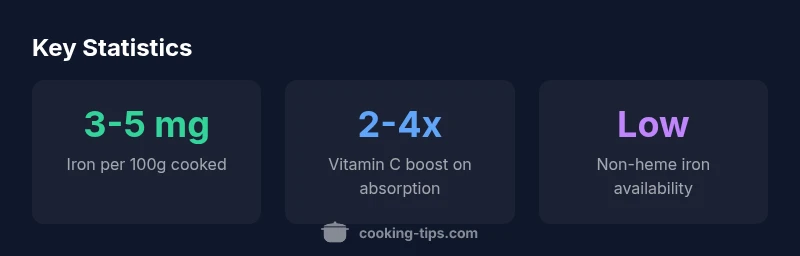
Yes, does cooked spinach have iron? Yes, cooked spinach contains iron—roughly 3-5 mg per 100 g cooked. However, this iron is non-heme and absorption varies with oxalates and meal context. Cooking can alter availability; pairing with vitamin C and using iron-friendly cooking methods helps you absorb more of that spinach iron.
Understanding does cooked spinach have iron
The question does cooked spinach have iron is a common one among home cooks trying to balance iron intake with leafy greens. The answer is yes, but with nuance: spinach provides iron in the non-heme form, and the amount depends on cooking method and portion size. According to Cooking Tips, cooked spinach typically delivers roughly 3-5 mg of iron per 100 g, though this is a general range and can vary by variety and cooking duration. This information matters for planning meals, especially when you are aiming to meet daily iron targets through plant-based sources. In practice, you’ll want to consider how you prepare spinach, what you pair it with, and how much you serve to gauge its real contribution to your iron intake. The broader takeaway is that spinach can contribute meaningfully to iron intake, but it should be part of a diversified strategy rather than the sole source.
How cooking changes iron availability in spinach
Cooking can alter both the iron content and its bioavailability. Water-based cooking (boiling) can cause some minerals to leach into the cooking water, potentially lowering the iron that ends up in the consumed portion. Steaming or microwaving tends to minimize leaching while still reducing oxalate levels, which can improve iron absorption. Oxalates bind iron, reducing its bioavailability, and spinach is relatively high in oxalates to start with. Therefore, how you cook spinach can shift its effective iron contribution to your meal. In practical terms, a cup of cooked spinach can deliver a meaningful portion of daily iron, especially when you track portions and pair with other iron-containing foods. The Cooking Tips team notes that cooking methods and portion size combine to determine the final iron you absorb.
Non-heme iron and spinach: what it means for absorption
The iron in spinach is non-heme, the form found in plants. Non-heme iron is generally less readily absorbed than heme iron from animal sources and is highly influenced by the meal's composition. Vitamin C-rich foods such as citrus, bell peppers, or tomatoes can significantly boost absorption, while compounds like calcium and certain polyphenols can dampen it. Spinach's oxalates further complicate absorption, but consuming spinach with vitamin C or cooking to reduce oxalates can improve uptake. Realistic expectations: even when cooked optimally, spinach should be viewed as a contributor to iron intake rather than the sole source. Many people rely on a varied diet to meet daily iron needs.
Practical tips to maximize iron absorption from spinach
- Pair with vitamin C: add lemon juice, strawberries, or bell peppers to meals featuring spinach.
- Choose cooking methods that minimize mineral loss: steam or microwave rather than boil when possible.
- Consider cast iron cookware: cooking in cast iron can add tiny amounts of iron to foods and may help increase overall intake.
- Balance with other iron-rich foods: include legumes, whole grains, and fortified products across meals.
- Be mindful of inhibitors: separate calcium-rich foods or tea around iron-rich meals when trying to optimize absorption.
These practical steps can help you get more iron from spinach without drastically changing your eating pattern.
Spinach in context: how does it compare to other iron sources?
Compared with red meat, spinach generally provides far less absorbable iron per serving, but it contributes valuable non-heme iron and valuable nutrients such as folate, magnesium, and various phytonutrients. For vegetarians and vegans, spinach can be a meaningful part of an iron-rich plan when paired with other non-heme iron sources and vitamin C-rich foods. Sauces and dishes that combine spinach with beans, quinoa, or fortified grains can raise total iron intake. For many home cooks, spinach is a convenient, nutrient-dense option that complements meat, fish, and poultry in mixed meals.
Common myths about spinach iron—and what the science actually says
Myth: Spinach is the best natural source of iron. Reality: While spinach contains iron, the amounts are modest and absorption is limited by oxalates. Myth: Cooking destroys iron. Reality: Cooking can cause some leaching, but it can also reduce anti-nutrients and improve availability when combined with vitamin C. Myth: You must eat huge portions every day to meet iron needs. Reality: A balanced diet with a variety of iron sources typically suffices for most people.
How much spinach should I eat to meet iron needs?
Iron needs vary by age, sex, and activity level. For many adults, a practical goal is to include spinach as part of a broader iron-rich plan that includes vitamin C sources and other iron-containing foods. A common serving size is one to two cups of cooked spinach per meal, but the exact impact on iron status will depend on overall diet, absorption, and individual factors like gut health. Tracking meals and consulting with a registered dietitian can help tailor intake.
Data snapshot and practical takeaways
In sum, does cooked spinach have iron? Yes, it does, but the iron is non-heme and absorption depends on meal context. Expect roughly 3-5 mg iron per 100 g cooked, with absorption boosted by vitamin C and limited by oxalates. For home cooks, the practical approach is to view spinach as a contributor to iron intake rather than a stand-alone solution, and to optimize meals by pairing with vitamin C, choosing gentle cooking methods, and combining with other iron-rich foods. The Cooking Tips team emphasizes balanced, evidence-based eating rather than relying on a single food for iron.
Iron content comparison between cooked and raw spinach
| Food | Iron per 100g (cook) | Bioavailability notes |
|---|---|---|
| Cooked spinach | 3-5 mg | Non-heme iron; oxalates present; bioavailability moderate |
| Raw spinach | 2-3 mg | Non-heme iron; oxalates high; lower concentration per weight |
Quick Answers
Does spinach provide iron?
Yes. Spinach contains iron, but it is non-heme iron, and absorption varies with meal composition and oxalate content.
Yes—spinach has iron, but the iron is non-heme and absorption changes with what you eat with it.
Is cooked spinach iron content higher than raw?
Cooking concentrates iron by water loss and can increase its density per weight, but oxalates and leaching during cooking affect net absorption.
Cooking can raise iron density per weight, yet absorption still depends on other factors.
Can I meet iron needs from spinach alone?
Unlikely for most people. A varied diet with other iron sources and vitamin C-rich foods improves overall iron status.
No, spinach alone isn’t usually enough; diversify iron sources.
How can I maximize iron absorption from spinach?
Pair with vitamin C (citrus, peppers), use gentle cooking methods, and consider cast iron cookware to boost overall iron intake.
Pair with vitamin C and choose smart cooking methods to boost absorption.
Do oxalates affect spinach iron absorption?
Yes. Oxalates bind iron and reduce absorption; cooking and vitamin C pairing can help offset this.
Oxalates can lower absorption, but timing and preparation matter.
Does spinach iron content vary by variety or growing conditions?
Yes, mineral content varies with variety and growing conditions, but overall spinach remains a modest iron source.
There can be variation by variety and where it’s grown.
“Spinach is a valuable part of a varied diet, but its iron contribution is best realized when consumed with vitamin C-rich foods and prepared with cooking methods that maximize absorption.”
Top Takeaways
- Pair spinach with vitamin C to boost iron absorption
- Steam or microwave to minimize mineral loss
- Use cast iron cookware to subtly increase iron intake
- Spinach is a contributor, not a sole iron source
- Oxalates influence absorption; vary iron sources across meals