Who Cooks Turkeys for Thanksgiving: Roles, Planning, and Safe Cooking
Discover who typically cooks the turkey for Thanksgiving, how families share tasks, and practical planning tips to ensure a juicy, safely prepared bird. Learn roles, timing, and safety from Cooking Tips.


Who cooks turkeys for Thanksgiving isn’t fixed to one person. Most households share roles: someone handles thawing and brining, another oversees roasting, and a third joins the carving. In some cases, families hire a caterer or restaurant chef to prepare the bird. This guide explains common arrangements and how to assign tasks efficiently.
Who Usually Cooks Turkeys for Thanksgiving
According to Cooking Tips, many households assign the turkey task to more than one person to reduce stress and ensure smooth timing. The lead planner coordinates thawing, brining, and the overall schedule, while a second cook oversees the roasting, baste timing, and monitoring the oven. A third person often handles carving and serving. By distributing duties early, families keep the kitchen calm and maintain juicier, evenly cooked meat. If someone in the group has culinary experience, they may take the lead, but it’s common to share responsibilities so that no single person is overwhelmed. The size of your gathering and the available kitchen gear often determine how many people participate. The Cooking Tips team found that clear role definitions help prevent overlap and miscommunication on the big day.
How Tasks Are Shared Across a Home Kitchen
Distributing tasks is less about strict division and more about creating a reliable timeline. Start with thawing, then season or brine, prepare sides, and schedule the roasting window. A typical division looks like this: one person handles thawing and brining or dry brining, another manages seasoning and stuffing decisions, and a third oversees roasting and checking internal temperature. If you’re hosting many guests, consider assigning a backup for each role in case of last-minute changes. Clear communication tools—like a shared checklist or a whiteboard in the kitchen—help everyone stay aligned. The goal is to have multiple hands ready for tasks that require attention at different times while keeping the bird’s safety front and center.
When to Hire a Caterer or Restaurant for the Bird
For larger gatherings or limited kitchen space, hiring a caterer or restaurant to prepare the bird can reduce stress and equipment needs. This option is particularly helpful if your oven space is tight or you want a very specific cooking method (such as a butter-brined or smoked turkey). When considering this route, compare lead times, delivery or pickup options, and how the bird will arrive at the right temperature for serving. Budgeting for a caterer should include transport, hot-holding if needed, and consider who will finish sides and gravy in-house. Cooking Tips recommends weighing convenience against the joy of handles and timing—choose what keeps your Thanksgiving experience enjoyable for you and your guests.
Practical Ways to Assign Roles Without Stress
To keep assignments practical, agree on a master plan with one person as the coordinator who communicates updates. Create a simple timetable that maps thawing, brining, roasting, and resting periods. Assign backup roles so nothing stalls if someone is delayed. For smaller kitchens, consider delegating with clear, written tasks (e.g., “Thermometer in at 152F by Step 5”). Favor tasks that suit individual strengths—someone who enjoys precise timing can own the thermometer checks, while another person can focus on sides and table setup. The important part is collaboration and a shared understanding of who does what, when.
Food Safety, Thawing, and Temperature Essentials
A successful Thanksgiving turkey starts with safe handling. Thaw meat safely in the fridge well ahead of time, and never thaw at room temperature. Dry brining can enhance flavor while giving you more control over timing. When roasting, use a reliable meat thermometer and monitor the internal temperature in the thickest part of the breast and the innermost part of the thigh. The bird is considered safe when it reaches an internal temperature of 165F (74C). Let the turkey rest at least 20 minutes before carving to preserve juiciness. Keep hot foods hot and cold foods cold to avoid cross-contamination. The plan should also include a clean-as-you-go approach so the kitchen stays functional for sides and cleanup.
A Simple Planning Template for Your Table
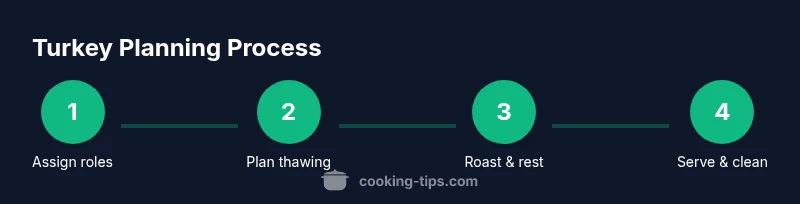
Create a one-page plan that lists: who leads thawing/brining, who manages roasting, who handles carving, and who coordinates sides and gravy. Include a rough timeline: thaw date, brine or dry-brine window, oven preheat time, estimated roast window, rest time, and serving. Share the plan with everyone involved and post it where all contributors can see it. This approach reduces guesswork and helps family members step in confidently if schedules change.
Authority Sources
For trusted guidance on turkey safety and cooking practices, consult:
- https://www.fsis.usda.gov/food-safety/safe-food-handling-and-preparation/meat-and-poultry/turkeys
- https://www.cdc.gov/foodsafety/keep-food-safe.html
- https://extension.umn.edu/food-safety/turkey-safety
Tools & Materials
- Roasting pan(Large enough for your turkey; with a rack is ideal)
- Meat thermometer(Digital probe thermometer for accurate readings)
- Oven-safe thermometer(Optional, for extra oven temperature checks)
- Aluminum foil(To tent the turkey if it browns too quickly)
- Basting brush(For additional glaze or butter basting if desired)
- Measuring spoons(Accurate seasoning and brine measurements)
- Kitchen timer or phone(Keep track of multiple cooking stages)
- Carving knife set(Sharp, well-balanced for clean slices)
Steps
Estimated time: Estimated total time: 4 hours
- 1
Decide planning lead and backup
Gather your household and assign a lead coordinator who will manage the timeline and who does what. Assign a backup for each key role to accommodate schedule shifts. Create a shared checklist so everyone can see tasks at a glance.
Tip: Document roles in a single place—print a copy for the kitchen wall. - 2
Choose cooking approach and backup
Select roasting as the default method or designate a secondary technique (e.g., slow roast or smoked turkey) if you have the equipment. Confirm who will oversee the cooking method and temperature checks.
Tip: Prefer a backup cook to handle thermometer monitoring if you’re hosting a crowd. - 3
Plan thawing, seasoning, and brining
Determine the thaw window based on turkey size and plan whether to brine, dry-brine, or season simply. Place the bird in the fridge early enough to ensure safety and best texture.
Tip: Never thaw at room temperature; plan ahead to keep meat at safe temperatures. - 4
Set roasting schedule and pan setup
Prepare the roasting pan, rack, and any stuffing decisions. Preheat the oven to the target temperature and place the turkey in position to minimize movement during roasting.
Tip: Put a timer in the kitchen to remind you about mid-roast checks. - 5
Roast to safe internal temperature
Roast the turkey, checking internal temperature in both the breast and thigh. Remove from heat when approaching 165F and let rest to finish carryover cooking.
Tip: Check in multiple spots for accuracy; the thickest part is your guide. - 6
Rest, carve, and serve
Let the turkey rest for 20-30 minutes before carving to preserve juiciness. Carve with a sharp knife, slice against the grain, and transfer to warm platters for service.
Tip: Reserve pan drippings for gravy and flavor-rich sides. - 7
Coordinate sides and table setup
Assign someone to finish sides, assemble the gravy, and manage table setting. Ensure hot foods stay hot and platters stay organized for a smooth service.
Tip: Establish a quick handoff plan so sides can be refreshed while the bird rests.
Quick Answers
Who should be the lead when planning the turkey?
Typically the host or a designated coordinator should lead the turkey planning, coordinating thawing, seasoning, roasting, and carving timelines. Having a clear lead helps synchronize cook times with sides and table service.
Usually the host or a designated planner leads the turkey plan, coordinating thawing, roasting, and carving with the rest of the kitchen tasks.
Is it better to have one cook or multiple helpers for the bird?
Multiple helpers reduce stress and improve timing, especially for larger gatherings. Assign specific tasks to each helper, such as thawing, seasoning, roasting, and carving to avoid overlap.
Many families prefer several helpers so tasks like thawing, roasting, and carving are shared.
What is the safest way to thaw a turkey?
Thaw the turkey in the refrigerator, allowing about 24 hours for every 4-5 pounds. Never thaw at room temperature to prevent bacterial growth. Plan ahead to give enough thaw time.
Always thaw in the fridge, not on the counter, and give yourself plenty of margin time.
Can I hire outside help to cook the turkey?
Yes. A catered bird or restaurant chef can reduce kitchen time and stress, but plan for delivery, hot-holding, and any rewarming needs at serving time.
Hiring a caterer is an option if the kitchen is tight or you want a specific cooking method.
What should I do if the turkey over-browns early?
Tent the bird with foil to prevent further browning and adjust oven temperature. Check internal temperature more frequently and consider finishing with residual heat.
If it browns too fast, cover with foil and keep an eye on the temperature until it hits target.
Watch Video
Top Takeaways
- Decide planning leadership early and assign backups.
- Distribute turkey tasks to reduce stress and ensure timing.
- Prioritize safe thawing, accurate temperatures, and resting.
- Communicate a clear kitchen timeline for smooth service.