What to do if cooked chicken is a little pink
Learn why cooked chicken can look pink and how to verify safety with a thermometer. Practical troubleshooting steps, safety tips, and prevention for home cooks.


If cooked chicken looks pink, don’t panic yet. The quickest fix is to verify doneness with a reliable thermometer: insert into the thickest part away from bone and aim for 165°F (74°C). If you reach 165°F and pink juices persist, check for bone marrow staining or pigment; otherwise reheat to safe temp and let rest. When in doubt, discard.
Understanding pink color in cooked chicken
Color alone is not a reliable indicator of safety. According to Cooking Tips, pink hues can appear in fully cooked chicken due to natural pigments and bone marrow. The Cooking Tips team found that a small amount of pink or rosy juice doesn't automatically mean undercooked chicken, but never rely on color alone—always verify doneness with a thermometer and proper technique. In home kitchens, especially when cooking bone-in cuts, pink can linger near bones or cartilage, particularly after grilling, roasting, or smoking. Use this guide to interpret color signals in context with internal temperature, and always prioritize safety over appearance. Remember that factors like cooking method, cut thickness, and resting time influence color. When used correctly, temperature is the most accurate signal of safety, not color.
How to verify doneness with a thermometer
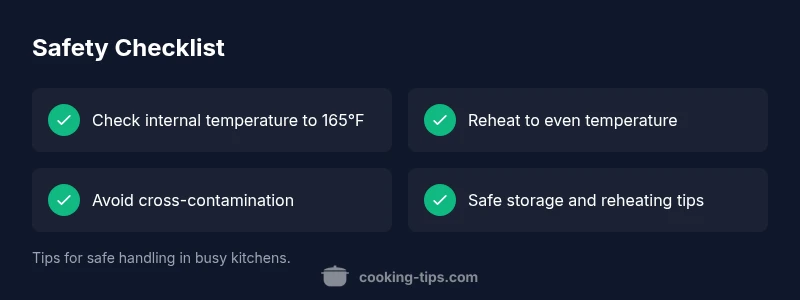
The most foolproof method to determine safety is a digital thermometer. Insert into the thickest part, avoiding bone, and rotate slightly to ensure a center reading. The target is 165°F (74°C). If you’re cooking multiple pieces, check the largest piece and ensure all others reach the same temperature. After removing from heat, let the meat rest for a few minutes; the temperature will continue to rise slightly and juices will redistribute, which helps with accuracy. Clean the probe between pieces to prevent cross-contamination, and calibrate your thermometer regularly for reliable readings.
Common causes of pink chicken after cooking
Pink color can be caused by several non-safety-related factors. Bone marrow tint near joints can color nearby tissue pink, especially in young birds. Myoglobin, a muscle protein, can retain a pink hue near the surface, particularly in lighter cuts or after fast cooking. Some smoked or cured chickens may show pink tinges due to nitrites or wood smoke, while very thin slices or leftovers may display pink due to pigment distribution. These factors do not guarantee safety or danger; they simply reflect how heat interacts with pigment and tissue.
Safe handling and reheating practices
Always thaw frozen chicken in the fridge or in cold water changing the water every 30 minutes, and keep surfaces clean to avoid cross-contamination. When reheating, ensure the entire portion reaches 165°F. For leftovers, reheat quickly and evenly, ideally using a shallow pan or microwave with 50% power and stirred halfway. If the food smells off, feels slimy, or has any visible signs of spoilage, discard. When in doubt, err on the side of safety and do not taste test raw leftovers.
Practical troubleshooting steps you can take right now
If pink persists after verifying 165°F, check for bone marrow pigments by slicing near the bone and inspect the color in several pieces. Consider rechecking with a second thermometer to confirm accuracy. If the color remains pink but the temperature is safe, you can proceed to eat, but monitor for any signs of spoilage and avoid leaving cooked chicken at room temperature for more than two hours. For other cooking methods, such as roasting or grilling, ensure even heat and avoid hot spots.
When color is not a reliable safety signal
Color is a poor sole indicator of safety; temperature is the best measure. The presence of pink juice at 165°F is sometimes observed in chicken with bone near the area, or in certain cooking methods like smoking or rapid searing, but this does not necessarily indicate undercooking. If you cannot confirm with a thermometer or the color mismatch continues despite correct temperature, err on the side of caution and consider discarding. Always follow local food safety guidelines and use a trusted meat thermometer for peace of mind.
Prevention: how to avoid pink chicken in future
Plan for even thickness to prevent uneven cooking by pounding thicker cuts or butterflying whole breasts. Use a reliable thermometer to monitor temperature throughout cooking, and adjust heat to avoid scorching while reaching the target temperature. Rest meat after cooking for 3-5 minutes to allow juices to redistribute and the internal temperature to stabilize. Store leftovers promptly in shallow containers to promote fast, even reheating, and label dates to track freshness. If you routinely grill or roast, consider a probe thermometer that stays in the meat to monitor temperature in real time.
Steps
Estimated time: 20-35 minutes
- 1
Gather tools and prep
Set up a digital thermometer, cutting board, pan or grill, and tongs. Make sure the thermometer is calibrated for accurate readings before you start cooking.
Tip: Calibrate thermometer before each use for best accuracy. - 2
Check the thickest part
Insert the thermometer into the thickest section of the chicken, avoiding bone. Rotate slightly to ensure you’re reading the center. Record the temperature.
Tip: Avoid bone, which can give a false reading. - 3
Continue cooking if needed
If the temperature is below 165°F, continue cooking and recheck every few minutes. Use even heat to prevent hot spots.
Tip: Use covered or indirect heat to finish without scorching. - 4
Rest and recheck
Remove from heat and let rest 3-5 minutes. Recheck a second piece or the thickest area to confirm the hold at 165°F.
Tip: Resting helps juices redistribute and final temps settle. - 5
Inspect near bones
If pinkness remains near bones, slice nearby areas to verify color consistency and ensure other parts have reached the target temperature.
Tip: Slicing a small portion can confirm doneness without wasting the whole piece. - 6
Handle leftovers safely
Cool quickly, store in shallow containers, and reheat to 165°F before serving. Do not leave cooked chicken at room temperature for more than two hours.
Tip: Label leftovers with date and reheat promptly.
Diagnosis: Cooked chicken appears pink or pink juices after cooking
Possible Causes
- highInsufficient cooking time or heat
- mediumBone marrow or pigment near bones
- lowMyoglobin in lighter meat near the surface
- lowSmoking or curing process affecting color
Fixes
- easyRe-check doneness with a calibrated thermometer in the thickest part away from bone
- easyContinue cooking until the internal temperature reaches 165°F (74°C) at the thickest part
- mediumIf pink persists after reaching 165°F, inspect near the bone and reheat or rest; consider recooking pieces to ensure even heat
- easyIf there's any doubt about safety, discard the batch to avoid foodborne illness
Quick Answers
Is pink chicken necessarily undercooked?
Not always; color alone isn't a reliable safety cue. Always verify doneness with a thermometer.
Pink color isn't proof; check the temperature.
What temperature should chicken reach to be safe?
165°F; test multiple pieces to ensure all are safe.
Aim for 165 degrees.
Can pink juice be safe?
If the temperature is 165°F, pink juices may appear; ensure even temperature throughout.
Yes, pink juices can occur even when safe.
Should I discard chicken if pink persists after 165°F?
Recheck with thermometer; if unsure, discard to be safe.
If unsure, discard to stay safe.
What cooking methods cause pink color?
Smoking or bone marrow can cause pink hues after cooking.
Smoking or marrow can leave pink color.
Can refrigerated pink chicken be eaten?
If it has reached 165°F when reheated, it's okay; otherwise discard.
If it's safely reheated to 165°, it's fine.
Watch Video
Top Takeaways
- Test thickest part to 165°F.
- Color isn't a reliable safety signal.
- Rest before slicing for even temps.
- Reheat leftovers to 165°F safely.