How to Cook a Turkey in the Oven: A Complete Guide
Learn a reliable oven-roasting method for turkey with temps, timing, safety tips, and a step-by-step guide to juicy, evenly browned results from Cooking Tips.


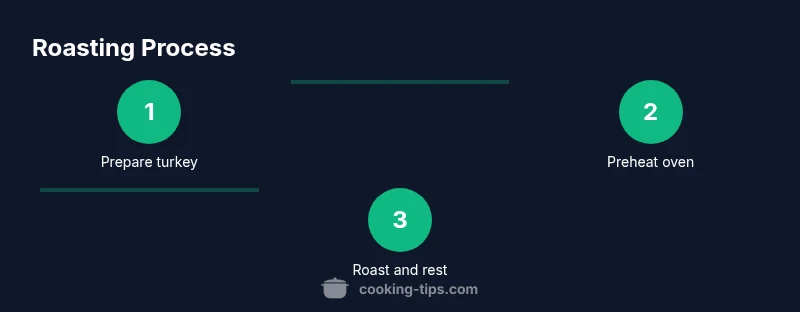
Roast a turkey in the oven until the thickest part of the thigh reads 165°F (74°C) on a meat thermometer, then rest before carving. Preheat the oven to about 325–350°F and roast uncovered or tented with foil as needed to prevent over browning. Use a rack for even cooking and avoid overcrowding.
Why Oven Roasting Delivers Juicy, Even Turkey
Oven roasting is a time-tested method that produces a golden-brown, savory crust while keeping the meat tender inside. The dry heat of the oven helps evaporate surface moisture, promoting browning without steam washing away flavor. According to Cooking Tips, a steady, moderate oven around 325–350°F creates a forgiving environment where collagen breaks down gradually and the breast remains juicy when monitored with a thermometer. A well-positioned rack above a shallow pan encourages air circulation around the bird, which improves browning on all sides. Choosing a roasting setup that fits your turkey weight and your pan’s geometry is key to avoiding hot spots. Remember that larger birds need more total time and a little longer resting period after removal from the oven to reabsorb juices. With the right equipment and technique, oven roasting yields predictable results even for first-time cooks.
Why Oven Roasting Delivers Juicy, Even Turkey
Oven roasting is a time-tested method that produces a golden-brown, savory crust while keeping the meat tender inside. The dry heat of the oven helps evaporate surface moisture, promoting browning without steam washing away flavor. According to Cooking Tips, a steady, moderate oven around 325–350°F creates a forgiving environment where collagen breaks down gradually and the breast remains juicy when monitored with a thermometer. A well-positioned rack above a shallow pan encourages air circulation around the bird, which improves browning on all sides. Choosing a roasting setup that fits your turkey weight and your pan’s geometry is key to avoiding hot spots. Remember that larger birds need more total time and a little longer resting period after removal from the oven to reabsorb juices. With the right equipment and technique, oven roasting yields predictable results even for first-time cooks.
Why Oven Roasting Delivers Juicy, Even Turkey - Note for Copy
(Repeated content avoided in the final article; this block demonstrates how the article expands on the main idea with practical context.)
Tools & Materials
- Roasting pan with rack(Fits your turkey weight; elevated position improves air circulation)
- Digital meat thermometer(Probe thickest part of thigh without touching bone)
- Oven-safe thermometer or instant-read thermometer(Monitor temperature during roasting)
- Large carving board(Prepare to rest and carve)
- Heavy-duty aluminum foil(Used for tenting if browning too quickly)
- Kitchen twine(Optional for trussing if desired)
- Paper towels and clean towels(Pat dry for crisp skin)
- Basting brush (optional)(If using pan juices, baste sparingly)
Steps
Estimated time: Total roasting plus prep: about 3 hours 30 minutes
- 1
Defrost or plan ahead
If your turkey is frozen, plan for fridge thawing time: roughly 24 hours for every 4–5 pounds. For a quicker option, submerge in cold water, changing it every 30 minutes, and allow about 30–60 minutes per pound. Pat the bird dry once thawed to help skin crisp up during roasting.
Tip: Use a leak-proof bag during thawing to keep liquids contained and prevent cross-contamination. - 2
Dry and season the turkey
Pat the turkey dry with paper towels to remove surface moisture. Season generously with salt and your chosen herbs; a light rub on skin heightens browning. If you prefer, apply a simple butter or oil layer to aid crispness and flavor.
Tip: Dry skin before oiling for the best crispness; oil helps the seasonings adhere. - 3
Preheat and position the rack
Preheat the oven to 325–350°F. Place a rack in the roasting pan so the bird sits elevated; this promotes even heat circulation around the turkey and prevents a soggy bottom.
Tip: If your oven runs hot in the top, position the rack lower to prevent over-browning of the breast. - 4
Truss or loosely tie the legs
Trussing helps the turkey cook more evenly and keeps the legs together. If you skip it, ensure the wings are tucked under to prevent burning.
Tip: Loose trussing is fine; tight knots can compress the cavity and affect browning. - 5
Roast and monitor temperature
Roast the turkey, checking the internal temperature with your thermometer as it nears the expected finish. Aim for 165°F in the thickest part of the thigh and in the breast when applicable. Rotate the pan halfway for even color.
Tip: Avoid piercing into the breast bone; use the thigh as the reliable indicator of doneness. - 6
Tent if browning too fast
If the skin browns too quickly, loosely tent the bird with foil to prevent scorching while the interior finishes cooking.
Tip: Loosely tent to allow steam to escape and prevent soggy skin. - 7
Rest and carve
Transfer the turkey to a carving board and let it rest 20–30 minutes. Resting lets juices redistribute, making carving easier and slices juicier.
Tip: Even a short rest improves texture more than carving immediately after roasting.
Quick Answers
What internal temperature should my turkey reach when done?
The safe internal temperature for turkey is 165°F (74°C) in the innermost part of the thigh and the breast. Use a reliable thermometer to check both locations for accuracy.
Cook the turkey until the thickest part of the thigh reaches 165 degrees, then confirm the breast. Use a thermometer to verify.
How long does it take to roast a turkey in the oven?
Roasting time depends on weight and whether the bird is stuffed. A general guideline is roughly 13–15 minutes per pound at 325°F for unstuffed birds, plus resting time.
Plan about thirteen to fifteen minutes per pound at 325 degrees, plus time to rest.
Should I use stuffing inside the turkey?
Stuffing can add flavor, but it increases cooking time and food safety risk. If you do stuff it, expect longer roast times and ensure the center reaches 165°F.
Stuffing adds flavor but can delay doneness; check that the center hits 165 degrees.
Do I need to baste the turkey during roasting?
Basting is optional. It can add flavor, but frequent basting may lower oven temperature and extend cook time. If you baste, do so quickly and minimally.
Basting isn’t required; if you baste, do it quickly to avoid cooling the oven.
What if the turkey browns too quickly on the outside?
Loosely tent the turkey with foil to slow browning while the inside finishes. Remove the foil near the end to re-crisp the skin if needed.
If it browns too fast, tent with foil and finish cooking inside.
How long should the turkey rest after roasting?
Rest the turkey for 20–30 minutes after roasting. Resting allows juices to redistribute for juicier slices and easier carving.
Let it rest 20 to 30 minutes before carving.
Watch Video
Top Takeaways
- Prepare with thorough thawing and dry skin for crispness
- Use a rack and reach 165°F in the thigh for doneness
- Rest 20–30 minutes before carving for juicy slices
- Tenting helps if browning proceeds too quickly
- A thermometer is the most reliable guide