What Temperature to Cook Salmon: A Complete Guide
Learn exact internal temperatures for cooking salmon across methods, with thermometer tips and common mistakes to avoid for perfect, moist fillets every time.


Want perfectly cooked salmon every time? This guide reveals the exact internal temperatures to target for different methods (pan-sear, bake, grill, poach) and explains how to adjust temps for thickness and doneness. By following these temps, you’ll avoid overcooking while keeping the fish moist and flavorful in every home kitchen.
Why Temperature Matters for Salmon
According to Cooking Tips, temperature is the single most reliable knob to tune for texture when cooking salmon. The range of doneness runs from translucent, silky centers to opaque, firm flakes, and small changes in temperature create big differences in juiciness. Using a thermometer takes the guesswork out of cooking and helps you reproduce consistent results, whether you’re pan-searing a fillet for a weeknight dinner or preparing a salmon fillet for guests. For most home kitchens, the goal is a moist, flaky center with a gently opaque color that signals doneness without drying. With the right temperatures, you’ll avoid overcooking while preserving flavor and moisture. The Cooking Tips team has found that precise temps reduce waste and increase confidence in every kitchen, from apartment ovens to large family stovetops. Keep the fish from curling or overcooking by reading the thickest part and accounting for carryover heat as soon as you pull it off heat.
Safe Internal Temperature Targets for Salmon
USDA guidance sets 145°F (63°C) as the minimum safe internal temperature for fish, including salmon. This safety threshold ensures pathogens are destroyed and the fish is cooked through. However, texture lovers often aim for different doneness levels: some people prefer a warm, slightly translucent center around 125-130°F (52-54°C) for a moister result, while others like it closer to 135-140°F (57-60°C) for a firmer flake. Cooking Tips Analysis, 2026 notes that precise temperature control improves consistency and reduces the likelihood of drying out the fillet. If you choose 125-130°F as your target, remove the salmon from heat a few degrees before it reaches final temperature so carryover cooking brings it to the perfect finish. Always measure at the thickest portion away from bone and skin to avoid skewed readings.
Temperature Guidelines by Cooking Method
Different methods require different temperature targets to balance safety and texture:
Pan-seared or skillet
- Target 125-130°F (52-54°C) for a pink-centered finish; carryover heat will push toward 130-135°F. Remove from heat when the thermometer reads the lower end of your target and let it rest.
- Why: a hot surface creates a crust while preserving moisture in the center.
Baked in the oven
- Target 125-135°F (52-57°C) for a softer, moist texture; for a firmer finish, aim 135-140°F (57-60°C).
- Why: oven heat surrounds the fish evenly, reducing hot spots.
Grilled
- Target 125-130°F (52-54°C) inside; rest briefly to allow carryover cooking.
- Why: grill heat can dry quickly if read too soon.
Poached
- Target 130-135°F (54-57°C) for gentle cooking in liquid; remove from heat once the center is just opaque.
- Why: poaching preserves delicate moisture without charring.
Sous vide
- Target 122-130°F (50-54°C) for a very tender texture; sear briefly after removal to finish the surface.
- Why: precise water-temperature control yields uniform doneness throughout.
Note: For safety, many chefs still consider 145°F (63°C) a standard benchmark. The temperatures above reflect texture preferences and carryover cooking. The most critical factor is to avoid going over your target by reading the thickest portion and accounting for residual heat after removal from heat.
How to Measure Temperature Accurately
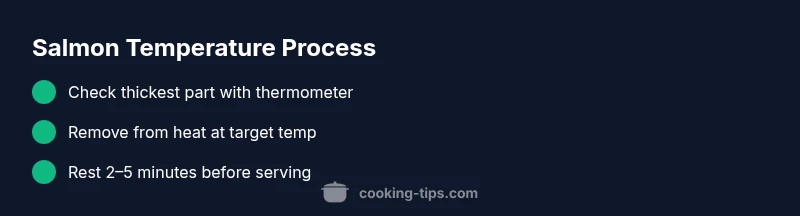
To get reliable readings, use a digital instant-read thermometer with a slender probe. Insert the probe into the thickest part of the fillet, avoiding bone, skin, and any browned edges. Calibrate periodically and avoid placing the tip directly on a cold pan or hot surface, which can skew results. For consistent results, insert the thermometer horizontally into the center of the thickest section and hold it for 2-3 seconds until the reading stabilizes. If you’re cooking multiple fillets at once, verify a sample from each thick piece because thickness can vary. Remember that carryover cooking will continue after you remove the fish from heat, so factor that into your timing.
Common Temperature Mistakes and How to Avoid Them
- Relying only on time rather than temperature can lead to overcooked or underdone salmon. Use a thermometer to guide the finish, not a timer.
- Not patting the fish dry before searing creates extra moisture, which can prevent a good crust. Pat thoroughly with paper towels.
- Removing salmon too early ignores carryover cooking. Plan to pull it off heat a few degrees before your target, then rest.
- Testing doneness by cutting into the fillet can cause moisture loss; a thermometer provides a non-destructive read.
- Using a crowded pan or pan that’s not hot enough can result in steamed rather than seared. Preheat and avoid overcrowding.
Tips for Even Doneness and Flavor
- Always pat salmon dry before cooking to improve browning and texture.
- Preheat your pan and use a neutral oil with a high smoke point to avoid scorching.
- If you have skin-on fillets, cook skin-side down first to protect the flesh and render some fat for extra flavor.
- Let the fish rest for a few minutes after cooking to allow juices to redistribute.
- For a finishing touch, a quick sear under a hot broiler or a light brush of lemon can brighten the flavor without drying the flesh.
Resting and Finishing Techniques
Resting the salmon off heat for 2-5 minutes helps the proteins relax and the moisture to redistribute, resulting in a juicier bite. Tent loosely with foil if you like, but avoid wrapping tightly, which can steam the surface. A brief sear after resting can add texture if you want extra crust. Tailor your finish to the method used and your preferred doneness.
AUTHORITY SOURCES
- USDA Food Safety and Inspection Service (fsis.usda.gov)
- U.S. Food and Drug Administration (fda.gov)
- Centers for Disease Control and Prevention (cdc.gov)
Tools & Materials
- Instant-read thermometer(Prefer a probe with a long, thin tip; calibrate occasionally.)
- Heavy skillet (cast iron or stainless steel)(Preheat well before adding salmon for a good crust.)
- Sheet pan or oven-safe dish(Needed for baking rather than pan-searing.)
- Tongs or spatula(Gentle turning and transfer without breaking the fish.)
- Paper towels(Pat dry the fillet before cooking for better browning.)
- Neutral oil (canola, grapeseed, or light olive oil)(High smoke point to prevent burning.)
- Fresh salmon fillets (skin-on preferred)(Even thickness helps uniform doneness.)
- Optional: lemon wedges or fresh herbs(For finishing and serving.)
Steps
Estimated time: about 25-40 minutes
- 1
Prepare the salmon and heat the surface
Pat the fillet dry with paper towels. Preheat your pan or oven to the target method and gather your tools so everything is ready when the fish hits heat.
Tip: A hot pan is key to a good crust; dry fish prevents steaming. - 2
Insert the thermometer into the thickest part
Insert the probe into the center of the fillet, avoiding bone or skin. Ensure the thermometer reads the thickest section for an accurate reading.
Tip: Angle the probe slightly to reach the very center. - 3
Cook until you reach the target temperature
Maintain steady heat and monitor the internal temperature as the fish cooks. Remove from heat when the thermometer reaches your chosen target (125–130°F for medium-rare, 135–140°F for firmer doneness).
Tip: If you’re unsure, aim for the lower end of your target and let carryover finish the job. - 4
Rest briefly after heat
Let the salmon rest off the heat for 2–5 minutes to allow juices to redistribute. This step improves moisture and texture.
Tip: Tent lightly with foil to keep warm without trapping steam. - 5
Finish for texture, if desired
For extra crust or color, give a quick 10-20 second sear under a hot broiler or a final flip in the hot pan.
Tip: Watch closely to avoid over-browning. - 6
Serve or refrigerate promptly
Serve immediately or refrigerate promptly if saving for later. Reheat gently to avoid overcooking.
Tip: Store leftovers in an airtight container for best texture.
Quick Answers
What is the safe minimum internal temperature for cooked salmon?
The USDA recommends cooking salmon to at least 145°F (63°C) for safety. Many cooks aim for 125-130°F (52-54°C) for a moister, medium finish, accepting some carryover cooking. Always measure at the thickest part.
Cook salmon to at least 145 degrees for safety, but many prefer 125 to 130 for a moister finish, knowing carryover heat will raise it slightly.
Should I test doneness by cutting into the fillet?
No. Cutting can cause juices to escape and dry the fish. Use an instant-read thermometer to check the interior temperature for consistent results.
Avoid cutting to check doneness; use a thermometer for a precise reading.
Can temps vary by cooking method?
Yes. Pan-seared or grilled salmon is often read around 125-130°F, baked around 125-135°F, and poached around 130-135°F. Always consider carryover cooking and the fillet thickness.
Temps do vary by method; monitor the thickest part and rest accordingly.
Is carryover cooking important for salmon?
Absolutely. Salmon can gain a few degrees after removal from heat. Plan to pull it from heat a little early and rest to finish.
Yes, carryover cooking matters—rest the fish to finish cooking.
What about frozen salmon and temps?
Thaw frozen salmon completely before cooking for even results. Temps remain guided by the chosen method and doneness preference.
Thaw frozen salmon before cooking and use your thermometer to guide doneness.
Should I use skin-on fillets for even cooking?
Skin-on helps protect the flesh during searing and can contribute to a better crust. Cooking temps are the same, but the skin can hide doneness if checked in the wrong spot.
Skin-on fillets help with even cooking and crust formation.
Watch Video
Top Takeaways
- Know the safe minimum and preferred temps for salmon.
- Use a thermometer for precise doneness.
- Account for carryover cooking when timing.
- Match temps to your cooking method and fillet thickness.