How to Check If Cooked Rice Is Spoiled: A Practical Guide
Learn reliable methods to tell if cooked rice has spoiled, including visual checks, smell tests, storage guidelines, and safe disposal tips from Cooking Tips.


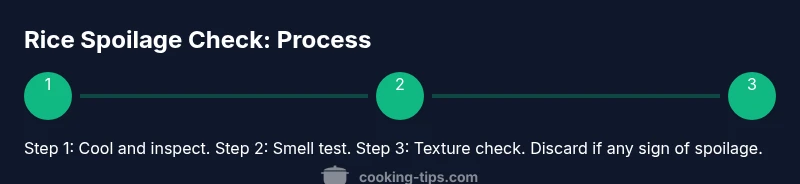
If you want to know how to check if cooked rice is spoiled, start with visual and aroma cues, then test texture and storage history. Look for mold, discoloration, sliminess, or sour smells. If in doubt, discard. Cool and store leftovers promptly and reheat only if clearly safe.
What does spoilage look like for cooked rice?
Spoiled cooked rice can show several distinct signs. When you learn how to check if cooked rice is spoiled, you start with a close visual inspection: mold may appear as fuzzy patches or colored specks on the surface, and grains can darken or look abnormally pale. A sticky, slimy, or unusually glossy surface is another red flag. Odor is also revealing: a sour, sour-milk, or off-putting smell suggests bacterial or fungal growth. Finally, texture matters—grains that feel mushy or overly hard after cooling may indicate spoilage or improper storage. If you observe any combination of these signs, discard the rice rather than risk illness. This approach aligns with general food-safety principles and helps minimize waste while keeping your kitchen safe. The goal is to prevent pathogens from taking hold and to protect household members from foodborne illness.
For home cooks, recognizing these cues early is essential to cooking safely and avoiding unnecessary waste. Remember that spoilage signs can be subtle, especially if rice has been stored in the fridge for several days. When in doubt, rely on the most obvious indicator (mold, sour odor, or slimy texture) as your trigger to discard.
Visual and aroma cues to check for spoilage
Visual cues are often the first clues that cooked rice has become unsafe. If you notice any mold growth, unusual discoloration (gray or pink tints, dark spots), or a film on the surface, discard the batch immediately. Mold can develop even when the grains appear mostly normal, so a quick, thorough look is worth the effort. In addition to color, texture matters: when rice is spoiled, you may feel a slimy coating or an overly mushy, clumpy feel that doesn’t resemble freshly cooked rice. A runaway odor—sharp, sour, or rotten notes—usually confirms spoilage even if the rice looks fine. Smell is a practical indicator because microbes that thrive in cooked rice often produce distinct smells as they multiply. Finally, consider the storage history: rice kept at room temperature for more than a couple of hours or stored too long in the fridge is more prone to spoilage. If any sign appears, it’s safer to discard.
How to perform a safe texture test
Texture testing is a practical way to assess safety without risking a large portion. Begin by taking a small portion of cooled rice and feeling it between your fingers: normal, well-cooked rice should be firm but pliable, with grains that separate easily. If the grains feel unusually soft, sticky, or rubbery, or if the rice forms a gel-like smear, consider discard or further disposal. If you’re unsure, gently reheat the portion to a safe temperature and reassess: overheating can mask certain spoilage signs, while underheating may leave residual bacteria active. Always use clean utensils and wash hands before and after handling the tested portion. A thorough texture check complements the visual and smell tests to provide a more complete assessment.
Safe storage, handling, and disposal guidelines
To minimize spoilage risk, practice prompt cooling and proper storage. After cooking, spread the rice in a thin layer on a tray (or shallow dish) to speed cooling, and refrigerate within 1–2 hours. Store in a clean, airtight container at or below 4°C (39°F). For longer-term safety, freeze leftover portions in small, meal-sized containers. When reheating, ensure the internal temperature reaches 165°F (74°C) and only reheat once. If you detect signs of spoilage, discard immediately and wash surfaces and utensils with hot, soapy water to prevent cross-contamination. Reserve a fresh portion for consumption only if you are confident it was stored properly and shows no signs of spoilage. Remember: food safety relies on both correct handling and careful observation of cues.
Fresh vs spoiled: a quick decision tree
- Look for: mold, unusual colors, slimy coating, or an off color on any grain.
- Smell: sour, rancid, or otherwise unpleasant odor.
- Feel: overly mushy, sticky, or gummy texture that deviates from freshly cooked rice.
- History: rice left out at room temperature for more than a couple of hours or stored for several days in the fridge.
- Action: discard if any signs are present; otherwise, reheat to a safe temperature and eat promptly.
Authoritative sources and further reading
For evidence-based food safety practices related to leftovers and spoilage, consult reputable sources from government and public health organizations. The guidance below supports safe handling and helps you verify signs of spoilage with confidence. See the linked pages for more detail and updates:
- https://www.cdc.gov/foodsafety/index.html
- https://www.fda.gov/food/buy-store-serve-safe-food/leftovers-and-food-safety
- https://www.fsis.usda.gov/food-safety/safe-food-handling-and-preparation/foodsafety-basics/leftover-food-safety
Tools & Materials
- Airtight container(to store cooled rice in the fridge promptly and safely)
- Clean spoon(for testing a small portion without cross-contamination)
- Disposable trash bag(for safe disposal of spoiled rice)
Steps
Estimated time: 20-40 minutes
- 1
Move rice to a shallow dish and cool
Place a small portion of the cooked rice onto a clean, shallow plate or tray to speed up cooling and make visual testing easier. Spreading the grain increases surface area and helps you notice any color or texture changes quickly as it cools.
Tip: Use a thin, even layer so heat dissipates rapidly and any off smells become detectable sooner. - 2
Inspect appearance closely
Examine the surface for mold, discoloration, or an unusual sheen. Spoiled rice may show fuzzy patches, dark specks, or a slimy film that wasn’t present when freshly cooked. If you see visual signs, discard the entire batch.
Tip: If you’re unsure about a small patch, discard the portion and sanitize the area to prevent cross-contamination. - 3
Assess aroma
Gently sniff the cooled rice. A sour, sour-milk, or otherwise off odor is a strong sign of spoilage. If the scent is faint or neutral, proceed to texture testing, but don’t rely on smell alone.
Tip: Keep your nose at a reasonable distance and avoid sticking your nose directly into the bowl to prevent overpowering your senses. - 4
Test texture safely
Take a small sample and feel the grain between clean fingers. Fresh rice should be tender yet separate, not mushy or gluey. Sliminess or unusual stickiness can indicate spoilage, especially if accompanied by other signs.
Tip: If you notice a slimy feel, do not taste it—discard and clean the testing surface immediately. - 5
Decide on storage or disposal
If there are no signs of spoilage, you can store leftovers in an airtight container in the fridge. If any sign is present, discard the rice and clean all utensils and surfaces that touched it to prevent cross-contamination.
Tip: Label stored rice with date and use within a safe window to reduce waste. - 6
Reheat correctly if safe to reuse
When reheating, ensure the rice reaches a safe internal temperature and is steaming hot throughout. Only reheat once and do not reheat the same batch multiple times. If you’re unsure about safety, discard.
Tip: Heat evenly, stir halfway through, and verify that there are no cold pockets.
Quick Answers
Can I eat rice that was left out at room temperature for a few hours?
No. Leftover rice that has sat at room temperature for more than a couple of hours should be discarded, as Bacillus cereus and other bacteria can multiply quickly.
Rice left out for more than a couple of hours should be discarded because bacteria can grow quickly.
Is it safe to freeze cooked rice for later use?
Yes. Freeze cooled rice in small portions to preserve texture. Reheat thoroughly before eating and discard any rice that shows signs of spoilage after thawing.
You can freeze cooked rice in portions and reheat to a safe temperature before eating.
How long can cooked rice safely stay in the fridge?
Cooked rice should be stored in the fridge promptly and used within a few days. If you notice signs of spoilage at any point, discard rather than risk illness.
Rice in the fridge should be used within a few days; discard if signs of spoilage appear.
Can I taste rice to see if it's spoiled?
No. Do not taste rice that may be spoiled. Some toxins may not be detectable by taste, and tasting can risk illness.
Don’t taste rice that might be spoiled; it can be unsafe.
What if mold appears on cooked rice?
Mold on cooked rice means discard the entire batch. Mold can spread beyond what is visible, so it’s safest to throw away all of it.
If you see mold, throw it away in full.
Does reheating always make spoiled rice safe to eat?
No. Reheating can kill some bacteria but may not neutralize toxins produced by certain bacteria. If spoilage signs are present, discard.
Reheating may not make spoiled rice safe; discard if signs exist.
Watch Video
Top Takeaways
- Inspect visuals, odor, and texture for spoilage signs
- Cool and store rice promptly to prevent bacterial growth
- Discard rice if any spoilage signs appear
- Reheat leftovers only if clearly safe to eat