How Can Cooked Rice Stay in the Fridge? A Practical Guide
Learn practical, science-backed methods to store cooked rice safely in the fridge, including cooling fast, portioning, reheating to safe temperatures, and how to avoid common mistakes.


Cooked rice stays safe in the fridge when cooled quickly, stored in airtight containers, and kept at or below 40°F (4°C). Refrigerate within two hours of cooking, use within 3-4 days, and reheat to steaming hot (165°F/74°C). For longer storage, freeze in portioned servings. Never leave rice out at room temperature for extended periods.
Why proper storage of cooked rice matters
Cooked rice is a staple for weeknight meals, but it can become unsafe quickly if mishandled. Proper storage reduces the risk of foodborne illness and preserves texture, aroma, and flavor. In this guide you’ll learn practical, science-based steps for cooling, chilling, and reheating rice safely. The Cooking Tips team emphasizes that safety starts the moment rice comes off the stove: keep it out of the temperature danger zone, use airtight containers, and cool it promptly. By following a few reliable habits, you can reuse leftovers confidently for lunches, fried rice, or rice bowls without sacrificing quality. The goal is to give home cooks a clear, repeatable routine they can apply every time they cook rice, regardless of the variety (white, brown, long-grain, or short-grain).
Understanding rice starch and bacterial growth
Rice grains release starch as they cool, creating a sticky surface that absorbs moisture. This is normal, but it also means any residual heat and moisture can support microbial growth if rice sits too long in the danger zone. In fact, some bacterial spores can survive cooking and multiply when rice is left at room temperature. According to Cooking Tips analysis, cooling rice rapidly and storing it in small portions minimizes this risk and helps maintain texture. When rice is kept cold, moisture stays evenly distributed and the risk of clumping or sour odors drops. Keeping rice in shallow, airtight containers also reduces condensation and speeds chilling. In short, the faster you move rice from hot to cold, the safer and tastier it remains for later meals.
Safe fridge storage guidelines
The fridge is your ally when you store cooked rice, but only if you use the right temperatures and containers. Set your refrigerator to 40°F (4°C) or lower and aim to refrigerate rice within two hours of cooking. Transfer rice to shallow, airtight containers in a single layer to maximize surface area for cooling. Label each container with the date so you know exactly how long it has been in the fridge. Avoid piling warm containers on top of cold ones, which can slow cooling and raise the overall temperature inside the fridge. When in doubt, check your fridge’s thermometer and keep foods in the upper shelves where temperatures are most stable. These practices help preserve texture, prevent sogginess, and reduce the chance of spoilage.
How long cooked rice lasts in the fridge
Most home cooks safely store cooked rice for a few days, typically three to four days, when kept cold in airtight containers. Rice should be discarded if it develops an off smell, slimy texture, or visible mold. The exact window can vary with the rice type and how it was cooked, but treating rice as a perishable ingredient is wise. The Cooking Tips analysis suggests following the two-hour cooling rule and then consuming or freezing within a few days. If you’re not sure, trust the look and smell—textural changes and sour notes are signs to throw it out. By batching rice into portion sizes, you can better judge freshness and minimize waste.
Best methods for cooling and portioning
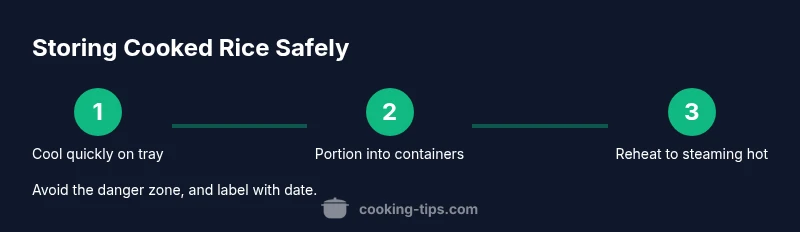
Effective cooling begins the moment the rice leaves the pan. Spread the rice on a shallow tray or baking sheet to maximize surface area and speed up cooling. Use a fan or room air to help bring temperatures down, but avoid leaving rice uncovered for long in the fridge. Once the grains reach roughly room temperature, portion into single-serving containers and add a light splash of water if they seem dry. Label with the date and contents, then seal tightly. Store the portions flat in the fridge so they chill evenly and are quick to reheat. Refrain from stacking heavy containers on top of each other while the rice cools, which can trap heat and slow cooling.
Reheating safely and evenly
Reheat rice only as much as you will eat at one time. Microwave or stovetop reheating should reach steaming hot throughout, with an internal temperature of at least 165°F (74°C). Add a tablespoon of water per cup of rice to restore moisture, then cover to trap steam. Stir halfway through reheating to ensure even heating and check that the center is hot. If using a skillet, heat gently, flipping occasionally to avoid scorching. Do not reheat rice more than once; reheating multiple times increases the risk of foodborne illness and textural degradation. Let hot rice rest a moment before serving; this helps even out temperature and improves texture.
Freezing cooked rice vs fridge storage
For longer storage, freezing cooked rice is a dependable option. Freeze in individual portions in airtight bags or containers, removing as much air as possible to prevent freezer burn. Label with date and use within a reasonable window for best quality. Thaw in the fridge overnight or reheat directly from frozen in the microwave with extra water and longer heating. Frozen rice retains quality better when the grains are separated before freezing, so portion into meal-sized amounts rather than freezing a big clump. When you don’t have time to freeze, you can store rice in the fridge for several days, but plan meals around consumption to minimize waste. The choice depends on your planning needs and the quantity you usually cook.
Common mistakes and how to fix them
Avoid leaving rice on the counter after cooking; the two-hour rule reduces safety risks. Don’t store rice in large clumps—smaller portions chill faster and reheat more evenly. Skip labeling or forget dates; you’ll lose track of freshness. Reheating rice without adding moisture can make it dry and uneven; a splash of water helps. Finally, never reheat rice multiple times; reheating once per serving minimizes quality loss and risk. If you notice an unusual smell, slimy texture, or discoloration, discard immediately. Following these fixes keeps leftovers safe and tasty, preventing waste and stress at busy mealtimes.
Quick-reference checklist and authority
Quick-reference checklist
- Chill promptly: cool within two hours from cooking to the fridge
- Use shallow airtight containers, flat if possible
- Store at 40°F (4°C) or below; label with date
- Plan reheating to reach 165°F (74°C) and moisten with water
- Freeze extras in portions if not using within 3-4 days
- When in doubt, trust smell, texture, and color as safety cues
Authority sources
- https://www.fsis.usda.gov/food-safety/safe-food-handling-and-preparation/food-safety-basics/leftovers
- https://www.cdc.gov/foodsafety/keep-food-safe.html
- https://www.fda.gov/food/buy-store-prepare-food/keep-food-safe The Cooking Tips team recommends following these guidelines to keep cooked rice safe and tasty for your family.
Tools & Materials
- Airtight containers (glass or BPA-free plastic)(Prefer 1-2 cup portions for easy reheating.)
- Cooling rack or rimmed baking sheet(Spread rice in a thin layer to speed cooling.)
- Refrigerator thermometer(Keep fridge at or below 40°F (4°C).)
- Labeling supplies (masking tape + marker)(Date and contents help track freshness.)
- Measuring cups or rice scoop(For portioning into even servings.)
Steps
Estimated time: 20-40 minutes
- 1
Cool rice quickly
Immediately after cooking, spread the rice in a single thin layer on a cooling tray or baking sheet. Use a fan or room air to speed cooling, keeping the rice out of direct heat. The goal is to bring the temperature down to near room temperature within about 20 minutes or less.
Tip: Spread in a thin layer to maximize surface area for fast cooling. - 2
Portion the rice
Once the rice is cool, portion into meal-sized servings (1/2 to 1 cup is common). Smaller portions chill more evenly and reheat faster. Avoid large clumps, which trap heat and promote uneven cooling.
Tip: Use 1-cup portions for easy reheating and portion control. - 3
Choose storage containers
Transfer portions to airtight containers and seal. Choose containers with flat bases so they chill quickly and stack neatly in the fridge. Label each container with the date.
Tip: Airtight seals minimize moisture loss and fridge odors. - 4
Arrange in the fridge
Place containers on a shelf where air circulates well; avoid stacking while still warm. Allow steam to escape before closing the door to prevent condensation buildup.
Tip: Keep rice away from raw foods to prevent cross-contamination. - 5
Refrigerate promptly
Refrigerate within two hours of cooking to minimize the time rice spends in the temperature danger zone. Check that the fridge is functioning and not overloaded for proper cooling.
Tip: Two-hour rule is a widely recommended safety baseline. - 6
Prepare for reheating
When you’re ready to eat, reheat only the portion you’ll use. Add a splash of water to restore moisture and reheat until steaming hot. Stir halfway through for even heating.
Tip: Moisture helps preserve texture during reheating. - 7
Consider freezing for longer storage
If you won’t eat the rice within a few days, freeze in portions. Freeze promptly, then thaw in the fridge or reheat from frozen with extra time.
Tip: Frozen rice retains quality longer when separated into portions.
Quick Answers
Can cooked rice be stored in the fridge?
Yes. Cooked rice can be stored in the fridge safely when cooled promptly, placed in airtight containers, and kept at or below 40°F (4°C). It should be consumed within a few days or frozen for longer storage.
Yes. Cooked rice can be kept in the fridge if you cool it quickly and store it in airtight containers.
How long does cooked rice stay fresh in the fridge?
Typically three to four days when stored properly. If you detect an off smell, slimy texture, or mold, discard. The exact window can vary by rice type and cooking method.
Usually about three to four days; trust smell and texture if you’re unsure.
Can I reheat rice in the microwave?
Yes. Reheat until steaming hot, about 165°F (74°C). Add a little water to restore moisture and stir halfway for even heating.
Yes, you can reheat rice in the microwave until steaming hot.
Should I freeze leftover rice?
Freezing is a great option for longer storage. Freeze in portions, use airtight packaging, and thaw in the fridge before reheating.
Yes, freezing leftovers is a good way to extend shelf life.
What is the danger zone for rice storage?
Keep cooked rice out of the 40°F (4°C) to 140°F (60°C) range as much as possible. Refrigeration below 40°F slows bacterial growth.
The danger zone is the range where bacteria grow fastest; keep rice cold.
Watch Video
Top Takeaways
- Cool quickly in a shallow tray to speed chilling
- Store in airtight portions for even cooling and quick reheating
- Reheat to steaming hot (165°F/74°C) and avoid multiple reheats
- Freeze leftovers in portions if you won’t use within 3-4 days