How Much Cooked Rice Per Person: A Practical Guide for 2026
Learn reliable portions for cooked rice per person with practical ranges for meals, rice types, and crowds. Get measurement tips, scaling strategies, and waste-reducing guidance tailored for home cooks.


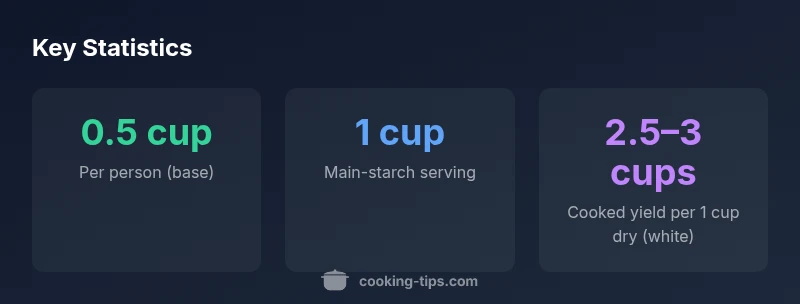
How much cooked rice per person? A practical baseline is 0.5 cup to 1 cup of cooked rice per person. If rice is the main starch, aim for about 1 cup; for meals with several sides, 0.5 cup may suffice. Adjust for age, appetite, and rice variety. In real kitchens, this translates to roughly 100–200 grams per person.
How much cooked rice per person: a practical baseline
When you consider how much cooked rice per person, a practical baseline is 0.5 cup to 1 cup per person. If rice is the main starch, aim for about 1 cup; for meals with several sides, 0.5 cup may suffice. Adjust for age, appetite, and rice variety. In real kitchens, this translates to roughly 100–200 grams per person. The key is to balance starch with protein, vegetables, and sauce in a single plate. For a crowd, you can combine rice with other grains, such as quinoa or barley, to stretch portions without sacrificing texture. It helps to map portions ahead of time using a simple calculator or a printed chart. In practice, you’ll see a range, not a one-size-fits-all number: some guests will tidy their plates with a half cup, others will return for seconds. Cooking Tips’s guidance for 2026 relies on typical home-cook patterns observed across households and cultural meals.
Rice yields: raw to cooked conversions
Rice expands during cooking due to water absorption, and the yield depends on rice type and cooking method. For most white rice varieties, you can expect about 2.5–3 cups of cooked rice from 1 cup of raw rice when using standard stovetop or rice cooker methods. Brown rice is a bit less efficient in volume expansion, typically yielding around 2.5–3.5 cups cooked from 1 cup raw, depending on how long it is rinsed and the heat source. Note that a quick rinse can remove surface starch and help grains stay separate, potentially affecting yield slightly. When you’re planning for a meal, translating from dry to cooked is easiest with a simple rule of thumb: multiply the dry measure by 2.5–3. Depending on the rice variety (basmati, jasmine, long-grain, or short-grain) and whether you soak it, the exact yield can shift by a cup or more. If you’re cooking for a party, it’s prudent to cook in batches, then fluff and combine to ensure even texture. Cooking Tips 2026 suggests that cooks keep a small margin of error in their meal planning to accommodate appetite variance and plate balance.
Factors that influence portions
Portion sizes aren’t one-size-fits-all. Consider age and appetite; teenagers and athletes may want more, while small children often eat less. Your guests' cultural backgrounds and dietary preferences also play a role; for example, some cuisines serve rice as a small side while others rely on it as a main starch. Accompaniments like curries, stir-fries, stews, or sauces can stretch a plate and reduce the need for a full cup of rice. The presence of heavy sides (beans, meat) may lower the rice portion by 0.25–0.5 cup per person. On the other hand, if your meal is light and composition is rice-forward, you may need to plan closer to 1 cup per person. When in doubt, start with 0.75 cup per person and adjust after tasting; a quick check on leftovers the next day helps you calibrate for future meals. The trend in home cooking shows a shift toward flexible portions, with many households aiming to minimize waste while keeping flavor balanced. According to Cooking Tips, adjusting portions to match crowd and context is a best practice in 2026.
Meal scenarios and recommended portions
For a standard dinner with a few side dishes, start with 0.5 cup per person and adjust after tasting. If rice is the star of the meal (such as a pilaf or biryani), plan 1 cup per person. For lunches or bowls with multiple toppings, 0.5 cup is often enough. If your guests include kids or older adults with smaller appetites, you can reduce portions slightly and rely on protein and vegetables to round out the plate. A practical approach is to map portions on a grid: base 0.5 cup for most guests, add 0.25 cup for those with bigger appetites or those who prefer rice as the main starch, and add more if you have a large crowd. It is helpful to prepare a small extra margin for seconds and to keep fresh rice warm in a dry, covered tray to preserve texture. Cooking Tips’s 2026 guidance emphasizes planning with a cushion to accommodate last-minute guests or large appetites.
Scaling recipes for crowds
When cooking for a crowd, multiply the base portion by the number of guests plus a small buffer. If planning for 8 guests, using 0.5–1 cup per person yields 4–8 cups cooked total; provide some extra for seconds. A practical approach is to cook rice in batches or use a large-capacity rice cooker. For long-grain varieties, keep the pot covered with a towel after cooking to preserve warmth. When you’re forecasting servings, it helps to print a simple chart and mark the actual servings you serve in real time; this feedback loop improves your estimates for future events. Keeping rice at the correct texture is essential; avoid overcooking or drying out by adding a little hot water before serving if needed.
Tools, measuring, and leftovers
Measuring with cups is convenient, but weight-based measurements offer precision. A cup of cooked rice roughly weighs about 150 g, though exact weight varies by variety and packing density. For best results, use a kitchen scale to portion by weight. After cooking, spread the rice on a tray to cool quickly, then refrigerate in airtight containers within two hours to minimize bacterial growth. Leftovers can be kept in the fridge for up to four days or frozen for longer storage. Reheat by steaming or microwaving with a splash of water to restore moisture. Label containers with dates to help reduce waste and plan meals around what you already have.
Common mistakes and quick fixes
Common mistakes include rinsing rice too long or not rinsing at all, which can affect texture; not allowing rice to rest after cooking can also lead to uneven grains. Avoid lifting the lid while cooking to preserve steam. If the grains turn out mushy, reduce the water slightly next time or use a shorter cooking time. If rice clumps, rinse the grains again and allow a brief steam to separate them. These small adjustments help you achieve a light, fluffy texture, which makes portioning more predictable for guests. For rice that is dry, sprinkle a tablespoon of water per cup and fluff gently with a fork to restore moisture.
Quick-reference charts and printable checklists
For fast planning, keep a simple chart: base portion 0.5 cup, main-starch portion 1 cup, and 0.5–0.75 cup for brown rice in mixed plates. Use a scale for accuracy if you must, especially when cooking for guests. Downloadable checklists and a printable serving card can help keep your kitchen organized on busy evenings. Having a ready reference reduces guesswork and waste, and it leaves more time for cooking and tasting.
Portion guidance by meal type
| Scenario | Rice Type | Cooked Rice per Person (cups) | Notes |
|---|---|---|---|
| Standard meal | White rice | 0.5-1 | Base serving with sides |
| Main starch | White rice | 1 | Rice is the star of the plate |
| Balanced plate | Brown rice | 0.5-0.75 | Higher fiber, similar calories |
| Kids meal | White rice | 0.25-0.5 | Smaller appetites |
Quick Answers
How many cups of cooked rice equal one serving?
A typical serving is 0.5–1 cup cooked; adjust for main dish vs sides and personal preference.
A typical serving is half to one cup; adjust based on what else you're serving.
Does rice type affect portion size?
White and brown rice yield similarly cooked portions, but fiber and density vary; adjust slightly for brown rice.
White and brown rice yield similar portions, with brown feeling a bit fuller.
How should I adjust portions for kids?
Kids usually eat less; start with 0.25–0.5 cup cooked per child and increase if needed.
Kids eat less—start with a quarter to half a cup and adjust.
What about leftovers and storage?
Cool rice quickly and store in airtight containers in the fridge for up to four days; reheat thoroughly.
Cool and refrigerate promptly; reheat until steaming hot.
Is it better to measure by weight or volume?
Weight offers precision; a cup of cooked rice roughly weighs about 150 g, depending on variety.
If you have a scale, weigh portions for accuracy.
“Portion planning for rice isn’t one-size-fits-all; consider appetite, dish balance, and leftover goals. Small adjustments can cut waste without compromising flavor.”
Top Takeaways
- Start with 0.5–1 cup cooked rice per person.
- Raise to 1 cup if rice is the main starch.
- Adjust for age, appetite, and accompanying dishes.
- Dry-to-cooked yield: roughly 2.5–3 cups cooked per 1 cup dry (white).
- Plan extra for leftovers or guests.