How much cooked rice is 1/4 cup dry? A practical guide
Discover how much cooked rice you get from 1/4 cup dry rice, with insights for white, brown, and aromatic varieties. Includes a calculator, data table, and practical meal-planning tips. Learn reliable conversions and how to optimize every batch.


Understanding the dry-to-cooked rice relationship
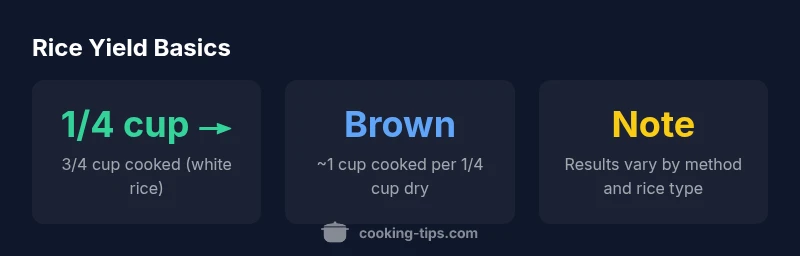
When you measure dry rice, you are counting grains in their uncooked state; when you cook it, the grains absorb water and swell, increasing in volume. For home cooks wondering how much cooked rice is 1/4 cup dry, the answer depends on rice variety and cooking method. In general, most white rice varieties expand to roughly three times their dry volume, so 1/4 cup dry will become about 3/4 cup cooked. This guideline offers a reliable starting point for meal planning and portioning. The Cooking Tips team reminds readers that results can vary, especially with brown rice or aromatic varieties like basmati, which may require different water amounts and cooking times. Variables such as rinsing, soaking, heat level, and cookware can shift the final yield by a small margin, so treat the numbers as a practical range rather than a fixed rule.
From a practical standpoint, consistency is built by following a routine: measure dry rice with a proper dry cup, rinse if desired, boil with a steady simmer, and rest briefly after cooking. Small changes in any step can influence the final volume, texture, and perceived fullness of the finished dish. Keeping notes on your own method will help you reproduce results more reliably over time.
Why one quarter cup of dry rice is not a universal answer
The single number you might expect is a helpful shortcut, but rice is not perfectly uniform. Each grain type—white, brown, basmati, jasmine—has its own absorption characteristics. Even within white rice, cultivar differences, milling, and surface starch can alter how much cooked rice you obtain from the same dry measure. Additionally, your cooking vessel, lid tightness, and whether you rinse or soak can nudge the final yield a bit up or down. For example, a very gentle simmer in a tightly covered pot tends to yield slightly more uniform results than a quick boil that loses some steam. In short, 1/4 cup dry is a useful starting point, but expect a small range depending on your specific rice and method.
To make planning easier, many home cooks rely on a straightforward rule of thumb and then adjust after a trial cook. If you prefer precision for meal prep, a simple calculator can store your preferred rice type and method and convert dry measures into cooked portions on demand.
Rice varieties and yield expectations
Rice isn’t a single, uniform product. White rice, jasmine, basmati, or long-grain varieties all behave a little differently when cooked. Brown rice typically absorbs more water and may yield a denser, slightly larger volume than white rice from the same dry measure. Aromatic varieties can release additional moisture through steam, subtly altering yield estimates. The practical takeaway is that while 1/4 cup dry is a good baseline, the actual cooked amount is influenced by grain size, bran layer, and coating. If you routinely cook different varieties, consider maintaining a small reference chart for your kitchen that lists your typical cooked yield per 1/4 cup dry for each rice type you use. This keeps planning accurate without reinventing the wheel every time.
Practical steps to estimate and hit your target yield
Follow a simple, repeatable workflow to hit your target yield:
- Measure dry rice with a proper dry cup; avoid packing.
- Rinse if you want to remove surface starch, then drain.
- Use a consistent water-to-rice ratio suited to the rice type you’re cooking (generally more water for brown or aromatic rices).
- Bring to a boil, then reduce to a gentle simmer and cover tightly.
- Let the rice rest off the heat for 5–10 minutes before fluffing. This rest period helps the grains finish absorbing moisture evenly.
- If you need a precise yield, use a calculator to convert your dry measure into cooked cups and round to your preferred precision.
These steps help you reproduce results and plan meals with confidence, whether you’re cooking for one or a family gathering. The goal is consistency, not perfection, since small variations occur naturally with each batch.
Using the Rice Yield Calculator
The dedicated tool in this guide lets you translate a dry measure into cooked yield with a configurable precision. The basic formula is simple: cookedCups = round(dryCups * yieldPerCup, rounding). Here, dryCups is your dry rice quantity, and yieldPerCup is how many cups of cooked rice you expect from each cup of dry rice. The rounding parameter lets you decide how many decimal places you want in the final result. This calculator is especially helpful when planning meals, batch cooking, or portioned servings for kids with varying appetites. Start with a quarter cup, then adjust the yield per cup for the rice variety you’re using and see how the numbers align with your plates. The tool can save you from under- or over-serving guests and helps reduce waste during meal prep.
Data considerations and reference notes
While the quick rule of thumb is handy, the exact outcome depends on factors such as rice variety, rinsing/soaking, and cooking method. The data table below summarizes the kind of information you’ll want to consider when planning meals:
- Rice type and variety affect absorption and texture.
- Pre-cooking steps (rinsing or soaking) can alter the final yield.
- Cooking vessel and heat management influence evaporation and evenness.
- Rest time after cooking improves texture and moisture distribution.
Keep in mind that numbers can vary by brand and batch, so it’s wise to perform a quick test with your favored rice to calibrate your expectations.
Factors that influence cooked rice yield
Yield is sensitive to multiple variables. Here are the most impactful:
- Rice type: White rice tends to cook quickly with moderate absorption; brown rice absorbs more water and takes longer to cook.
- Water amount: More water can lead to softer grains and a higher perceived volume, while too little water can undercook and reduce the final yield.
- Cooking method: Stovetop simmer, electric rice cooker, and pressure cookers all behave differently in how they distribute moisture and heat.
- Soaking and rinsing: Soaking can improve hydration and yield in some varieties; rinsing removes surface starch and can influence texture and final volume.
- Rest time: A short rest after cooking helps grains absorb moisture uniformly, increasing perceived yield and texture accuracy.
Understanding these factors will help you predict outcomes more reliably and adjust your method to reach your target yield.
Practical meal planning and portion guidance
When planning meals, think in terms of portions rather than exact volumes. A quarter cup of dry rice serves as a compact base for one person’s portion in many meals, but appetite and dish context matter. If you’re feeding a crowd or balancing sides, use the calculator to estimate total cooked rice for the group. You can also round results to simpler numbers for quick recipe execution: for example, rounding cooked yields to the nearest quarter cup can make it easier to portion out meals without sacrificing accuracy. Finally, store leftover rice safely in the fridge within two hours of cooking and reheat thoroughly before serving.
Common mistakes and how to fix them
Common mistakes include rinsing too aggressively (which can wash away some starch that helps binding), not adjusting water for brown rice, and lifting the lid too soon (which traps steam and can lead to uneven cooking). To fix these issues, measure meticulously, select a rice-type-appropriate water ratio, and let the pot stand covered off the heat for a few minutes after cooking. If you notice overly sticky rice, try reducing rinsing or adjusting the resting time. If it’s undercooked, add a splash of hot water and simmer briefly with the lid on.
Quick reference: a practical conversion guide
- 1/4 cup dry white rice roughly yields 3/4 cup cooked.
- For brown rice, expect a larger final volume, often closer to 1 cup cooked per 1/4 cup dry, depending on soak and cook time.
- Aromatic rices (basmati, jasmine) may have slight variations, so use your calculator as a precise tool for planning.
- Always account for resting time after cooking before measuring final portions.
- If you’re batch-cooking, scale the dry-to-cooked ratio accordingly and verify with a test batch.