How Much Cooked Rice Is 2 Cups Dry? A Practical Guide
Discover how many cups of cooked rice 2 cups of dry rice yield, with tips on rice types, rinsing, and cooking methods for reliable everyday meal planning.


Understanding the Dry-to-Cooked Rice Expansion
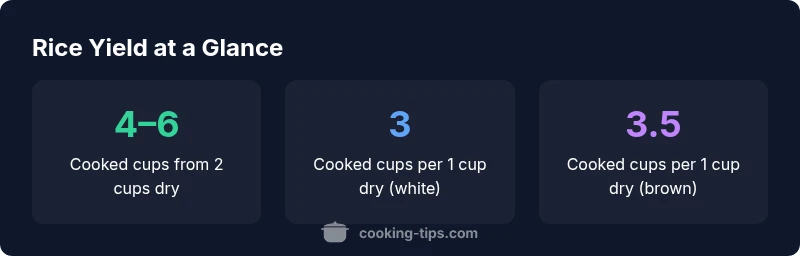
In this guide we tackle the common kitchen question: how much cooked rice is 2 cups dry. Dry-to-cooked expansion is not a fixed rule but a range influenced by the grain, rinse and soak steps, and the cooking method you choose. For most white rice varieties, 1 cup dry becomes about 3 cups cooked, so 2 cups dry often yields around 6 cups cooked. Brown rice and basmati can shift this a bit lower or higher depending on processing and age.
Yield Variations by Rice Type
Rice varieties behave differently when cooked. White rice typically expands to roughly three times its dry volume, while brown rice can reach about 3.5 times in many cases. Basmati and jasmine may land between these values. Cooking Tips analysis shows that the exact value depends on grain age, milling, and whether you rinse or soak. Plan for a range rather than a single fixed number and adjust based on your experience with the brand you use.
Measuring and Rinsing for Consistent Results
Begin with a reliable measuring method—use a standard 1-cup measure for dry rice and level off each scoop. Rinsing first removes surface starch that can make rice gummy, but it doesn’t dramatically increase the total cooked yield. If you soak rice, it may shorten cooking time but typically preserves yield. After cooking, let the rice rest off the heat for a few minutes before fluffing to prevent clumping.
Quick Calculations: How 2 Cups Dry Translates
A simple way to estimate is to multiply the number of dry cups by the yield per cup. If you expect about 3 cups cooked per 1 cup dry, 2 cups dry would yield about 6 cups cooked. If you use a brown rice yield of 3.5 cups per dry cup, 2 cups dry would yield about 7 cups. These figures assume standard water-to-rice ratios and typical cooking methods.
Methods: Stove Top, Rice Cooker, and Instant Pot
Stovetop cooking usually requires a precise water-to-rice ratio; rice cookers and Instant Pots automate absorption, which can slightly influence the final texture but not the overall yield. With 2 cups dry, you’ll likely see roughly the same range across methods, though water amount, pot size, and idle time can shift texture and the amount of "packed" rice in a cup.
Practical Scenarios and Meal Planning
If you anticipate serving four people at a dinner and you have 2 cups dry, plan on 6 cups cooked to be safe, with leftovers for later. For a week of lunches, cook 4 cups dry to yield about 12 cups cooked, enough for several bowls. Include a protein and some vegetables to round out meals. Label leftovers and store in shallow containers to cool quickly.
Common Mistakes and How to Fix Them
Common errors include lifting the lid during cooking, which can interrupt absorption, and using too little water, which leads to undercooked grains. Conversely, over-washing can remove nutrients and impact texture. If the rice is sticky or gummy, reduce rinsing and adjust the water ratio slightly in future batches. Letting the rice rest helps the grains finish absorbing moisture evenly.
Food Safety, Storage, and Reheating
Cooked rice should be cooled rapidly and stored in the fridge within two hours. Consume leftovers within 3–4 days, or freeze for longer storage. Reheat with a splash of water to restore moisture and fluffiness. When reheated, check that the internal temperature reaches a safe level before serving.