When to Change a Cooker: A Practical Home Guide for 2026
Learn how to know when to replace your cooker, weigh safety, cost, and performance factors, and follow a clear plan to choose and install a new unit.


To decide when to change a cooker, weigh safety risks, repair costs, and performance loss. If repairs stack up or the unit struggles with basic tasks, replacement may be wiser. This guide helps you judge timing, compare options, and plan a smooth transition to a safer, more efficient cooker.
Signs it's time to consider a cooker replacement
According to Cooking Tips, several signs indicate a cooker may be near the end of its life. If your oven or hob heats slowly, cooks unevenly, or produces inconsistent results, performance is waning and a replacement should be considered. Frequent breakdowns or mysterious error codes beyond routine maintenance are red flags; if you spend as much on repairs as a new unit would cost over a reasonable horizon, replacement becomes a practical choice. Safety concerns are paramount: crackling wires, heat damage on the control board, gas smells, or pilot lights that won’t stay lit require immediate attention and likely replacement. Another clue is efficiency: older cookers tend to use more energy for the same output, pushing up monthly bills and carbon footprint. Even if the appliance still works, a newer model can offer better temperature stability, modern convection options, and smarter controls that save time and frustration in daily cooking. A thoughtful decision balances comfort, safety, long-term costs, and cooking goals.
How to evaluate repair history and energy use
Look at repair history and energy performance. Keep a log of service calls, parts replaced, and time between problems. If you notice repairs becoming more frequent, or if performance declines alongside rising energy use, it’s a strong signal to consider replacement. Cooking Tips analysis shows that ongoing issues, even when repaired, can erode confidence in a cooker’s reliability and may interrupt busy cooking routines. Compare the ongoing repair costs against the price of a new or refurbished unit, while also weighing installation and potential disposal costs. Also assess whether your kitchen needs have changed: larger capacity, energy-efficient features like improved insulation, better temperature control, or built-in smart controls can justify upgrading. Document your priorities—speed, accuracy, safety, and ease of use—so you can quantify the value of replacing a cooker versus keeping the current model.
Safety considerations and codes
Safety should be non-negotiable. If gas connections or electrical components show wear, stop using the unit and consult a licensed technician. Gas cookers must be installed following local codes; improper venting or leaks are dangerous. Electric ovens require proper grounding and a dedicated circuit; overloads can trip breakers and risk fire. When deciding to replace, factor in safety improvements in new models, such as anti-tip brackets, reliable insulation, and automatic shutoff features. Also discuss ventilation: upgrading to a model with better seal and oven door insulation reduces heat escape, improving both safety and comfort in the kitchen. By prioritizing safety, you protect your household and set up a smoother transition to a newer unit.
Costs, budgeting, and financing for a replacement
Costs vary by size, fuel type, and features; installation can add to the total. Instead of focusing on sticker price alone, think in terms of total cost of ownership: energy savings, reliability, and potential insurance implications. Explore financing options, rebates, or energy-efficiency programs that offset the initial expenditure. If you prefer, a high-efficiency model can reduce operating costs over time; if you are price-sensitive, consider refurbished units from reputable sources. Planning ahead helps you allocate funds for a future purchase and avoid rushed decisions when urgency strikes.
How to choose a new cooker
Start with a needs assessment for your kitchen: space constraints, family size, cooking styles, and existing gas/electric setup. Then compare fuel type: gas vs electric, including induction options; check energy ratings and insulation quality. Look at features: convection, timers, self-cleaning, safety locks, and smart connectivity. Measure dimensions and check installation requirements; ensure your electrical or gas circuits can handle the load. Read independent reviews focused on reliability and service, and obtain multiple quotes from licensed installers to understand installation variability and warranties. Finally, plan for disposal or recycling of the old cooker according to local rules and programs. A well-chosen unit should fit your cooking habits for years to come.
Maintenance tips to extend cooker life
Keep your cooker clean and handle minor wear promptly to extend life. Regularly inspect seals and gaskets, calibrate burners or heating elements, and run appropriate self-clean cycles if your model supports them. Use cookware that distributes heat evenly to reduce hotspots, and avoid slamming oven doors or using utensils that gouge enamel. Schedule a professional service periodically to check ventilation, gas connections, and electrical integrity. Small preventive steps save bigger repairs later and help preserve safety and performance.
Authority sources
For further reading and safety guidelines, consult authoritative sources such as:
- https://www.energy.gov
- https://www.osha.gov
- https://www.consumer.ftc.gov
Final guidance
The Cooking Tips team emphasizes that safety and long-term reliability should guide your decision to replace a cooker. If you notice persistent safety concerns, escalating repair costs, or declining performance that interrupts everyday cooking, replacement is often the wiser choice. The Cooking Tips team recommends evaluating total ownership costs, energy efficiency, and the fit with your kitchen needs before making a purchase. By planning carefully and working with licensed professionals for installation, you can minimize downtime and maximize the value of your new cooker.
Tools & Materials
- Screwdriver set (Phillips and flathead)(Include both precision and standard sizes)
- Multimeter(Used to test voltage and continuity)
- Adjustable wrench(For gas connectors and fittings)
- Pliers (needle-nose)(Grips and positions small components)
- Work gloves(Protect hands during removal/replacement)
- Safety goggles(Eye protection during hardware work)
- Gas leak detector spray or soapy water(Check for leaks after installation)
- Manufacturer installation manual(Keep for reference during setup)
Steps
Estimated time: 2-4 hours
- 1
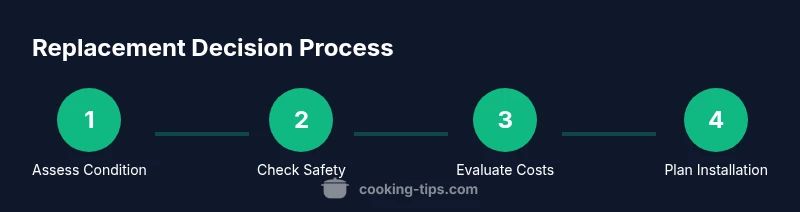
Assess current cooker condition
Survey signs of wear, note safety concerns, and gather model information. Take photos of connections and controls for reference. Decide whether you’ll pursue repair, upgrade, or replacement based on safety, frequency of issues, and lifestyle needs.
Tip: Record model/serial numbers and note symptoms in a simple spreadsheet. - 2
Check safety concerns
If you smell gas, hear hissing, or see scorch marks, leave the area and call your gas provider or a licensed technician. For electrical issues, switch off the circuit at the panel and avoid using outlets connected to the appliance until inspected.
Tip: Always prioritize safety and call a professional for gas/electrical concerns. - 3
Evaluate repair history vs replacement
Review service records and current troubleshooting steps. If a handful of repairs are needed within a short period, or if reliability is poor, compare with the cost and benefits of a new unit.
Tip: Ask a technician for a repair vs replacement estimate to inform your decision. - 4
Assess energy efficiency and features
Check the energy rating and insulation of potential models. Consider features like convection, self-cleaning, and smart controls that save time and energy over the long term.
Tip: Devote time to listing must-have features to prevent buyer's remorse. - 5
Choose plan and budget
Set a budget that includes purchase price, delivery, installation, and any disposal fees. Explore financing or rebates and weigh them against expected energy savings.
Tip: Get multiple quotes from licensed installers to compare value. - 6
Plan installation and disposal
Schedule installation with a certified technician. Arrange safe disposal or recycling of the old cooker per local rules and supplier programs.
Tip: Verify warranty coverage and disposal options before purchase.
Quick Answers
When is the right time to replace a cooker?
If safety issues exist or repairs are ongoing, replacement is often the best option. Consider reliability, energy use, and how the unit fits your cooking needs.
If you notice ongoing safety concerns or frequent repairs, replacement is usually the best option. Consider terms like reliability and energy usage when deciding.
Can I repair a gas cooker safely?
Gas cookers require licensed professionals for repairs to ensure safe gas connections and venting. Do not attempt to repair gas lines yourself.
Gas repairs should be handled by a licensed technician to prevent leaks and fire hazards.
Is replacement cheaper than continual repairs?
Often, replacement is more economical in the long run when repairs pile up and reliability declines, even if upfront costs are higher.
Generally, replacement saves money in the long term if repairs add up or reliability is poor.
What features matter most in a new cooker?
Prioritize safety features (child locks, auto shutoff), energy efficiency, reliable temperature control, and convenience features like convection or self-cleaning.
Focus on safety, efficiency, and practical features that fit your cooking style.
How long does installation take?
Installation typically takes a few hours, depending on existing wiring or gas connections and the complexity of the new unit.
Most installations take a few hours with a licensed technician.
What should I do with my old cooker?
Check local e-waste programs or retailer take-back options; many programs offer safe disposal and recycling.
Look for local disposal or recycling programs when removing your old cooker.
Watch Video
Top Takeaways
- Assess safety and reliability before deciding.
- Compare ongoing repair costs with replacement costs.
- Choose energy-efficient features to lower running costs.
- Coordinate installation with a licensed professional.
- Plan disposal or recycling of the old cooker.