What Temperature to Cook Eggs: A Practical Guide
Discover precise temperatures for soft, medium, and fully cooked eggs, how to measure them, and safety tips to perfect egg dishes every time.


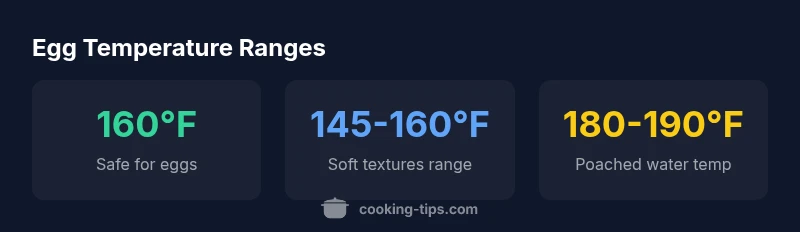
To safely cook eggs, aim for an internal temperature of 160°F (71°C) for eggs and egg dishes. For softer textures, target 145-160°F (63-71°C), but avoid below 140°F to minimize safety risks. Use a thermometer for precision, especially with poached, soft-boiled, or baked eggs. A quick check right after cooking helps confirm doneness; temperature matters for both safety and texture.
Why Temperature Matters for Eggs
Eggs are a versatile, comforting staple, but their safety and texture hinge on precise heat. The temperature you use determines whether the yolk stays delightfully runny, turns jammy, or firms completely. The Cooking Tips team emphasizes that consistent results come from monitoring internal temperature, not just timing, because egg sizes and starting temperatures vary. For home cooks, understanding temperature helps you dial in doneness while reducing the risk of foodborne illness. In practical terms, knowing the exact temperature lets you tailor recipes—from poached eggs with a silky center to sturdy scrambled eggs—without guessing.
Safe Internal Temperature for Eggs and Egg Dishes
Safety guidelines for eggs are clear: reach an internal temperature of 160°F (71°C) for eggs and any dish that combines eggs, such as frittatas or quiches. This baseline minimizes Salmonella risk and ensures the yolk and whites have achieved a safe level of doneness. Some methods aimed at delicate textures may operate at lower temperatures during cooking, but the final product should be held or finished so that the 160°F mark is met. For reference, Cooking Tips analysis notes that accurate thermometer use correlates with consistent safety outcomes across home kitchens. When in doubt, finish dishes with a brief, targeted heat to reach the safe threshold.
Temperature Targets for Popular Egg Preparations
Different preparations demand different temperature targets to hit the ideal texture. Soft-boiled eggs, where the yolk remains fluid, typically sit in a temperature window around 150-160°F (65-71°C). For fully firm yolks, hard-boiled eggs approach 170-180°F (77-82°C); eggs with puffy whites benefit from higher end of this range. Poached eggs are gently cooked in water around 180-190°F (82-88°C) to keep the whites tender while the yolk stays runny or softly set. Egg dishes like omelets and scrambled eggs should reach about 160-165°F (71-74°C) to balance safety with creamy texture. These ranges help standardize results across stove, oven, and air-fryer methods.
How to Measure Temperature Accurately
A reliable instant-read thermometer is your best friend for eggs. Insert into the thickest part of the egg or the center of the dish to verify the temperature. Calibrate your thermometer periodically, and avoid relying solely on time alone, especially for small or very large eggs. For poached eggs, use a thermometer to keep water in the 180-190°F range and monitor gently to prevent the egg from dispersing. When cooking in the oven or air fryer, use a probe or a thermal camera if available, and check the final internal temperature of the dish to ensure safety.
Temperature Considerations for Different Cooking Methods
Stovetop, oven, and microwave methods each have unique temperature dynamics. On the stove, keep simmering water for poached eggs at 180-190°F and monitor closely. For pan-fried eggs, aim for a surface temperature that allows the whites to set without scorching, while the yolk temperature can remain variable depending on preferred doneness. In the oven, bake egg casseroles until the center hits ~160-165°F. Microwave cooking offers speed but can create uneven heating; cover and stir if possible, and verify even heating with a thermometer. Across methods, robust safety hinges on reaching 160°F at the center, especially for dishes containing multiple eggs.
Practical Timelines: From 3-Minute Soft Eggs to 15-Minute Frittata
Soft eggs require short cooking windows: soft-boiled may take 4-6 minutes after water reaches a rolling boil, with yolks that are rich and slightly runny. Poached eggs typically finish within 2-4 minutes in gently simmering water. Scrambled eggs come together in 3-5 minutes, depending on heat and volume. Frittatas or quiches take longer and finish when the center hits about 160-165°F. Use an instant-read thermometer to confirm center temperature, especially for larger batches.
Troubleshooting Common Temperature Mistakes
If your eggs taste rubbery or the yolk is chalky, you may have overcooked them or heated them too quickly. Conversely, if whites remain translucent and the yolk is dangerously undercooked, you’ve undercooked the dish. Always preheat to the appropriate temperature and keep a thermometer handy. Adjust heat gradually and test a small sample before serving. When possible, rely on temperature rather than time alone to determine doneness, and plate promptly to avoid residual carryover cooking.
Quick Recipe Guides with Temperature Benchmarks
- Poached eggs: water at 180-190°F; cook until whites are set and yolk reaches your desired consistency, typically 2-4 minutes. The final internal temperature should be around 145-160°F if you were to measure the yolk; remember, safety standards require holding to 160°F for egg dishes.
- Soft-boiled eggs: boil, then simmer at 150-160°F to maintain a runny to slightly set yolk. Time is your friend here; 4-6 minutes can yield a creamy center.
- Scrambled eggs: whisk to incorporate air, then cook until center hits about 160-165°F for safety and a creamy texture.
- Omelets and baked eggs: aim for an internal temperature of 160-165°F; finish in the oven if necessary to avoid overcooking the exterior while the interior remains underdone.
Putting It All Together: A Quick Checklists for Home Cooks
Use a thermometer for confidence, start with 160°F as your safety baseline, and adjust texture by a few degrees within the 145-165°F range depending on the dish. Remember to calibrate your thermometer regularly and keep the cooking environment steady—whether on the stovetop, in the oven, or in a microwave.
Temperature targets for common egg preparations
| Egg Method | Target Temp (°F) | Target Temp (°C) | Notes |
|---|---|---|---|
| Soft-Boiled Eggs | 150-160 | 65-71 | Runny to slightly set yolk; adjust time to texture |
| Hard-Cooked Eggs | 170-180 | 77-82 | Fully set white and yolk; longer cooking increases firmness |
| Poached Eggs (in water) | 180-190 | 82-88 | Gentle simmer; avoid vigorous bubbles that break the egg |
| Egg Dishes (omelets, frittatas, quiche) | 160-165 | 71-74 | Target internal temp for safety; finish with texture preference |
Quick Answers
What is the safest internal temperature for eggs?
Eggs and egg dishes should reach 160°F (71°C) to ensure safety from Salmonella. Some recipes for delicate textures may use lower temps during cooking, but the final product should meet the 160°F safety threshold. Use a thermometer to verify.
For safety, cook eggs to 160 degrees Fahrenheit.
Can I cook eggs without a thermometer?
You can cook eggs without a thermometer by following trusted timing guides, but results vary with egg size and starting temperature. A thermometer improves reliability and safety, especially for egg dishes served to vulnerable groups.
Yes, but a thermometer makes it easier to be sure.
What temperature should poached eggs be cooked at?
Poached eggs are cooked in water kept at about 180-190°F (82-88°C). This gentle heat helps set the whites while keeping the yolk soft or runny, depending on time. Always verify doneness if you’re aiming for precise textures.
Poach in water around 180-190°F.
Is it safe to eat raw or runny eggs?
Raw or undercooked eggs carry a risk of Salmonella. Pregnant people, young children, older adults, and those with weakened immunity should avoid undercooked eggs. If you must, consider pasteurized eggs.
Raw eggs can be risky; avoid for at-risk folks.
How do I know when a fried egg is done?
Fried eggs are typically done when the whites are fully set and the yolk is cooked to your preference. If in doubt, reach an internal temperature in the safe range with a thermometer, especially for dishes mixed with other ingredients.
Cook until white is set and yolk to your liking.
“Precision matters when cooking eggs; using a thermometer helps you hit both safety and texture targets consistently.”
Top Takeaways
- Target 160°F as the safety baseline for eggs
- Use an instant-read thermometer for precision
- Adjust yolk texture within 145-160°F ranges
- Poach eggs in 180-190°F water for best results
- Verify doneness by temperature, not time alone