What is a Line Cook vs Chef? A Thorough Comparison
Explore the differences between line cooks and chefs, including roles, daily duties, training paths, and career trajectories to help aspiring culinarians choose their path.


Line cooks focus on station-level cooking, following recipes and executing dishes under supervision. Chefs oversee kitchen operations, menu development, staffing, and budget while setting standards for quality. The line cook vs chef distinction matters for daily duties, training, and long-term career growth in professional kitchens.
Understanding the Core Difference: Line Cook vs Chef
To answer what is a line cook vs chef, it helps to distinguish the scale of responsibility, the locus of decision-making, and the expected outcomes. A line cook is a trained cook who works at a particular station—grill, sauté, pantry, or expo—within a fast-paced service. A chef, by contrast, holds a broader leadership role that shapes the kitchen's direction, from menu planning to staffing and budget oversight. In many kitchens, the distinction also aligns with formal titles: line cook, sous chef, and executive chef. Across different regions and restaurant types, the responsibilities shift, but the core difference remains a question of scope: execution at the station versus leadership across the kitchen.
According to Cooking Tips, understanding this gap helps aspiring cooks map a practical path: you can enter kitchens quickly as a line cook and learn the craft while you decide whether you want to grow into a leadership role, or pursue a broader culinary and managerial career as a chef. The Cooking Tips team notes that career trajectories vary by region, restaurant concept, and individual ambition, but the fundamental split between hands-on work and strategic oversight is universal.
Comparison
| Feature | Line Cook | Executive Chef |
|---|---|---|
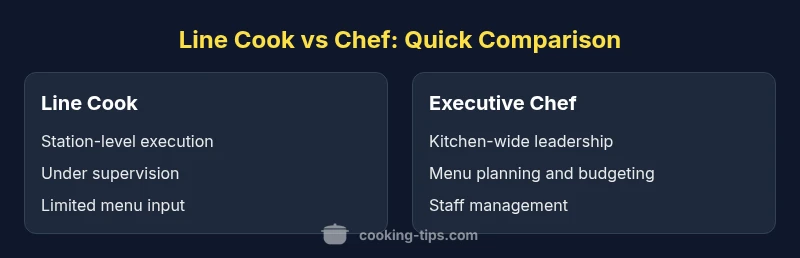
| Primary role and scope | Performs station-level prep and execution under supervision | Leads kitchen-wide operations, menu strategy, and overall responsibility |
| Supervision and team leadership | Receives direction from station chefs and peers | Manages sous chefs, line cooks, and other staff; sets staffing and workflow |
| Menu involvement | Follows recipes; limited input on menu changes | Drives concept development, recipe creation, tasting, and pricing decisions |
| Decision-making authority | Operational decisions at the station level | Strategic decisions affecting menu, costs, and brand direction |
| Hours and service pace | Long shifts during service; very high daily pace | Varied hours with emphasis on planning, admin, and leadership |
| Training path | On-the-job learning; apprenticeships common | Culinary education plus extensive kitchen leadership experience |
| Impact on revenue and quality | Ensures consistency and timely plating | Shapes menu quality, portion control, and profitability |
| Creativity and influence | Moderate creativity within established recipes | High influence on cuisine style, plating identity, and standards |
Benefits
- Hands-on cooking experience and rapid skill development
- Clear, observable path from station work to leadership
- Immediate impact on service and guest experience
- Opportunities to advance through merit and performance
- Experience transferable across restaurant formats
Cons
- Long hours, physical strain, and high service stress
- Line cooks may have limited initial creative input
- Advancement can depend on kitchen culture and openings
- Pay growth can be gradual without formal leadership roles
Executive chef path offers broader influence and leadership; line cook path offers faster entry and hands-on mastery.
If you want to shape a kitchen’s direction and run operations, aim for the chef track. If you prefer hands-on cooking and rapid entry into the kitchen, start as a line cook and build leadership skills later.
Quick Answers
What is the primary difference between a line cook and a chef?
The line cook focuses on station-level execution and recipe adherence, while a chef oversees the entire kitchen, including menu development, staffing, and budgets. The roles differ in scope, responsibility, and career trajectory.
Line cooks are hands-on at a single station; chefs lead the whole kitchen and shape the menu.
Is a line cook the same as a sous chef?
No. A line cook works at a station under supervision, whereas a sous chef is a leadership role directly beneath the executive chef, supervising the line cooks and coordinating prep. The sous chef acts as a bridge between staff and upper management.
No—line cooks do the day-to-day cooking, sous chefs manage teams and operations.
How long does it take to become a chef?
There is no single timeline. It depends on training, opportunities, and personal goals. Many chefs accumulate years of kitchen experience, earn formal culinary credentials, and progressively assume larger leadership roles before becoming executive chefs.
It varies, but growth usually happens over several years with steady leadership opportunities.
Can line cooks influence menu design?
Line cooks can influence menus through hands-on feedback, testing new dishes, and contributing ideas during tastings, but final decisions typically rest with the executive chef. Advocacy and demonstrated consistency can elevate a line cook’s influence.
They can suggest ideas, but the final menu is usually set by the chef.
What skills help advancement in a kitchen?
Key skills include leadership, communication, recipe costing, time management, and a solid foundation in technique. Demonstrated reliability during peak service and the ability to train peers often accelerates promotion.
Focus on leadership, reliability, and solid cooking skills to move up.
Do every restaurant use the same titles?
Titles vary by region and concept. Some places use Field/Line Cook, Station Chef, Sous Chef, or Head Chef. The responsibilities typically scale with the title, but local norms influence the exact duties.
Titles differ by kitchen, but the roles are usually similar in scope.
Top Takeaways
- Line cooks execute at the station under supervision.
- Chefs lead menus, teams, and kitchen strategy.
- Career progress depends on leadership opportunities and training.
- Choose based on appetite for leadership vs. hands-on cooking.
- Both paths demand discipline, teamwork, and resilience.