Is a Line Cook the Same as Chef de Partie? A Practical Comparison
A detailed, analytical comparison of line cook and chef de partie roles, exploring duties, hierarchy, training, and career paths to help home cooks and aspiring professionals navigate kitchen titles.


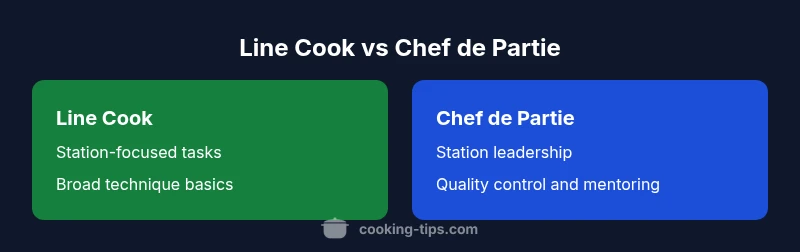
Line cook and chef de partie are not the same role. A line cook typically works at a single station, executing recipes and plating with speed. A chef de partie leads a station, assigns tasks, and ensures quality across the menu. The distinction matters for training, supervision, and career progression in most kitchens.
Understanding the Roles: Is line cook the same as chef de partie?
In many kitchens, readers ask is line cook the same as chef de partie. The short answer is no—these are distinct positions within a professional brigade. A line cook typically works at a single station, executing recipes, managing mise en place, and delivering plates during service with speed and consistency. A chef de partie, by contrast, leads a station’s operation, assigns tasks, checks quality, and coordinates with other stations to ensure the menu stays on track. The two roles share foundational cooking skills—knife work, heat control, seasoning, and timing—but the scope of responsibility, leadership expectations, and training needs diverge as you move up the ladder. For home cooks, recognizing this difference helps set expectations when reading job postings or when practicing for a new role in your own kitchen. The distinction becomes more pronounced as teams grow and the menu becomes more complex.
Hierarchy and Career Path: Where these roles fit in the Brigade
Kitchen hierarchies revolve around a brigade system where titles signaling responsibility guide learning and promotion. The line cook is often the entry point, gaining broad station experience and refining core techniques. The chef de partie sits at a specific station and shoulders station leadership, quality control, and a degree of mentorship for junior cooks. Between these roles, other positions such as sous-chef and head chef coordinate across stations, menus, and service flow. The exact ladder varies by country, restaurant concept, and kitchen size, but the central idea remains: more responsibility, accountability, and decision-making power accompany the move from line cook to chef de partie. Aspiring cooks benefit from targeting training in station management, recipe standardization, and cross-station communication to prepare for advancement.
Core Duties on the Line: Day-to-Day Tasks
On a typical line, duties revolve around mise en place, cooking, plating, and speed. A line cook rehearses recipes, monitors temperatures, and ensures consistency across servings. Turnover during service is high, so attention to detail and the ability to adapt quickly are essential. Collaboration with teammates on adjacent stations is common, and communication with the expo or pass during service is critical to maintain flow. The role requires resilience under heat, a calm approach to high pressure, and the habit of cleanliness and safety. While some kitchens emphasize solo execution, others incorporate teamwork rituals such as short handoffs, pre-service checklists, and post-service reviews. Across cultures and cuisines, the line cook's core skills—heat control, aromatics, timing, and plating—remain foundational to the kitchen's success.
Skill Sets and Training: What’s Required to Progress
Progression from line cook to chef de partie depends on mastering both technique and leadership. For the line cook, practitioners should build a broad toolkit: knife proficiency, sauce fundamentals, protein handling, and consistent plating. The chef de partie adds station leadership, workflow planning, and quality assurance. Training for this role often includes mentoring, standard operating procedures, and understanding how your station contributes to overall menu coherence. Formal culinary schooling or apprenticeships can help, but many kitchens value hands-on learning, feedback, and the willingness to take ownership of a station. Remember that kitchens vary widely: some prioritize formal credentials, others prize on-the-job reliability and the ability to train peers. In any case, the expectation is steady improvement over time and a demonstrated capacity to guide others while upholding standards.
Supervision, Leadership, and Team Dynamics
Leaders at a station-level role exercise influence through example and clear communication. The chef de partie often becomes a go-to resource, coaching junior cooks, assigning tasks, and stepping in during emergencies. The line cook typically follows direction and maintains rhythm, but in many kitchens, leadership emerges informally: taking initiative to solve problems, sharing tips, or keeping the station organized. Team dynamics vary with kitchen culture—some emphasize mentorship, others stress rapid execution. Effective leadership hinges on listening, adapting to staff strengths, and aligning with the head chef's culinary vision. While a formal title matters, the day-to-day reality often centers on how you organize, motivate, and support teammates to deliver consistent plates. The ability to guide others, not just perform tasks, distinguishes a chef de partie from a line cook in most established brigades.
Variation by Kitchen Size and Cuisine
Kitchen size and concept greatly influence how these titles are used. In large, high-end establishments, the brigade is more formal, with explicit station leaders and defined prospects for advancement. In smaller kitchens or casual venues, titles may blur, and a capable line cook can assume leadership duties when necessary. Cuisine type also shapes role expectations: pastry stations often use different ladders than savory lines, while sushi or dim sum kitchens may feature specialized roles with unique leadership responsibilities. These differences emphasize that the line cook and chef de partie are not universal templates; instead they reflect local practice, staffing, and service rhythm. When you interview, ask about station responsibilities, supervision structure, and how promotions are earned, because those details vary widely across kitchens.
Overlaps and Transitions: When a Line Cook Becomes a Chef de Partie
Transitions happen most often through demonstrated reliability, leadership, and a track record of consistent outputs. In some kitchens, the line cook may rotate into a chef de partie role during a busy period or as a formal promotion after a period of mentorship. The overlap can also occur in smaller venues where the same person handles both roles. Key signs of progression include taking ownership of a station’s menu items, guiding junior cooks through prep and service, and contributing to menu planning or quality control discussions. If you are aiming for the chef de partie role, seek opportunities to lead a small project, train new staff, or help refine a station’s standard operating procedures. By building these leadership experiences, you demonstrate readiness for the next rung on the brigade ladder.
Career Planning and Resume Tips
To reflect these roles in resumes and interviews, be precise about your station responsibilities and leadership experience. For line cook positions, emphasize speed, accuracy, and reliability on the pass, as well as consistency in plating. For chef de partie roles, highlight station ownership, training others, enforcing quality standards, and collaboration with other stations to ensure smooth service. Use action verbs such as led, supervised, implemented, and standardized to convey leadership. When describing your experience, connect your achievements to menu quality, guest satisfaction, and waste reduction. Tailor your resume to job postings that mention brigade structure, station leadership, or station-specific skills. Finally, be ready to discuss how you would handle a difficult service, how you train teammates, and how you sustain consistency under pressure.
Comparison
| Feature | Line Cook | Chef de Partie |
|---|---|---|
| Scope of responsibility | Performs station-level tasks and plating | Leads a station and coordinates tasks across related roles |
| Supervision | Reports to station lead or sous-chef | Mentors junior cooks and ensures consistency |
| Menu discipline | Executes prescribed recipes and timing | Ensures adherence to technique and recipe specs |
| Training focus | Fundamentals of heat, timing, plating | Station-specific techniques and leadership skills |
| Career path | Entry-level, common in many kitchens | Mid-level role on the brigade ladder |
| Workload during service | High-speed execution across tasks | Load is distributed and monitored for the station |
Benefits
- Clear pathway to higher kitchen roles
- Hands-on station expertise builds solid fundamentals
- Useful for aligning training across teams
Cons
- Role definitions can vary by country and kitchen size
- Titles don't always reflect actual responsibilities
- Advancement may depend on kitchen demand
Not the same role; chef de partie is typically a higher-responsibility, station-lead position that can include supervising others, whereas line cook is more execution-focused.
The distinction matters for hiring, training, and progression in most kitchens. The Cooking Tips team recommends recognizing the difference for accurate role descriptions and growth planning.
Quick Answers
What is the chef de partie responsible for in a professional kitchen?
A chef de partie leads a specific station, oversees junior cooks, and ensures quality control for that station. They coordinate with other stations to maintain service flow and menu consistency.
A chef de partie runs a station, mentors juniors, and keeps the kitchen on track during service.
Can a line cook be promoted to chef de partie in a small kitchen?
Yes. In smaller kitchens, roles often blend, and a capable line cook may take on station leadership responsibilities as part of a promotion or during a busy period.
In small kitchens, line cooks can move into station leadership when opportunities arise.
Do line cooks ever supervise other staff?
Some line cooks supervise during service or act as informal leads, but formal supervision depends on kitchen policy and size.
Sometimes, yes, but it varies by kitchen.
How does training differ between the two roles?
Chef de partie training emphasizes leadership, station discipline, and quality control; line cook training focuses on technique, speed, and reliability.
Leadership and station discipline matter more for chef de partie.
What should I put on a resume to reflect these roles?
Highlight station ownership, training others, enforcing quality standards, and cross-station collaboration. Tailor to postings that mention brigade structure.
Show leadership, station ownership, and collaboration on your resume.
Are there regional differences in the titles for these roles?
Yes. Different regions and restaurants may label roles differently, even when the duties are similar.
Terminology varies by region and kitchen.
Top Takeaways
- Line cook and chef de partie are distinct roles with different scopes
- Chef de partie leads a station and mentors juniors
- Progression depends on kitchen size, country, and cuisine
- Ask about station duties and leadership expectations during interviews
- Tailor resumes to brigade-focused job postings