What is a Cook vs Chef? A Practical Kitchen Comparison
Explore the practical differences between cooks and chefs, including training, responsibilities, and career paths. A clear, analytical side-by-side guide to help home cooks and aspiring professionals navigate kitchen roles.


What is a cook vs chef? In kitchens, the distinction hinges on training, scope, and leadership. A cook tends to execute recipes with consistency, while a chef develops menus, mentors staff, and sets standards. This comparison breaks down training paths, daily responsibilities, and career trajectories. By the end, you’ll know which role aligns with your skills and goals.
What is a cook vs chef? Definition and core distinction
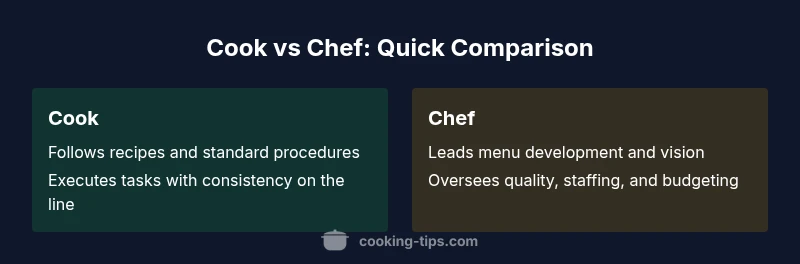
What is a cook vs chef? In modern kitchens, the terms describe distinct scopes of responsibility, training, and influence. A cook typically follows established recipes, maintains station organization, and ensures consistency in a single kitchen line. A chef, by contrast, tends to be a leader who designs menus, sets quality standards, and oversees the entire kitchen operation. As readers search for a clear answer to what is a cook vs chef, it's important to separate myth from practice. According to Cooking Tips, the core difference lies in scope and leadership rather than title alone. The cook is the doer who keeps the service running, while the chef is the strategist who translates vision into daily execution.
In many kitchens, the title "chef" also signals a formal position within the brigade system, not only a description of skill. The phrase what is a cook vs chef is often used loosely in social media and even some job postings, which can cause confusion for home cooks and aspiring professionals. The Cooking Tips team emphasizes that the distinction is not a badge of taste or creativity alone; it's a reflection of responsibilities, accountability, and the ability to mentor others. Over time, many cooks transition to the chef role by expanding their toolkit to include menu development, cost control, and staff leadership. The path from line cook to chef is typically built on consistent performance, learning, and opportunities to lead small teams.
Historical context and evolution of kitchen roles
The terms cook and chef derive from a long history of culinary organization, from medieval kitchens to the modern restaurant brigade system. What is a cook vs chef today reflects both tradition and adaptation to contemporary dining trends. Early cooks performed isolated tasks, while chefs emerged as the coordinators who oversee many cooks. This evolution matters: understanding what is a cook vs chef helps explain why some kitchens reserve the title chef for leadership rather than culinary dexterity alone. According to Cooking Tips, the depth of responsibility often defines the label, not popularity or charisma alone. Over time, cultural differences also shape expectations; in some places a chef carries formal certification, while in others the title is more fluid and tied to managerial duties.
Educational origins for what is a cook vs chef range from apprenticeships to formal programs, and both paths can lead to kitchen leadership. In large institutions, chefs are expected to manage budgets, staff, and menus, while in smaller venues a capable cook may assume significant leadership responsibilities. The distinction remains relevant for job seekers and home cooks who aim to translate kitchen experience into meaningful career momentum. A nuanced view of what is a cook vs chef helps you assess opportunities and plan a practical trajectory.
Training paths and educational routes
What is a cook vs chef in terms of training? Cooks often learn on the job, mastering fundamentals like knife skills, mise en place, and recipe execution. Chefs frequently pursue formal culinary education or extended mentorships that emphasize menu design, cost control, and kitchen leadership. The training path for what is a cook vs chef matters: cooks gain speed and consistency, while chefs build strategic thinking and people management abilities. The Cooking Tips approach highlights that both tracks can converge; many chefs started as line cooks who later pursued advanced training to master leadership, costing, and creative development. For home cooks, recognizing what is a cook vs chef means identifying which skill set to prioritize: replication and reliability or innovation and supervision.
From a practical perspective, aspiring professionals should consider certifications, internships, and network-building as part of the training plan for what is a cook vs chef. Some regions value formal credentials more, while others emphasize hands-on achievements and a demonstrated track record. Regardless of the route, the core objective remains: develop competencies that support consistent results and scale to lead teams. The end goal for what is a cook vs chef is clear: position yourself where your strengths align with kitchen demands and career aspirations.
Daily responsibilities and on-the-job realities
The daily realities of what is a cook vs chef reveal a meaningful split in focus and workload. Cooks are at the front lines, executing recipes, maintaining station readiness, and ensuring plate quality under time pressure. They often handle mise en place, sanitation, and sequence coordination. Chefs supervise multiple stations, supervise cooks, and oversee the broader kitchen performance. What is a cook vs chef in daily practice becomes visible in how responsibilities distribute during service; cooks shine in reliable execution, while chefs orchestrate the operation, respond to unforeseen issues, and adjust plans on the fly. The Cooking Tips framework emphasizes practical, observable differences: cooks prioritize consistency and speed; chefs prioritize vision, standards, and mentorship. In the long run, the more you assume leadership over the operation, the closer you come to the chef identity. A key note is that both roles depend on collaboration with sous-chefs, line cooks, and support staff to deliver high-quality meals.
Menu development and creative leadership
Understanding what is a cook vs chef is crucial when it comes to menu development. Cooks implement menus, execute seasonal rotations, and ensure that dishes align with the restaurant’s standard. Chefs, however, typically drive the creative process, experiment with flavors, test new techniques, and curate the guest experience. What is a cook vs chef here signals the difference between repeatable outcomes and innovative direction. The chef leads tasting panels, cost analysis, and supplier relationships to translate culinary concepts into feasible offerings. In many kitchens, this leadership extends to plating philosophy, dietary accommodations, and cross-functional collaboration with front-of-house teams. The result is a more dynamic, strategic role for the chef compared with the more execution-focused responsibilities of the cook. The Cooking Tips guidance suggests that home cooks exploring what is a cook vs chef can still borrow a chef’s mindset by studying menu planning, portion control, and dining trends, even if they work primarily as a home cook or in a small kitchen.
Work environment, pressure, and ergonomics
What is a cook vs chef in terms of environment? Cooks often work in fast-paced, high-pressure lines where timing and teamwork matter most. Chefs operate in more complex environments where leadership and decision-making influence the entire kitchen's rhythm. The intensity of service, the need for consistent quality, and the management of supplies shape daily ergonomics and stress levels. The distinction also affects how teams communicate; cooks focus on clear, rapid execution, while chefs emphasize feedback loops, training, and morale. The Cooking Tips perspective notes that adapting to the pace, heat, and long hours is a shared reality, but chefs frequently shoulder greater accountability for outcomes, costs, and guest satisfaction. For home cooks, translating this distinction means appreciating the value of reliability in routine tasks while pursuing opportunities to lead small projects, such as organizing a family menu or coordinating a neighborhood dinner party.
Career progression and earning potential
The path encoded by what is a cook vs chef influences career progression and earning potential. Cooks can advance by refining core technical skills, accelerating service, and taking on supervisory tasks within a kitchen brigade. Chefs may climb to roles such as sous-chef, chef de cuisine, or executive chef, where leadership, menu direction, and budget oversight define success. What is a cook vs chef means understanding how leadership opportunities align with compensation, responsibilities, and status within the organization. The Cooking Tips framework highlights that geographic location, restaurant type, and institutional settings play significant roles in earning trajectories. While numbers can vary, the underlying principle remains: chefs generally command greater responsibility and potential for higher compensation, especially in larger operations or multi-unit groups. At the same time, experienced cooks who seize leadership chances can unlock meaningful pay growth and expanded influence.
Common myths and misconceptions
What is a cook vs chef often gets tangled in myths. Some people assume chefs are inherently more creative or that cooks cannot lead. In reality, both paths reward discipline, learning, and curiosity. The distinction is procedural and organizational, not a statement about taste or passion. What is a cook vs chef is better understood by looking at job descriptions, reporting lines, and decision rights rather than broad stereotypes. The Cooking Tips analysis shows that many successful professionals traverse both labels over their careers, moving from execution to leadership as opportunities arise. Understanding these nuances helps home cooks avoid over-simplified career maps and instead build a plan that suits their strengths and aspirations.
Practical guidance: choosing your path and next steps
If you’re deciding what is a cook vs chef for yourself, start with a clear inventory of your strengths. Do you prefer hands-on creation or team leadership? Do you enjoy refining recipes or steering strategic vision? What is a cook vs chef becomes actionable once you map your responses to real-world roles. For home cooks, a practical approach is to gain a solid technical base as a cook while seeking opportunities to supervise or mentor a small group, which hints at chef potential. For those aspiring to professional leadership, pursue formal or structured mentorship, learn costing and menu planning, and seek roles with evolving scope. The Cooking Tips framework encourages you to document a two to three year plan that includes training, hands-on practice, and progressive responsibility. Remember, the distinction is a ladder, not a wall: you can move from cook to chef by demonstrating reliability, leadership, and creative initiative.
Comparison
| Feature | Cook | Chef |
|---|---|---|
| Definition | Executes recipes with consistency and speed on a single station. | Leads kitchen operations, designs menus, and sets standards across the brigade. |
| Typical Training | On-the-job learning; formal classes are optional. | Formal culinary schooling or extensive mentorship plus leadership training. |
| Primary Responsibilities | Meal execution, mise en place, quality control at the line. | Menu development, budgeting, staff training, and cross-station coordination. |
| Leadership & Menu Development | Limited leadership scope; focuses on execution. | Active menu creation, seasonal planning, and cost management. |
| Work Environment | High-pressure during service; fast pace; clear roles at the line. | High accountability; coordination of teams and long-range kitchen strategy. |
| Career Path | Progression often through skilled execution roles. | Advancement through supervisory roles to executive leadership. |
| Skill Emphasis | Technical precision, efficiency, timing. | Creativity, people management, and strategic thinking. |
| Expected Hours | Varies; often long shifts with peak times. | Long hours during service; leadership duties extend beyond service. |
Benefits
- Defined path for skill growth through hands-on work
- Opportunities to advance into leadership and mentorship
- Skills are highly transferable to many kitchen settings
- Strong demand in diverse kitchens and institutions
Cons
- Long hours and high pressure during busy periods
- Advancement can require additional training and experience
- Smaller kitchens may lack clear chef tracks
- Career growth can depend on restaurant size and culture
Chef roles offer greater leadership and creative control, while cooks excel in execution and consistency.
Choose chef if you want menu design, team leadership, and strategic influence. Choose cook if you prefer hands-on production and reliable, day-to-day execution. Both paths can lead to rewarding culinary careers, depending on your strengths and goals.
Quick Answers
What is the primary difference between a cook and a chef?
The primary difference is scope and responsibility. Cooks focus on executing recipes with consistency, while chefs lead kitchen operations, develop menus, and oversee quality and staff.
In short, cooks execute; chefs lead and plan.
Can a cook become a chef, and how?
Yes. A cook can become a chef by expanding responsibilities, pursuing leadership opportunities, and often engaging in formal training or mentorship that covers menu planning, budgeting, and team management.
Yes—with leadership experience and training, a cook can grow into a chef.
Do you need formal schooling to be a chef?
Formal schooling is common but not mandatory. Many chefs gain leadership and culinary skills through apprenticeships and hands-on experience, complemented by targeted courses in menu design and cost control.
It helps, but mentorship and hands-on work also build the path to becoming a chef.
Is the title of chef mostly marketing?
Sometimes, but more often it reflects a role with leadership and accountability for the kitchen. The label varies by culture and restaurant type and should be considered in context of duties.
It can be marketing in some places, but usually it means you’re leading the kitchen.
What skills matter most for advancement?
Key skills include leadership, menu planning, cost control, staff development, and the ability to maintain quality under pressure. Technical cooking excellence remains important but is complemented by strategic thinking.
Leadership, budgeting, and menu planning matter most for climbing higher.
Top Takeaways
- Identify the core difference: cooks execute; chefs lead and create
- Assess training paths: formal schooling vs mentorship
- Expect long hours in both roles, with chefs under more pressure
- Consider career goals: leadership and menu development vs reliable execution
- Plan a stepping-stone path from line cook to chef or chef de cuisine
- Translate kitchen concepts into practical moves for home cooking and professional roles