Ways to Cook Eggs: 10 Essential Techniques for Perfection
Master reliable egg-cooking methods—from boiling and scrambling to poaching and baking—with timing tips, tools, and flavor ideas for perfect eggs every time.


Learn 10 reliable ways to cook eggs, from soft- and hard-boiled to scrambled, fried, poached, and baked. This guide covers timing, temperatures, and common pitfalls, plus tips on peeling, egg freshness, and pan selection, so you can consistently achieve restaurant-quality results at home, every morning or whenever you crave comfort food.
Eggs safety, freshness, and fundamentals
According to Cooking Tips, understanding the basics of eggs—how they are stored, their freshness, and how heat affects them—sets the foundation for every cooking method. Start with eggs that are refrigerated, clean, and free from cracks. Bring eggs to room temperature when possible to reduce shock during cooking, which helps in even cooking and easier peeling later. Safety also means using clean utensils, avoiding cross-contamination, and refrigerating leftovers promptly. Freshness isn’t just about flavor; it influences shell integrity and how the white and yolk respond to heat. As you explore different techniques, remember that eggs are versatile carriers for flavors like herbs, cheese, and peppers, making the same ingredient suitable for breakfast, lunch, or dinner.
The Cooking Tips team emphasizes method choice based on yolk texture you want. A soft, runny yolk calls for gentle heat and shorter times; a firm yolk needs longer exposure to heat or a different water-to-egg ratio. Practice simple adjustments, like slightly lowering heat or adding a splash of liquid, to tune texture without overcooking. By mastering fundamentals, you’ll expand your repertoire from quick weekday breakfasts to elegant brunch plates.
Why eggs are a kitchen workhorse
Eggs are inexpensive, nutrient-dense, and cook quickly, making them a staple in homes worldwide. The best ways to cook eggs depend on your goals: speed, texture, and flavor. For a fast breakfast, a fried or scrambled egg might be ideal; for a weekend brunch, a poached egg atop greens or a baked egg cup can feel special. Eggs also pair with ingredients you already keep in your pantry—salt, pepper, butter, herbs, and cheese—allowing you to tailor each technique to your taste. Cooking eggs is less about one perfect method and more about choosing the method that matches the yolk firmness you desire and the dish you’re building.
As you practice, note how heat, timing, and pan choice influence results. A nonstick skillet makes delicate eggs easier to manage, while a cast-iron pan can add a bit of caramelization for fried eggs. Use a timer when learning; even small changes in time can yield very different textures. Over time, you’ll recognize cues—silky whites, set edges, a yolk that’s just barely set—that signal it’s time to finish and plate.
Overview of the 10 core methods
This guide covers ten core ways to cook eggs, with variations to tailor texture and flavor: soft- and hard-boiled, medium-boiled, poached, sunny-side up, over-easy, over-medium, over-hard, scrambled, omelets, and baked/shirred eggs. Each method has its own heat needs, moisture level, and finishing steps. Start with a few you enjoy most and build from there. Even with line-by-line instructions, the real skill is learning to read the eggs—how their whites set, how the yolk thickens, and how the pan responds to heat. Practicing a few core methods will unlock countless combinations for breakfast, lunch, or dinner.
Getting the right equipment and ingredients
The essential tools are simple: a sturdy pan or pot, a slotted spoon, a timer, a whisk or fork, a bowl or ramekin, and a heat source you trust. In terms of ingredients, you only need eggs plus a few pantry staples for flavor—salt, pepper, butter or oil, and optional dairy or toppings. If you’re new to a method, keep it forgiving by choosing a low-stress setup: a nonstick skillet for gentle scrambling, a saucepan for boiling, and a saucepan or deep skillet for poaching. As your skills grow, you’ll discover small upgrades—like a splash of water or milk for fluffier eggs or a splash of vinegar to help poaching—are worth trying for finer control.
Heat mastery: why temperature matters with eggs
Heat control is the single most important factor across all methods. Too high heat yields rubbery whites and overcooked yolks; too low heat may leave you with undercooked centers. The goal is to land in a zone where moisture escapes gradually and proteins coagulate evenly. For delicate methods like poaching or soft scrambling, gentler heat with careful stirring or gentle motion keeps the texture light and custard-like. For fried eggs, preheating the pan and using enough fat prevents sticking and achieves a glossy, evenly cooked surface. By thinking of heat as a dial you adjust rather than a single on/off switch, you’ll consistently improve texture across techniques.
Ingredient handling and freshness tips
Eggs cook best when handled minimally and at the right temperature. Crack eggs into a clean bowl to check for freshness and avoid shell fragments. If you plan to whisk eggs for scrambling or omelets, a good whisk or fork makes a big difference in texture. For poached or boiled eggs, older eggs sometimes peel more easily after cooking, while very fresh eggs can resist peeling after boiling. Always taste and adjust seasonings at the end, since salt can intensify flavors after cooking. By cultivating these habits, you’ll see a steady improvement across every method.
Troubleshooting common issues and how to fix them
When things go wrong, identify the symptom first: runny whites, undercooked yolk, sticking or scorching, or eggs that smell off. For runny whites in fried eggs, reduce the heat and use a touch more fat; for undercooked yolks in boiled eggs, extend the cooking time slightly in subsequent attempts. If eggs stick, switch to a nonstick surface or add a little more fat and ensure the pan is adequately preheated. Cracking during boiling can be reduced by starting with room-temperature eggs and adding a pinch of salt to the water. If peeling is stubborn, cool the eggs promptly in an ice bath and roll gently to loosen the shell.
Flavor boosters and plating ideas
Finish eggs with a range of toppings to elevate basic methods. Consider fresh herbs, grated cheese, a dash of hot sauce, or a spoon of creamy yogurt for balance. For poached eggs, a light drizzle of olive oil or a smear of pesto can transform the dish. Omelets can be layered with vegetables or mushrooms, and baked eggs can be baked in ramekins with toppings like tomatoes, spinach, or smoked salmon. The aim is to complement the egg’s natural sweetness and protein with contrasting textures and a touch of brightness from herbs or citrus.
Quick-start reference: choosing a method by yolk texture
- Runny yolk: soft-boiled or poached, short cooking time, gentle heat
- Custard-like yolk: medium to soft scrambled or a well-made omelet
- Set yolk: hard-boiled or fried over-hard, longer cooking or higher heat
- Chalky texture avoided: fresh eggs, gentle heat, and proper timing
By using texture as your map, you can pick the right method for your meal and mood, and then fine-tune with finishing ingredients.
A glossary of egg-cooking terms
Learn terms such as “over-easy,” “shirred eggs,” and “basted eggs” to describe outcomes clearly when following recipes. Understanding these phrases helps you choose methods quickly and communicate preferences with confidence at the table.
Tools & Materials
- eggs(Fresh, refrigerated; store in their carton to protect quality)
- nonstick skillet or cast-iron pan(Prefer nonstick for delicate scrambling; cast-iron for caramelized edges)
- saucepan or pot(Size depends on the method; a 1-2 quart pan is versatile for poaching/boiling small batches)
- slotted spoon(For lifting boiled or poached eggs without breaking them)
- timer or clock(Accurate timing is essential for consistent results)
- whisk or fork(Whisk eggs for scrambling or omelets to achieve light texture)
- bowl or ramekins(For cracking eggs into and for beating; ramekins for baked eggs)
- ice and bowl of cold water(Ice bath helps stop the cooking for boiled eggs; peel easier after cooling)
Steps
Estimated time: 60-90 minutes
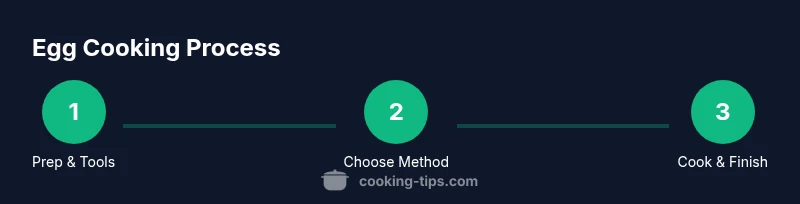
- 1
Gather all tools and ingredients
Collect eggs, pan, utensils, and seasonings. Having everything within reach prevents mid-cook scrambling to locate a tool. Check freshness by placing eggs in water: fresh eggs tend to sink, while older eggs float slightly, indicating air buildup. This step sets the stage for consistent results.
Tip: Organize items by method you’ll use first (boiling, then frying) to minimize delays between steps. - 2
Choose your primary method
Decide which technique you want to master first: boiled, poached, fried, scrambled, or baked. Each method has its own heat needs and timing logic, so picking one helps you build confidence before expanding to more complex techniques.
Tip: Start with scrambling or boiled eggs to learn the basics before moving to poached or fried eggs. - 3
Boil eggs to your preferred doneness
Place eggs in a single layer in a saucepan, cover with water, and bring to a gentle simmer. Adjust time based on yolk preference, then transfer to an ice bath to halt cooking. Peel when cool for clean removal of shells.
Tip: Use a timer and cool rapidly to prevent green rings around yolks or overcooking. - 4
Poach eggs with care
Create a gentle simmering bath, add a splash of vinegar if desired, swirl water, and slide eggs in one at a time. Cook until whites set while yolks stay runny, then lift with a slotted spoon. Remove excess water on paper before serving.
Tip: Freshness matters; slightly older eggs poach more cleanly. - 5
Fry eggs for glossy whites
Preheat a nonstick pan with a small amount of fat over medium heat. Crack in eggs, reduce heat, and cook until whites are set. For over-easy or over-hard, flip gently and cook to your preferred yolk firmness.
Tip: Avoid crowding the pan; give eggs space to prevent steaming and uneven cooking. - 6
Scramble eggs for tender texture
Beat eggs with salt and optional milk or cream until just combined. Cook over medium-low heat, stirring slowly to form soft curds. Remove from heat while still slightly runny, as carryover heat will finish cooking.
Tip: Low and slow heat yields creamier, fluffier scrambled eggs. - 7
Bake or shirred eggs for presentation
Whisk eggs with dairy and seasonings, pour into buttered ramekins, and bake until just set. Top with cheese, herbs, or vegetables for a complete small dish.
Tip: Bake at moderate heat and watch for just-set edges to avoid rubbery centers. - 8
Plate, finish, and enjoy
Season to taste, add finishing touches like herbs or pepper, and serve hot. Rest a moment before tasting to let flavors meld.
Tip: A light drizzle of olive oil or a touch of lemon can brighten flavors. - 9
Clean up and store leftovers
Cool any leftovers promptly, refrigerate in an airtight container, and reuse creatively in salads, sandwiches, or future meals.
Tip: Label with date and method for easier planning tomorrow.
Quick Answers
What is the easiest method for beginners to start with eggs?
Scrambled eggs are forgiving and quick to master. Start with plain scrambled eggs, then add cheese or herbs as you gain confidence.
Scrambled eggs are the easiest place to start for beginners, then you can add flavors as you get comfortable.
How do I peel hard-boiled eggs easily?
Cooling the eggs promptly in an ice bath helps shrink the egg from the shell, making peeling easier. Gently crack all over and peel under running water if needed.
Cool them first, then gently crack and peel under running water to help release the shell.
Can you reheat cooked eggs safely?
Yes, cook eggs to safe temperatures and refrigerate promptly. Reheat to steaming hot and avoid reheating more than once to maintain quality and safety.
You can reheat cooked eggs, but do it until steaming hot and don’t reheat more than once for safety and best texture.
What are signs of overcooked eggs?
Overcooked eggs often have a dry, rubbery texture; hard-boiled yolks may develop a greenish ring around the outside due to sulfur reaction. Adjust heat and timing to prevent this.
If the egg whites are rubbery or the yolk looks dull and chalky, you’ve overcooked it.
Are eggs safe to eat if they crack during cooking?
Cracked eggs can still be safe if cooked thoroughly and the crack is manageable. Discard if you notice off smells or unusual texture.
If a crack happens, finish cooking thoroughly and check for off smells before serving.
How long do eggs last in the fridge?
Keep eggs in their original carton in the refrigerator. They typically stay fresh for several weeks when refrigerated properly; use the sniff test and look for off smells.
Store eggs in the fridge in their carton and use within a few weeks for best quality.
Watch Video
Top Takeaways
- Master heat control across methods
- Choose the method that matches your yolk texture goal
- Use room-temperature ingredients when possible for even cooking
- Prep tools and ingredients before starting
- Finish with a flavorful, simple finish for best results