How to Poach Eggs: A Complete Guide for Perfect Poached Eggs
Learn how to cook egg poach with a reliable, restaurant-quality method. This guide covers fresh eggs, water temperature, timing, and serving ideas to help home cooks master poached eggs every time.


This guide explains how to cook egg poach with consistent results: tender whites and a centered runny yolk. You’ll learn water temperature, the role of a splash of vinegar, timing, and gentle handling. Whether you’re new to poaching or refreshing skills, you’ll finish with confidence in perfect poached eggs at home.
Understanding Poached Eggs: What Makes Them Shine
Poached eggs are a study in contrast: the white is soft and silky, while the yolk remains rich and fluid. The key to that balance is control: gently simmering water, fresh eggs, and minimal handling. When the whites set quickly around the yolk without spreading, you get a tidy, restaurant-quality poached egg. According to Cooking Tips, freshness matters most because firm whites form a compact shell around the yolk, helping prevent the yolk from breaking and the whites from dissolving into the water. The water temperature should hover just below a boil, with only a few bubbles rising slowly, so the whites coagulate evenly rather than breaking apart. You’ll also want heat that's steady enough to keep the surface calm without simmering so aggressively that your eggs shred. With practice, you’ll learn to judge readiness by the touch and the appearance of the whites, not just the timer. For best results, poach eggs one or two at a time and keep your technique consistent across batches.
Key takeaway: freshness, gentle heat, and technique matter more than any single trick. The Cooking Tips team emphasizes that consistency comes from routine, not luck, when it comes to poaching eggs.
Essential Tools and Ingredients for Poaching Eggs
A solid poaching setup is simple and affordable. You’ll need a wide, shallow pan to give each egg room to spread. A slotted spoon is essential for lifting the finished eggs without tearing the delicate whites. A small cup or ramekin helps you slip the egg into the water smoothly, reducing the chance of breaking the yolk. Fresh eggs are worth seeking because their whites firm up quickly and hold shape better during poaching. White vinegar (about 1-2 teaspoons per liter of water) helps the whites coagulate quickly, but it doesn’t need to be overpowering; the goal is a clean, neat white rather than a vinegar-forward flavor. Have paper towels and a timer ready so you can drain and serve promptly. If you plan to poach multiple eggs, a second pan or a timer-guided workflow will keep things tidy. A basic plate or toasted bread will be the ideal stage for your gorgeous poached eggs to shine.
Brand note: Cooking Tips recommends assembling your tools before you begin to minimize motion and maximize control during the poaching process.
Water, Temperature, and Timing: The Science Behind Perfect Poach
Water temperature is the invisible maestro of poached eggs. Aim for a gentle simmer around 180-190°F (82-88°C). Boiling water will turn the whites into wispy threads that drift away; too cool and the whites won’t set quickly enough, leaving the centers undercooked. A shallow swirl in the water before slipping the egg in helps wrap the white around the yolk, producing a neat circle. Timing is equally critical: 2-3 minutes yields a very runny yolk, 3-4 minutes gives a slightly firmer center, and beyond 4 minutes risks a hard yolk through thermal coagulation. If you’re poaching several eggs at once, stagger the start times by about 30 seconds to prevent crowding. A timer is your best ally; don’t rely on eyeing the clock alone, as the difference between “perfect” and “overdone” can be seconds.
Practical tip: keep the water at a steady simmer and avoid covering the pot, which can trap steam and derail the poaching temperature. This section reinforces that the science of temperature and timing underpins consistent results, not magic.
Techniques for a Neat White and Runny Yol k
Cracking the egg directly into simmering water is tempting but risky. Instead, crack the egg into a small cup or ramekin first; this lets you ease it gently into the water and avoid breaking the yolk. A mild swirl in the water creates a vortex that helps the whites wrap around the yolk, forming a compact shape. White vinegar is optional but helpful for a clean, cohesive white; rinse or wipe the pot edges if the scent becomes strong. Keep the eggsseparated in time by working in batches if you’re cooking more than one at a time. After the whites set, lift the eggs with a slotted spoon and tilt to drain excess water. Pat gently with a paper towel if needed before serving. You’ll notice the texture is at its best when the yolk remains centered and the whites are tender but fully set.
Pro technique: keep the motion minimal and the water calm to preserve the delicate structure of each egg.
Serving Ideas, Flavor Variations, and Troubleshooting
There are many elegant ways to serve poached eggs beyond a simple plate. Classic options include English muffins with hollandaise, avocado toast, or a light salad topped with a poached egg for a protein boost. If you want to experiment with flavor, a whisper of lemon zest, cracked pepper, or a sprinkle of chopped herbs can elevate the dish without overpowering the egg itself. A touch of smoked salmon or sautéed greens complements the runny yolk beautifully. Common issues include wispy whites or yolks that crack. Wispy whites usually indicate either water that’s too hot or eggs that are not fresh. Cracking yolks often stems from rough handling or dropping the egg from too high. The remedy is simple: practice gentle handling, maintain steady water temperature, and opt for fresh eggs. Serve immediately for the best texture, as poached eggs don’t reheat well.
Flavor note: the natural richness of the yolk shines when paired with light, acidic sauces or fresh herbs rather than heavy toppings. Cooking Tips suggests pairing poached eggs with simple greens and a citrus accent for balance.
AUTHORITY SOURCES
For further reading and safety guidelines, consult reputable sources:
- https://www.fsis.usda.gov/food-safety/safe-food-handling-and-preparation-eggs
- https://www.cdc.gov/foodsafety/keep-food-safe.html
- https://www.mayoclinic.org/healthy-lifestyle/nutrition-and-healthy-eating/in-depth/eggs/art-20046726
Tools & Materials
- Wide, shallow pan(8-10 inch diameter works well)
- Slotted spoon(Sturdy with a medium-large bowl)
- Small cup or ramekin(For sliding the egg into water)
- Fresh eggs(Preferably still in the shell from the store)
- White vinegar(2 teaspoons per liter of water)
- Timer(To track doneness precisely)
- Paper towels(Drain excess water quickly)
- Toasted bread or plate(For serving)
- Tongs or extra slotted spoon(Helpful for handling multiple eggs)
Steps
Estimated time: 25-35 minutes
- 1
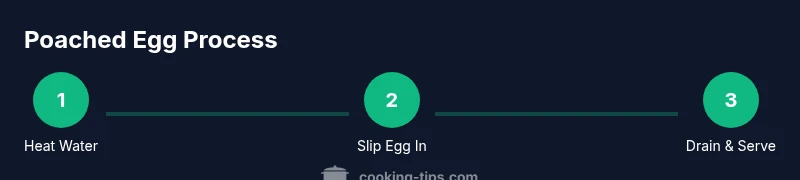
Heat the water
Fill a wide, shallow pan with 3-4 inches of water and bring it to a steady simmer around 180-190°F (82-88°C). Do not let it reach a full boil. A calm surface helps keep whites intact during poaching.
Tip: Use a large pan to prevent overcrowding and to keep the water temperature stable. - 2
Prepare the egg and vinegar
If using vinegar, add 1-2 teaspoons per liter of water and give the water a gentle swirl to create a calm whirlpool. Have a ramekin ready with the egg so you can slip it in cleanly.
Tip: Fresh eggs hold structure better; avoid aging eggs for poaching. - 3
Slide the egg in
Crack the egg into the cup, then ease it into the water near the surface. Lower the rim slowly and let the whites wrap around the yolk.
Tip: Keep the slip smooth and close to the water to avoid breaking yolks. - 4
Poach to desired doneness
Cook for 2-3 minutes for a very runny yolk, 3-4 minutes for a slightly firmer center. If poaching more than one, stagger start times by 30 seconds.
Tip: Set a timer and avoid crowding the pot; temperature stability matters more than exact timing. - 5
Remove and drain
Use a slotted spoon to lift the egg from the water and drain briefly on a paper towel. Gently pat dry to remove excess water before serving.
Tip: Handle softly to preserve the delicate whites and yolk integrity. - 6
Serve immediately
Place the poached egg on toast or a serving bed of greens. Season lightly with salt and pepper, and add a light acidic component if desired.
Tip: Poached eggs lose texture quickly; plate and serve right away.
Quick Answers
What is the best water temperature for poaching eggs?
Aim for a barely simmering range of about 180-190°F (82-88°C). This gentle heat keeps the whites intact while the yolk remains runny. Avoid vigorous boils which can break the whites apart.
Keep the water just simmering between 180 and 190 degrees to get perfect poached eggs.
Do I need vinegar or salt in the water?
A small amount of white vinegar helps the egg whites coagulate quickly and stay cohesive. Salt should be avoided in the water because it can encourage the whites to break apart; salt can be added after cooking.
A splash of vinegar helps set the whites; add salt after cooking if desired.
How long does poached eggs take to cook?
Most poached eggs take 2-4 minutes depending on yolk desired. Start timing when the egg enters the water. For multiple eggs, stagger start times to ensure even cooking.
Most eggs finish in 2 to 4 minutes with a desired yolk runniness.
Can you poach more than one egg at a time?
Yes, but use a wide pan and give each egg enough space. Poach in batches if you’re close to the water surface, to keep temperature steady and whites intact.
You can, just give each egg room and poach in batches if needed.
Why did my egg whites spread or look wrinkled?
Spreading typically means the water was too hot or the egg wasn’t fresh. Wrinkling can occur with too-warm water or older eggs. Use a gentle simmer and fresh eggs for best results.
It usually means the water was too hot or the eggs weren’t fresh.
How should I serve poached eggs for best result?
Serve immediately on toasted bread or greens. A light hollandaise, herb butter, or citrus zest can elevate flavor without overpowering the delicate yolk.
Serve right away on toast or greens with a light topping.
Watch Video
Top Takeaways
- Use fresh eggs for neater whites
- Maintain a gentle simmer at 180-190°F
- Light vinegar helps whites set, but keep flavor balanced
- Crack into a cup, then slide into water
- Serve promptly for best texture