Slow Cooker Roast Beef: A Practical Guide
Learn to master a foolproof slow cooker roast beef with searing, aromatics, and braising liquid. A practical, reliable guide for busy home cooks by Cooking Tips.


With this guide you’ll make a slow cooker roast beef that’s tender, evenly cooked, and deeply flavorful. You’ll sear for complexity, then braise in a small amount of stock with aromatics. Best of all, it’s hands-off once you set the cooker—perfect for busy weeknights or when guests are arriving. Follow the steps and tips to avoid common pitfalls.
Why slow cooker roast beef is a home cook’s best friend
For many home cooks, slow cooker roast beef is the unsung hero of weeknight dinners. The low-and-slow method yields meat that stays juicy, evenly cooked, and flavorful with minimal hands-on time. When you start with a well-seasoned roast and a reliable slow cooker, you can pull a dinner together while you focus on sides, tasks, or helping kids with homework. The Cooking Tips team has found that the convenience of a slow cooker makes it easier to fit a roast into a busy schedule without sacrificing texture or depth of flavor. The trick is to plan for a gentle braise, not a dry roast: the moist environment and steady temperature protect connective tissue and keep the beef soft rather than stringy. The result is slices with a tender, fork-twisting texture and a rich pan sauce that can double as gravy. If you’re new to slow cooker roast beef, start with a roast around 2 to 4 pounds and a straightforward seasoning mix; you’ll learn how your model behaves and where you can tweak timings. Over time, you’ll discover how aromatics, stock, and the choice of cut influence the final mouthfeel, and you’ll tailor the method to your family’s tastes. The following sections break down the process in practical, kitchen-tested steps.
Choosing cuts and thickness for even doneness
Choosing the right cut and thickness is critical for a successful slow cooker roast beef. For best results, select cuts with good marbling and relatively uniform thickness, such as a chuck roast or a bottom round roast in the 2–4 pound range. A slightly thicker roast can withstand longer braising, while a thinner slice cooks faster and risks drying out. Trim excess surface fat, but leave a thin layer to protect moisture during long cooking. The goal is to balance connective tissue with leanness so the meat remains juicy when finished. Sizing the roast to your slow cooker matters: if it barely fits, you’ll lose surface area for browning and you may crowd the lid, which can lead to uneven heating. The Cooking Tips team recommends patting the surface dry before searing to promote a rich crust, then allowing the roast to rest briefly after searing to maintain moisture during braising.
Flavor boosters: rubs, marinades, and aromatics
Flavor is built in layers in slow cooker roast beef. Start with a simple rub of salt, black pepper, and optional garlic powder or paprika for color. A quick marinade is optional but can add depth if you have the time; even a few minutes of rest after applying dry rub can improve bark-like flavor. Aromatics are your friends: onions, garlic, carrots, and celery create a savory base, while fresh thyme and rosemary impart fragrant notes. Add a splash of Worcestershire sauce or soy sauce for umami, and pour in beef stock or broth to braid moisture with flavor. The Cooking Tips approach emphasizes a balanced combination: enough salt to season through the meat, but not so much that the braising liquid becomes overly salty. If you prefer a richer sauce, whisk in a little cornstarch slurry at the end for glaze-like body.
Searing vs. no-sear: does it matter?
Searing is widely recommended for slow cooker roast beef because it develops color and a crust that adds flavor through the Maillard reaction. A quick sear in a hot skillet before braising can dramatically improve the final depth of flavor. If you’re short on time or the roast is very large, you can skip the sear, but plan to compensate with a longer braise and a richer finish from the aromatics. The important thing is to brown all exposed surfaces evenly, then deglaze the pan to capture fond (the caramelized bits) and add it to the slow cooker. This small step can make a big difference in the overall taste profile of the final dish.
Building the cooking base: liquids and vegetables
The cooking base is more than just water. Use beef stock or broth as the primary liquid, supplemented by a splash of wine or a touch of tomato paste for color and depth. Vegetables like onions, carrots, and celery not only flavor the meat but provide a natural bed that prevents the roast from sticking. Layer aromatics under and around the roast, and pour the liquid around the meat rather than directly on the top to preserve the crust. The liquid should come up only about one-third to halfway up the sides of the roast to maintain surface browning and crispness. If you’re aiming for a sauce, reserve some braising liquid to reduce on the stove after cooking.
Step-by-step cooking method overview
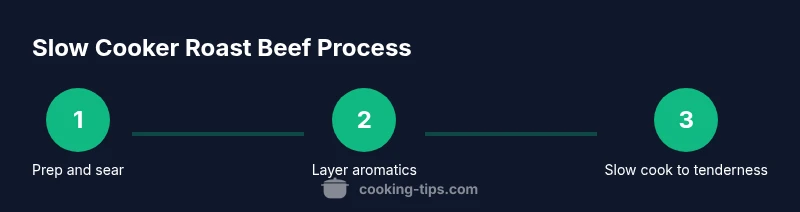
A typical plan is to sear the roast, place it in the slow cooker with aromatics, and braise on low until tender—roughly 8–9 hours for a 2–4 pound roast. If you’re short on time, you can cook on high for 4–6 hours, but the texture will be firmer and less forgiving. Throughout cooking, keep the lid closed to maintain moisture and heat; avoid lifting the lid too often, which extends cooking time. For doneness, plan for a range: medium-rare to medium (approximately 135–145°F internal temperature) yields slices that melt in your mouth with a juicy center. Remember to tilt the lid at the end to capture any evaporated juices for a quick pan sauce, if desired.
Resting, slicing, and serving
Resting is essential: let the roast sit for 10–15 minutes after cooking before slicing. Resting allows juices to redistribute, keeping slices moist rather than watery. Slice against the grain in thin, even cuts to ensure tenderness, then spoon pan juices over the meat or use them to make a quick gravy. For a complete meal, serve with mashed potatoes, roasted vegetables, or a light salad to balance richness. Leftovers can be repurposed in sandwiches, stews, or over noodles for another delicious meal.
Make-ahead, storage, and leftovers
Slow cooker roast beef stores well: refrigerate in an airtight container for up to 4 days, or freeze for up to 3 months. Reheat gently on the stove or in a low oven, adding a splash of broth to retain moisture. If you plan to reheat, consider slicing before refrigerating to speed up warming. Sauce can be prepared ahead and chilled; reheat with a splash of broth or red wine to restore gloss and flavor. Planning ahead, you can cook a large roast on a Sunday and portion for quick weekday meals, which is a hallmark of reliable Cooking Tips guidance.
Tools & Materials
- Slow cooker / crock-pot (6-8 quart ideal)(Choose a size that fits the roast with some room for aromatics)
- Cast-iron skillet or heavy-bottom pan(For a good sear; avoid crowding the pan)
- Meat thermometer(For accurate doneness (target 135–145°F))
- Sharp chef’s knife(For clean, even slices)
- Cutting board(Sturdy surface, preferably plastic for easy cleaning)
- Beef stock or broth(Base for braising liquid)
- Onions, garlic, carrots, celery(Aromatics to layer flavor)
- Worcestershire sauce or soy sauce(Adds umami depth)
Steps
Estimated time: 8-9 hours (slow cook on low)
- 1
Prep the beef and season
Pat the roast dry with paper towels. Season generously with salt and pepper, adding optional garlic powder or paprika for color. This step helps create a flavorful crust once seared.
Tip: Dry surface ensures better browning; don’t skip this step. - 2
Sear the roast
Heat a heavy skillet with a light coat of oil until shimmering. Sear all sides until deeply browned, 2–3 minutes per side. Let the crust set for a few minutes before moving to the slow cooker.
Tip: A good crust adds major flavor even before braising begins. - 3
Layer aromatics
Place chopped onions, garlic, and optional carrots/celery in the bottom of the slow cooker. They form a savory bed that enhances every bite of the roast.
Tip: Spread aromatics evenly to prevent sticking and promote uniform flavor. - 4
Add liquids and seasonings
Pour beef stock around the roast (not directly over the top). Add Worcestershire or soy sauce and a bay leaf if using. The liquid should come up only a third to halfway up the roast.
Tip: Avoid drowning the crust; you want moisture without soggy surfaces. - 5
Cook on low until tender
Cover and cook on low for 8–9 hours (or high for 4–6 hours) until the meat is fork-tender. Do not lift the lid excessively; every peak adds minutes to total time.
Tip: Check at the 6–7 hour mark if you’re pressed for time; the goal is a tender, not mushy texture. - 6
Test doneness and rest
Insert a thermometer or test with a fork; the meat should be easy to shred. Remove the roast and let it rest 10–15 minutes before slicing to retain juices.
Tip: Resting is essential; slicing too early causes juice loss. - 7
Slice and serve
Slice against the grain into even portions. Spoon a portion of braising liquid over the meat or reduce the liquid on the stove for a quick gravy.
Tip: Carve with a sharp blade for cleaner cuts and a prettier plate.
Quick Answers
Can I use a frozen roast beef in a slow cooker?
It’s best to thaw the roast before cooking to ensure even heat penetration. If you must cook from frozen, expect longer cooking times and check doneness carefully.
You should thaw first for even cooking, but if you’re short on time, expect longer cooking and check tenderness late.
Is searing essential for slow cooker roast beef?
Searing is not strictly mandatory, but it greatly enhances flavor via browning. If you skip it, you’ll rely more on aromatics and longer braising for depth.
Searing adds flavor, but you can braise without it if you compensate with spices and longer cooking.
How long does slow cooker roast beef take?
Typically 8–9 hours on low, or 4–6 hours on high, depending on roast size and slow cooker model. Check tenderness rather than time alone.
Most roasts take about eight to nine hours on low; check tenderness to confirm.
What cut is best for slow cooker roast beef?
Chuck roast and bottom round are reliable choices due to their connective tissue; they become tender with slow braising.
Chuck roast or bottom round work well for slow cooking because they stay juicy when braised.
How should I store and reheat leftovers?
Store in airtight containers for up to 4 days in the fridge or freeze for up to 3 months. Reheat gently with a splash of broth to maintain moisture.
Cool and store in airtight containers; reheat slowly with some broth to keep the meat moist.
Can I add vegetables to the slow cooker roast beef?
Yes, add root vegetables like carrots and potatoes around the roast for a complete one-pot meal. They’ll absorb braising flavors and finish tender.
You can add vegetables around the roast to cook alongside it.
Should I use high or low heat for best texture?
Low heat yields the most even tenderness and juiciness. High heat can work in a pinch but risks tougher texture if overcooked.
Low is usually best for tenderness; high can work if you’re short on time, but watch closely.
Is pan gravy necessary?
Pan juices left after braising are flavorful; you can thicken them into a gravy with a simple slurry. It elevates the dish, but is optional.
Pan juices make a great gravy if you want extra richness.
Watch Video
Top Takeaways
- Sear the roast for depth of flavor.
- Cook on low for tender results.
- Rest before slicing to retain juices.
- Balance aromatics and braising liquid for depth.
- Leftovers become quick, tasty meals.