Slow Cook Beef Tips: A Practical Guide to Tender, Flavorful Meat
Learn how to slow cook beef tips to fork-tender perfection. This comprehensive guide covers cut selection, browning, braising liquids, aromatics, timing, safety, and serving ideas for reliable weeknight dinners.


With slow-cooked beef tips, you’ll transform tough cuts into tender, flavorful morsels. This guide shows how to choose cut, sear for depth, braise or slow-cook with aromatics, and finish with a rich sauce. You’ll learn timing, temperatures, and safety tips to ensure juicy, fork-tender results every time. This article covers budget-friendly cuts, pantry-friendly braising liquids, and how to adjust for different cookers.
Choosing the right cut for slow cooking
For slow-cooked beef tips, the cut matters almost as much as the braising technique. Look for cuts with ample connective tissue that break down during long cooking. Classic choices include chuck roast cut into 1-2 inch cubes, blade or shoulder tips, brisket point, or stew meat. These cuts typically contain collagen that converts to gelatin, creating a lush, silky sauce and fork-tender meat once braised. If you’re shopping on a budget, buy meat on sale and cut it yourself; larger chunks will also help you stretch a small amount of meat into a hearty meal. When choosing, aim for about 2-3 pounds (900 g–1.4 kg) for a 4-serving dish, and avoid overly lean cuts that dry out during long cooking. If time is tight, you can use trimmed brisket or bottom round, but plan for a longer braise to achieve tenderness. Freshly ground spices can be added later, but salt and aromatics should be integrated from the start to build depth.
Browning for depth: sear before braise
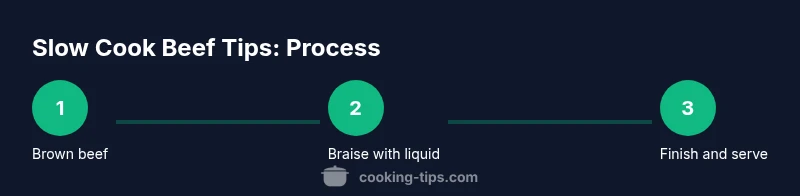
Browning beef creates the Maillard reaction, which adds depth to the final sauce. Pat the meat dry, then sear in a hot, heavy-bottom pot in batches to avoid crowding. Aim for a rich, dark crust on all sides, about 2-3 minutes per side. Resting the meat briefly between batches prevents steaming, which would dull the sear. The fond left in the pan is a flavor goldmine; don’t skip rescuing it by deglazing with liquid later. If you skip browning, you’ll still braise, but you’ll miss the extra complexity that makes the sauce shine.
Liquid and braising options: choosing a braising liquid
Choose a braising liquid that complements the beef and your flavor goals. Common options include beef stock or broth (about 3-4 cups), a splash of red wine for acidity and depth, and a bit of tomato paste or worcestershire for body. The goal is to have enough liquid to barely cover the beef as it braises; too little liquid can scorch, too much dilutes flavor. If you’re using a slow cooker, you may need slightly more liquid to compensate for evaporation, while oven braising tends to retain more moisture with a snug lid.
Aromatics and seasoning: building flavor
Aromatics are the backbone of slow-cooked beef tips. Sauté onions, carrots, and celery with garlic until translucent to build a sweet base. Add herbs such as bay leaves, thyme, and a pinch of black pepper. Salt should be added in stages: season the beef just after browning, then adjust the sauce at the end based on taste. A touch of sugar or mirroring sweetness can balance acidity from wine or tomatoes. Fresh herbs added toward the end brighten the sauce and contrast with the rich meat.
Low-and-slow cooking methods: stove-top, oven, and slow cooker
There are three reliable paths for braising beef tips. Stove-top braising in a heavy pot at a low simmer, covered, yields even tenderness in roughly 2.5–3.5 hours depending on cut. Oven braising at 325°F (165°C) for 2.5–3.5 hours produces a consistent texture with less hands-on attention. Slow cookers offer “set it and forget it” convenience: low heat for 8–10 hours or high for 4–6 hours. Choose the method that fits your schedule, but maintain a gentle simmer and keep the lid on to preserve moisture. If you reduce liquid, plan for a longer braise; if you add more liquid, expect a looser sauce.
Troubleshooting and adjustments
If the meat seems dry, check your liquid level and cover tightly; add a splash more stock if needed. If the sauce is too thin, reduce it on the stovetop, or thicken with a slurry of cornstarch or a beurre manié. If flavors are flat, boost salt and acidity with a splash of vinegar or a pinch of reserved wine. For tougher meat, continue braising until textures break down and tender fibers give way to a fork-tender bite. Resting the meat for 10–15 minutes after cooking helps juices settle for juicier slices.
Finishing touches and serving suggestions
Finish by spooning the sauce over the beef and pairing with creamy starches like mashed potatoes, polenta, or buttered egg noodles. A final glaze of pan sauce and a drizzle of olive oil or chopped parsley adds brightness. If you’ve kept the braising liquid richer, you can skim fat before reducing to a glossy finish. Serve hot and enjoy the velvet texture and deeply seasoned flavor that comes from the long, slow cook.
Recipe variations to fit budgets and diets
Try swapping cuts: chuck is cheap and forgiving; brisket or round yield similar tenderness with longer braises. For gluten-free meals, use cornstarch or arrowroot to thicken sauces instead of flour. If dairy-free is preferred, skip butter and use olive oil for the finishing touch. For lighter meals, remove skin and excess fat from the meat before browning and use a lighter broth as braising liquid. These variations keep the technique intact while adapting to different needs.
AUTHORITY SOURCES
- https://www.fsis.usda.gov/food-safety
- https://www.nutrition.gov/topics/food-safety
- https://extension.illinois.edu/foodsafety
Get Practical: tips you can apply tonight
Remember to plan ahead. Braising beef tips is not a race; allow time for browning, deglazing, and low, steady cooking to maximize flavor and tenderness. The key is balance: enough liquid to braise, enough heat to brown, and patience for the collagen to melt into a silky sauce.
Tools & Materials
- Beef cuts (chuck roast, shoulder tips, or stew meat)(About 2-3 pounds (900 g–1.4 kg) for 4 servings)
- Heavy-bottom Dutch oven or heavy skillet with lid(Important for even heat and fond formation)
- Slow cooker (optional)(Use for hands-off braising)
- Kitchen thermometer(Check internal temperature if using a method that requires it)
- Oil for searing (high smoke point like canola or avocado)(Dense, even sear without burning)
- Onions, garlic, carrots, celery(Chopped or sliced as called for in the recipe)
- Beef stock or broth(Approx. 3–4 cups; adjust for method)
- Red wine (optional)(Adds acidity and depth)
- Tomato paste or tomato sauce (optional)(Flavor and color enhancer)
- Herbs and spices (bay leaves, thyme, pepper, salt)
- Salt and pepper
Steps
Estimated time: 4-6 hours
- 1
Prepare and measure ingredients
Mise en place keeps the cooking process smooth. Gather all ingredients, measure spices, and trim the beef so you can work efficiently without interruptions.
Tip: Organize everything within arm’s reach to reduce coaching during braise. - 2
Dry and season beef chunks
Pat beef dry to promote browning. Season generously with salt and a light pepper to enhance surface flavor before searing.
Tip: Dry meat thoroughly; moisture on the surface hinders browning. - 3
Brown beef in batches
Sear beef in the hot pan until deeply browned on all sides. Do not crowd the pan; browning in batches yields better color and flavor.
Tip: Crowding causes steaming; brown in several small batches for best results. - 4
Deglaze and collect fond
Pour liquid into the pan to release browned bits; scrape the fond from the bottom for a flavorful base.
Tip: Use a wooden spoon to loosen every browned bit; those sugars are flavor gold. - 5
Add aromatics and braising liquid
Return meat to the pot with onions, garlic, and your chosen braising liquid. Add herbs and spices and bring to a simmer.
Tip: Keep liquid at a gentle simmer to avoid tough meat. - 6
Braise using your chosen method
Covered braising: stove-top at low heat, oven at 325°F (165°C), or slow cooker on low. Target until the meat is tender and easily cuts with a fork.
Tip: For oven or stove-top, check tenderness after 2.5 hours and adjust time as needed. - 7
Check tenderness and finish the sauce
If the sauce is too thin, reduce on the stove or thicken with a slurry. Taste and adjust salt and acid before serving.
Tip: Rest meat 10–15 minutes before serving to redistribute juices. - 8
Rest, slice, and serve
Slice or shred the beef tips and serve with the sauce over mashed potatoes, polenta, or buttered noodles.
Tip: A gentle rest improves juiciness and flavor absorption.
Quick Answers
What is the best cut for slow-cooked beef tips?
Chuck, shoulder tips, brisket, or stew meat are ideal for slow braising due to their connective tissue. These cuts tenderize beautifully with long, moist cooking.
Chuck or shoulder tips are ideal for slow cooking because their collagen breaks down during braising, creating tenderness and flavor.
Can I speed this up with a pressure cooker or Instant Pot?
Yes. A pressure cooker can shorten the braise to about 35–45 minutes, then finish on a stove or in the pot to develop flavor and sauce thickness.
You can use a pressure cooker to speed this up significantly. Finish with a quick simmer if you want a thicker sauce.
How do I fix a sauce that’s too thin?
Simmer to reduce, or whisk in a cornstarch slurry or beurre manié to thicken. Adjust seasoning after thickening.
Let the sauce reduce on a simmer, or thicken with a small slurry of cornstarch or flour.
Is it safe to reheat slow-cooked beef tips?
Reheat leftovers to 165°F (74°C) and refrigerate within two hours. Reheat once and enjoy promptly; do not reheat multiple times.
Reheat to steaming hot and only once. Refrigerate leftovers promptly.
What should I serve with slow-cooked beef tips?
Pair with creamy mashed potatoes, polenta, buttered noodles, or roasted vegetables. A bright green herb garnish completes the dish.
Serve with mashed potatoes or polenta for a comforting, rounded meal.
Watch Video
Top Takeaways
- Choose the right cut with ample connective tissue.
- Browning adds essential depth of flavor.
- Maintain sufficient braising liquid to stay moist.
- Allow collagen to break down for tender beef tips.
- Rest before serving for juicier slices.