How Much to Cook Turkey: Time, Temp, Doneness
Learn how to estimate turkey cooking time by weight, understand unstuffed vs stuffed roasting, and verify doneness with a thermometer for juicy, safe results. Includes resting, carving, and practical tips from Cooking Tips.


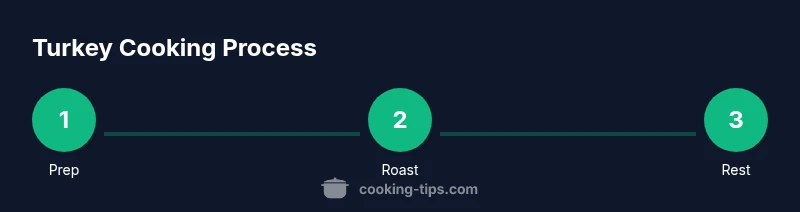
You can estimate turkey cook time by weight, aiming for 13-18 minutes per pound for an unstuffed bird at 350°F, and 18-22 minutes per pound if stuffed; always finish with an internal temp of 165°F in the thickest part of the thigh. You'll need a reliable oven thermometer and a meat thermometer.
Understanding How Much to Cook Turkey
According to Cooking Tips, the core rule for turkey safety and juiciness is finishing with a safe internal temperature while avoiding overcooking. The Cooking Tips team emphasizes that the goal is a moist, flavorful bird with a safe interior. In this guide, you’ll learn how to translate weight into approximate cooking time, whether you’re roasting unstuffed or stuffed, and how to plan for rest and carving. Key factors include turkey weight, whether the bird is stuffed, oven accuracy, and whether the bird is brought to room temperature before roasting. While timelines vary, you can rely on per-pound estimates and then verify with a reliable thermometer for safety and best texture. Resting after cooking helps distribute juices and improves slicing. By the end, you’ll feel confident planning a delicious turkey for your table.
Weight-Based Timing: Unstuffed vs Stuffed
Unstuffed turkey generally requires about 13-18 minutes of roasting per pound at 350°F (177°C). Stuffed turkey takes longer—roughly 18-22 minutes per pound—because the stuffing adds mass and moisture diffusion challenges. These are general ranges; always check the thickest part of the thigh and the center of the stuffing (if used) to ensure 165°F (74°C) internally. For a 12-pound unstuffed turkey, plan around 2.5 to 3 hours; for a 12-pound stuffed bird, expect around 3 to 3.5 hours. If your oven runs hot or slow, add 10–20% more time and verify with a thermometer. This approach minimizes guesswork and helps you avoid undercooked meat or oversalted skin.
Temperature Guidelines and Doneness
The safe internal temperature for turkey is 165°F (74°C) in the breast and thigh. Some cooks prefer to check in multiple spots—the thickest part of the thigh, the breast near the breastbone, and the center of any stuffing. Resting is essential; carryover cooking will lift the temperature by a few degrees. Remove the turkey from the oven when the thermometer reads 160°F (71°C) in the thigh if you want extra juiciness, then let it rise to 165°F during resting. Use a thermometer with a thin probe for accurate readings near bone. Always record the lowest reading to avoid overcooking a portion that may be denser.
Preparing for Even Cooking: Thawing, Drying, and Seasoning
Thaw fully in the refrigerator for 24-48 hours depending on size. Pat dry with paper towels to promote crisp skin. Salt the skin or rub with oil and herbs for flavor and browning. If using stuffing, ensure stuffing is cooled and mixed with the turkey just before roasting; do not pack warm stuffing inside. Tie wings and legs for even heat distribution, and position the bird breast-side up for a stable roasting environment. For best results, remove giblets and neck, rinse quickly if needed, then pat dry again before seasoning. This preparation reduces uneven heating and helps achieve uniform doneness.
Size and Oven Considerations for Large Turkeys
When roasting a very large bird (20 pounds or more), plan for longer times and potentially tent the breast with foil to prevent over-browning. An even heat approach helps; otherwise, maintain oven temperature at 325-350°F. Use a rack in a heavy roasting pan to allow even air circulation. If you’re cooking multiple birds, be mindful of oven capacity and staggering start times. Larger birds need careful monitoring toward the end of cooking to ensure the inner temperature hits 165°F without drying the outer skin.
Common Mistakes and How to Avoid Them
Mistake: relying on time alone without a thermometer. Fix: use a reliable meat thermometer and check multiple spots. Mistake: not allowing proper resting time. Fix: rest 20-30 minutes before carving to redistribute juices. Mistake: stuffing the bird with warm stuffing or overpacking the cavity. Fix: chill stuffing before placing it in the bird or cook stuffing outside the bird. Mistake: opening the oven too often. Fix: minimize door openings; check temperature with a meat probe instead of guesswork.
Resting, Carving, and Juiciness
Let the turkey rest on a cutting board for 20-30 minutes after removing from the oven to let juices redistribute. Tent loosely with foil during resting. Carve by slicing along the natural grain of the breast meat, then separate the legs and thighs before slicing. Resting time improves juiciness and makes carving easier. If skin isn’t as crispy as you’d like, you can finish with a quick 2-3 minute broil, watching closely to avoid burning.
Practical Tips for Juicy Results
Basting is optional and can slow cooking if you keep opening the oven. If you baste, do it quickly and only a few times. Use a meat thermometer and check multiple sites close to the bone to verify doneness. If skin won’t brown, raise the oven temperature for the last 15 minutes or briefly broil. Always plan for 20-30 minutes of resting, and consider a dry-brine the day before for extra flavor and moisture.
Quick Reference Timetable by Weight (Unstuffed vs Stuffed)
Use this quick guide as a starting point, then verify with a thermometer. Unstuffed: 13-18 minutes per pound; Stuffed: 18-22 minutes per pound. Weight ranges and times are approximate and depend on oven accuracy and whether the turkey is fully thawed and properly dried. Always confirm 165°F in the thickest part of the thigh and in the center of the stuffing (if used).
Tools & Materials
- Meat thermometer (instant-read, digital)(Probe into the thickest part of the thigh without touching bone)
- Oven thermometer(Verify oven temperature is accurate)
- Roasting pan with rack(Heavy-gauge metal preferred; enables even heat and air circulation)
- Carving knife and fork(Sharp blade; allows clean slices)
- Aluminum foil(Tent during resting or for browning protection)
- Basting brush(Optional; used if you plan to baste)
- Kitchen twine(For trussing the legs if desired)
Steps
Estimated time: Total time varies with weight and whether stuffed; typical range 2.5-4 hours plus 20-30 minutes resting
- 1
Choose turkey size and thaw safely
Select a turkey size that fits your cookware and crowd. Thaw in the refrigerator well ahead of time, allowing roughly 24 hours for every 4-5 pounds. This ensures even cooking and reduces the risk of cold spots.
Tip: Plan ahead to avoid last-minute rush; a slowly thawed bird roasts more evenly. - 2
Preheat oven and prepare pan
Preheat to 350°F (177°C). Place a rack in a heavy roasting pan so air can circulate around the bird and the skin browns evenly.
Tip: A hot roaster and even air circulation promote crisp skin without drying the meat. - 3
Dry, season, and truss
Pat the turkey dry with paper towels. Lightly oil or dry-brine the skin and season with salt and herbs. If desired, tie wings and legs for uniform shape.
Tip: Dry skin helps achieve a golden, crisp finish; avoid rubbing wet seasonings that can steam the surface. - 4
Roast while monitoring temperature
Roast the unstuffed turkey until the internal temp reaches 160°F (71°C) at the thickest thigh, then let rest to reach 165°F. If stuffed, monitor both thigh and center of the stuffing for 165°F.
Tip: Keep the oven door closed as much as possible to maintain steady heat. - 5
Rest before carving
Remove from the oven and tent with foil for 20-30 minutes to let juices redistribute. This step reduces carryover cooking and improves slice quality.
Tip: Resting is as important as cooking for moisture and flavor distribution. - 6
Carve for best texture
Carve along natural muscle lines of the breast, then separate legs and thighs. Slice thinly and against the grain for tender portions.
Tip: Carve on a wide board to gather juices for serving sauce or gravy. - 7
Handle leftovers safely
Cool leftovers quickly and refrigerate within two hours. Reheat to 165°F before consumption and store in shallow containers for even cooling.
Tip: Label date and portion sizes to simplify future meals. - 8
Consider make-ahead options
Prepare a simple gravy, stock, or soup from turkey bones. These additions extend the meal and reduce waste.
Tip: Simmer bones with aromatics for a rich base; refrigerate or freeze for later use.
Quick Answers
Is it better to cook turkey stuffed or unstuffed?
Stuffed turkeys take longer to cook and can be uneven. If you choose stuffing, ensure both the turkey and stuffing reach 165°F. Some cooks prefer to cook stuffing outside the bird for safety and even doneness.
Stuffed turkeys take longer and may cook unevenly. Make sure both turkey and stuffing reach 165 degrees Fahrenheit.
What oven temperature is best for turkey?
Roast at 325-350°F (163-177°C) for most sizes. A moderate heat helps the meat cook evenly without drying out the exterior skin. Adjust slightly for very large birds or if using stuffing.
Roast at 325 to 350 degrees Fahrenheit for most sizes. This balance helps doneness and skin browning.
How do I thaw a frozen turkey safely?
Thaw in the refrigerator for roughly 24 hours per 4-5 pounds. Keep it in a tray to catch drips. Do not thaw at room temperature to minimize bacterial growth.
Thaw in the fridge for about a day for every 4-5 pounds. Don’t thaw on the counter.
Can I baste the turkey while roasting?
Basting is optional. It can slow cooking and introduce heat loss when the oven door is opened. If you baste, do it briefly and only when needed for flavor.
Basting is optional and can slow cooking; baste briefly if you choose to.
What about resting time after cooking?
Rest the turkey for 20-30 minutes after removing from the oven. This allows juices to redistribute, making slicing easier and the meat juicier.
Rest for 20-30 minutes to keep the meat juicy.
Why is my turkey dry or pale?
Overcooking or insufficient resting often causes dryness. Use a thermometer and aim for 165°F; allow adequate resting and check final temperature before serving.
Dry poultry usually means overcooking; check with a thermometer and rest properly.
Watch Video
Top Takeaways
- Estimate time by weight and verify with a thermometer
- Unstuffed vs stuffed affects cooking time
- Resting and proper carving improve juiciness
- Follow safe temperature guidelines for every Thanksgiving