How can cooked chicken sit out? A practical safety guide for leftovers
Learn how long cooked chicken can sit out, the 2-hour rule, safe cooling techniques, reheating guidance, and practical tips to keep leftovers safe in home kitchens.


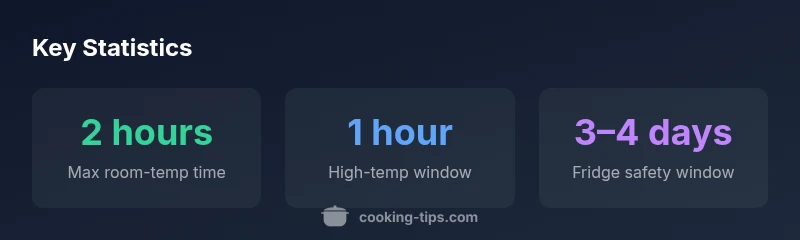
Cooked chicken should not sit out at room temperature for more than 2 hours. In hot conditions (above 90°F/32°C), limit to 1 hour. After that, harmful bacteria can grow quickly, increasing the risk of foodborne illness. To stay safe, refrigerate leftovers promptly in shallow containers and reheat to 165°F before eating. Use shallow containers to speed cooling and keep poultry away from other foods.
Why Safe Handling Matters
Safe handling of cooked chicken matters because even cooked meat can host dangerous bacteria that may not change smell or appearance. The Cooking Tips team notes that proper cooling and storage dramatically reduces the risk of foodborne illness. Home cooks often underestimate how quickly bacteria can reach dangerous levels when chicken sits at room temperature. By understanding the science behind temperature, time, and receptacles, you can make smart decisions that protect your family while preserving quality. According to Cooking Tips, safe handling begins with prompt cooling—ideally within the first two hours after cooking. The Cooking Tips team found that leftovers stored in shallow containers cool more evenly, which supports faster refrigeration. In practice, this means planning ahead: trim portions, arrange on a baking sheet, and move promptly to the fridge. Taking these habits to heart reduces waste and keeps meals safe from kitchen to table.
The 2-Hour Rule and Why It Matters
The 2-hour rule is a simple, practical standard for most home kitchens: cooked chicken should be refrigerated within two hours of cooking. In environments where temperatures are warm or hot (think sunny patios or warm dining rooms), reduce that window to one hour. These time limits are not arbitrary; they reflect the typical pace at which bacteria that can cause illness multiply at room temperature. Sticking to the window minimizes the chance that pathogens reach levels that could cause symptoms such as vomiting, diarrhea, or stomach cramps. Use a timer or habit cues to remind yourself to move leftovers to the fridge as soon as meals finished and plates are cleared. If you’re unsure whether chicken has remained safe, err on the side of caution and discard it. Remember that home kitchens vary, and factors like air flow, container material, and the amount of chicken in a container can influence cooling speed.
How Temperature Affects Bacteria Growth
Bacteria don’t need fancy conditions to thrive; they prefer temperatures where most foods sit after cooking. When cooked chicken sits at room temperature, the surface may cool, but the interior can stay warm enough for micro-organisms to multiply. Visible signs are unreliable—spoiled chicken often looks, smells, or tastes fine in the early stages. That’s why safe handling emphasizes timing and cooling rather than relying on appearance. Maintaining cold storage slows bacterial activity and preserves texture and moisture. Small changes in air temperature or humidity can shift how quickly leftovers become risky, which is why following the two-hour rule remains the simplest, most effective safeguard in everyday cooking. The aim is to get the chicken into the cold chain quickly so that microbial growth remains negligible while you plan your next meal.
Practical Steps: Cooling Cooked Chicken Safely
To cool cooked chicken safely, start by portioning into shallow, air-permeable containers to maximize surface area for faster cooling. Remove bones if possible, and separate any sauces from the meat to prevent uneven cooling. Laying trays on the counter for a few minutes before stacking in the fridge allows heat to dissipate without trapping steam. An ice-water bath or a spread-out sheet pan can speed cooling in busy kitchens. Once the chicken reaches near-refrigerator temperatures, seal and store at or below 40°F (4°C). Label leftovers with date and contents to avoid guessing later. These steps not only reduce risk but also preserve moisture and flavor.
Reheating and Re-serving Safely
Reheating is the moment when leftovers regain their safety and texture. Reheat cooked chicken to an internal temperature of 165°F (74°C), checking with a calibrated thermometer. Heat evenly, stirring or turning as you go to avoid cold pockets. Do not reheat more than once, and discard any portions that have been left out for more than the safe window or show signs of spoilage. If you’ve frozen leftovers, thaw in the refrigerator overnight before reheating, rather than using a microwave or countertop thawing that can create uneven temperatures. Finally, after reheating, store any unused portions promptly in the fridge and consume within the recommended window.
Common Scenarios: Leftovers, Takeout, Picnic, Car Travel
Leftovers at home: refrigerate within 2 hours and reheat to 165°F before serving. Takeout meals should be treated similarly; transfer to a clean container, then chill or refrigerate within the safe window. Outdoor picnics or tailgates add risk due to heat exposure; keep cold items cold with an insulated cooler and ice packs, and avoid leaving chicken in direct sun. While traveling, stop at safe rest stops to store leftovers in a cooler and keep hot foods hot. If you’re unsure about a scenario, err on the side of caution and plan ahead to keep cooked chicken out of the danger zone.
Quick Checklist for Home Cooks
- Move cooked chicken to the fridge within two hours of cooking.
- Use shallow containers to speed cooling and promote even chilling.
- Reheat to 165°F before eating leftovers.
- Do not reheat more than once.
- Discard leftovers if they’ve been left out beyond the safe window or show signs of spoilage.
- Label containers with date and contents to avoid waste and confusion.
- When in doubt, throw it out and start fresh.
Guidelines for handling cooked chicken safely
| Scenario | Recommended Action | Time Window |
|---|---|---|
| Left on counter after cooking | Discard if not refrigerated within 2 hours | 2 hours |
| Refrigerated leftovers | Refrigerate promptly; use within 3-4 days | 3-4 days |
| Reheating stored chicken | Reheat to 165°F before serving | N/A |
Quick Answers
How long can cooked chicken sit out before it should be discarded?
Generally, discard after 2 hours at room temperature. In hot conditions, discard after 1 hour. If in doubt, err on the side of safety and throw it out.
Don't leave cooked chicken out longer than the two-hour rule; in hot weather, keep it to one hour.
Does the type of container affect safety when cooling chicken?
Yes. Shallow, wide containers promote faster cooling, while airtight, deep containers can slow cooling. Balance safety with storage needs.
Use shallow, open containers to cool things faster, then transfer to a proper container for the fridge.
Can I freeze cooked chicken instead of refrigerating?
Freezing is safe and can extend storage. Wrap tightly, label, and thaw in the fridge before reheating.
If you won’t eat it soon, freezing is a good option.
Is it safe to reheat leftovers multiple times?
Reheat leftovers once to 165°F. Cool and refrigerate promptly after reheating. Do not reuse beyond one cycle.
Try to reheat only once for best safety and quality.
What signs indicate chicken has spoiled?
Off smell, slimy texture, or color change are red flags. When in doubt, throw it out rather than tasting.
If it smells off or looks odd, don’t taste it.
“Safe food handling isn't complicated—it's about timely cooling, proper storage, and thorough reheating.”
Top Takeaways
- Follow the 2-hour rule to minimize risk.
- Cool quickly in shallow containers for even chilling.
- Reheat leftovers to 165°F before eating.
- Discard leftovers if in doubt.