Can You Cook Frozen Ground Beef? A Practical How-To Guide
Learn how to safely cook frozen ground beef, whether you thaw first or cook from frozen. Step-by-step methods, tips for texture, temps, and flavor, plus safety guidelines from trusted sources.


Yes—you can cook ground beef directly from the freezer. You can thaw it first in the fridge or cold water, or choose to cook from frozen using gentle heat and steady stirring. Crumble the meat as it thaws, and continue cooking until it is fully browned and reaches a safe internal temperature.
Understanding the Question: Can You Cook Frozen Ground Beef?
For busy home cooks, the simplest answer is often the most useful: yes, you can safely cook ground beef from frozen. This approach is handy when you forget to thaw ahead of dinner or when you’re cooking a quick, one-pan meal. The Cooking Tips team emphasizes that safety and texture matter. Ground beef that’s been kept frozen maintains its flavor and tenderness when approached with low-to-medium heat, patience, and proper temperature control. In practice, you may choose to thaw before cooking for even browning, or you can proceed directly from frozen and adjust your technique. Either path requires attention to avoid undercooked centers and overcooked edges. By understanding the temperatures, timing, and methods, you’ll produce a ground beef dish that browns nicely and tastes great, even when you started from frozen. According to Cooking Tips, the key is balancing heat with time and using a thermometer to verify doneness. This guidance helps home cooks stay safe while achieving satisfying texture and flavor.
Thawing vs. Cooking from Frozen: Pros, Cons, and When to Use Each
Thawing ground beef before cooking yields more even browning and quicker overall cooking. The texture tends to be more uniform, which is especially important for crumbling into taco filling, sauces, or casseroles. Thawing is safe if you plan ahead: place the beef in the fridge for 24 hours or use a cold-water method. If you’re short on time, cooking from frozen is perfectly acceptable, but you’ll need to manage heat and stirring to break up clumps and ensure the interior reaches a safe temperature. Cooking Tips analysis suggests that thawed meat browns faster and more evenly, while frozen meat requires ongoing crumbling and gentle heat to prevent large chunks from forming. Each method has its place in a home cook’s toolkit, depending on time, dish, and texture goals.
Skillet Method: Directly from Frozen Ground Beef
The skillet approach is popular for weeknight dinners because it’s simple and fast. Start by preheating a heavy skillet over medium heat. Add a small amount of oil if you’re using a lean ground beef to help prevent sticking. Place frozen meat into the pan and let it sit briefly to loosen, then begin breaking it apart with a sturdy spatula. Keep the heat at medium to medium-low as you crumble the meat into smaller pieces. Stir frequently to promote even browning and to prevent steam-braising the meat in its own juices. Once most of the ice crystals have melted and the pieces start to brown, add salt, pepper, or any preferred seasonings. Finish cooking until the internal temperature reaches a safe level. The key with the skillet method is patient crumbling and consistent stirring to avoid large, pale chunks.
Oven Method: Sheet-Pan Crumbles for Baked Dishes
For larger batches or meal-prep, the oven method offers even heat distribution and minimal hands-on time. Preheat the oven to a moderate temperature. Line a sheet pan with parchment or a silicone mat and spread the frozen beef into a single layer. As it thaws, use a spatula to break the mass into chunks, then continue cooking until most of the meat is browned and crumbles break apart easily. Turn the meat halfway through to promote uniform browning. This method is excellent for taco fillings, chili bases, or baked casseroles, and it avoids the risk of scorching on the stovetop. Expect a longer total cook time than the skillet method, but less active attention.
Microwave Method: Quick but Check Your Texture
The microwave can be a viable option when you’re really short on time, but it requires more attention to moisture and texture. Place frozen ground beef in a microwave-safe dish with a loose cover or vented lid. Cook on medium power in short intervals (two to three minutes), pausing to break up the mass and stir evenly. Continue until the meat is thawed enough to crumble and is fully cooked through. The microwave can create uneven browning, so you may want to finish with a quick sear in a skillet to develop color and extra flavor. Always verify doneness with a thermometer.
Seasoning, Texture, and Flavor Development
Seasoning from frozen can be tricky because salt and spices may draw moisture if added too early. A common approach is to add salt after the meat has started browning and most of the moisture has evaporated, then finish with spices like garlic powder, onion powder, paprika, and a pinch of black pepper. If you’re using a lean grind, consider finishing with a little oil or fat to improve mouthfeel. For richer flavor, sauté aromatics (onions, garlic) in the pan before adding the meat, or deglaze with a splash of broth or tomato-based sauce after browning. Over the course of cooking, taste and adjust seasoning in small increments to avoid oversalting.
Food Safety First: Safe Temperature, Handling, and Storage
The USDA and other health authorities recommend cooking ground beef to an internal temperature of 160°F (71°C) to ensure safety. Use an instant-read thermometer to confirm doneness, inserting it into the thickest part of the meat. Handle raw meat with clean hands and utensils, wash cutting boards and surfaces immediately after contact, and store leftovers promptly in shallow containers for rapid cooling. If you’re reheating pre-cooked beef, heat to 165°F (74°C) to ensure safety. Avoid leaving cooked meat at room temperature for extended periods. Cooking Tips emphasizes that safety isn’t optional—it’s the foundation of a reliable kitchen routine.
Authority Sources: Where to Verify the Guidance you Read
- United States Department of Agriculture (USDA): FoodSafety.gov and FSIS guidelines on cooking ground beef
- Centers for Disease Control and Prevention (CDC): Food safety and handling basics
- University extension programs (edu domains) that provide practical cooking and food safety advice These sources provide evidence-based guidelines for cooking ground beef, whether thawed or from frozen, and help you apply best practices in everyday meals.
Quick Reference: Avoiding Common Pitfalls and Pro-Tips
- Do not overcrowd the pan; cook in batches if needed to ensure thorough browning.
- Break the meat into small pieces as it cooks to promote even heat penetration.
- Use a thermometer to verify doneness rather than relying on appearance alone.
- For the best texture, add onions or aromatics after the initial browning stage and deglaze if needed.
- Save leftovers properly in shallow containers for faster cooling and safer reheating.
Tools & Materials
- Heavy skillet or frying pan(Cast iron preferred for even heat; at least 12 inch diameter)
- Spatula or wooden spoon(Sturdy enough to break up frozen chunks)
- Instant-read meat thermometer(Needed to verify 160°F (71°C) internal temp)
- Knife and cutting board(For optional pre-chopping if thawed in advance)
- Measuring spoons(Optional for precise seasoning)
- Paper towels(To blot excess fat if desired)
- Lid or splatter guard(Helpful for controlling splatter and heat)
Steps
Estimated time: 20-40 minutes total
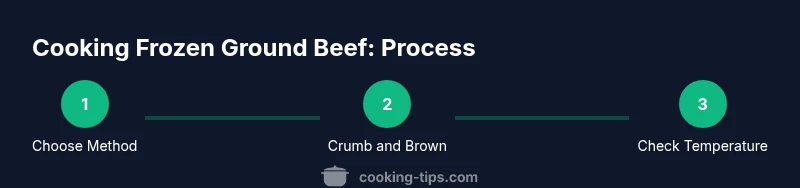
- 1
Decide thaw vs. cook-from-frozen
Evaluate your timeline and dish. If you have time, thawing yields more even browning. If not, plan to cook from frozen with steady heat and frequent stirring. This initial decision shapes your technique and timing.
Tip: Choose thawing if you want the fastest browning; otherwise, proceed with gentler heat from the start. - 2
Preheat and prep your pan
Preheat the skillet on medium or medium-low heat. A light coating of oil helps prevent sticking, especially with lean ground beef. Gather your tools and have your thermometer ready to monitor doneness.
Tip: Don't rush to high heat; even low-to-mid heat yields better texture when starting from frozen. - 3
Add frozen mass and begin crumbling
Place the frozen block in the pan and let it soften briefly. Use the spatula to break off chunks; keep turning and breaking until you have small crumbles. Maintain steady heat to avoid steaming rather than browning.
Tip: Work in sections; avoid trying to melt the entire block at once. - 4
Season gradually and finish browning
Season after the meat begins to brown so you don’t draw moisture too early. Add salt, pepper, garlic or onion powders in stages, and continue to cook until the pieces are evenly browned and separate easily.
Tip: Consider finishing with aromatics after most browning to build aroma and depth. - 5
Check temperature and rest
Insert an instant-read thermometer into the thickest part of the meat. Ensure it reaches the safe internal temperature, then remove from heat and rest for a minute or two to redistribute juices.
Tip: Resting helps with texture and juiciness; don’t skip this step even for fast meals. - 6
Store or repurpose safely
If you have leftovers, portion into shallow containers, cool quickly, and refrigerate within two hours. Reheat to 165°F (74°C) before serving as part of another dish like tacos, sauces, or casseroles.
Tip: Label leftovers with date and use within 3-4 days.
Quick Answers
Can I cook frozen ground beef without thawing?
Yes. You can cook ground beef from frozen, but plan for a longer cook time and ongoing breaking apart of the meat to ensure even cooking. Using a thermometer helps confirm doneness.
Yes. You can cook frozen ground beef, but it takes longer and you should keep breaking it into small pieces as it cooks to ensure it’s fully done.
What is the safest internal temperature for ground beef?
The safe internal temperature for ground beef is 160°F (71°C). Use an instant-read thermometer to check the thickest part of the meat.
Safe internal temperature for ground beef is 160 degrees Fahrenheit; use a thermometer to be sure.
Should I thaw beef before cooking if I’m aiming for tacos or crumbles?
Thawing before cooking generally yields finer crumbles and more even browning, which is great for tacos or crumbled toppings. If you’re in a hurry, frozen-to-crumble works with careful stirring.
Thawing helps for even texture, but if you’re short on time you can cook from frozen with steady stirring.
Can I freeze cooked ground beef leftovers for later use?
Yes. Cool leftovers quickly and store in shallow containers. Reheat to 165°F (74°C) before using in future meals.
Yes, you can freeze cooked beef and reheat it later to a safe temperature.
What are common mistakes when cooking from frozen ground beef?
Common mistakes include over-high heat causing scorching on the outside while the inside stays undercooked, overcrowding the pan, and adding too much salt early. Use medium heat and break up the meat as it cooks.
Common mistakes are too-hot heat, overcrowding, and seasoning too early.
Can I season frozen meat directly, or should I wait?
Seasoning can be added in stages. Start with a light salt after browning begins and finish with other spices once the chunks are well separated and browned for maximum flavor.
Season in stages: start lightly and finish with spices as browning completes.
Watch Video
Top Takeaways
- Cook frozen ground beef safely with proper heat and temperature
- Thawing yields more even browning, but frozen method works in a pinch
- Use a thermometer to verify doneness (160°F/71°C)
- Brown thoroughly and avoid crowding the pan for best texture