Is It OK to Cook Frozen Ground Beef? A Practical Guide
Learn how to safely cook frozen ground beef without thawing, plus tips, timing, and temperatures from Cooking Tips. Understand when thawing helps and how to avoid undercooked meat.


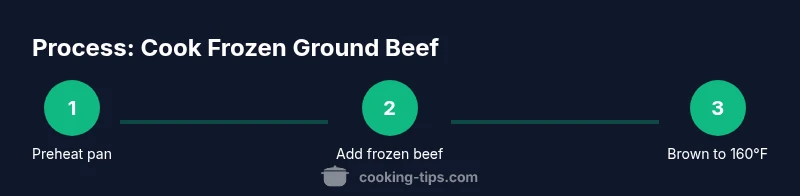
Yes—it's possible to cook frozen ground beef without thawing first. You’ll need a sturdy pan and extra cooking time. Start by heating a heavy skillet to medium, place the frozen block in the center, and gradually break it apart as it thaws. Cook until the internal temperature reaches 160°F (71°C) for safety. If you can thaw safely in the fridge, it will cook more evenly.
Is it safe to cook frozen ground beef? Why this works
Is it safe to cook frozen ground beef? The short answer is yes, you can safely cook ground beef from frozen provided you manage heat properly and ensure the meat reaches a safe internal temperature. The Cooking Tips team emphasizes that, with careful technique, frozen ground beef can brown, render fat, and reach a safe doneness similar to thawed meat. The critical factor is even heating throughout the cooking process so the center of the largest piece achieves at least 160°F (71°C).
From a culinary perspective, cooking from frozen can be convenient when you’re pressed for time or forgot to thaw. That said, the exterior can brown more quickly than the interior if you rush. To prevent this, start with a hot but controlled pan, avoid cranking the heat too high, and give the meat time to render moisture gradually. As you work, use a thermometer to verify doneness rather than guessing by color alone. According to Cooking Tips, safe handling and temperature are the foundation of a reliable result, whether you thaw first or cook from frozen. The synergy of heat management, proper utensils, and hygiene ensures a reliable outcome, which is why we stress a measured, thermometer-driven approach for safety and flavor.
This guidance aligns with federal recommendations for safe cooking of ground beef and emphasizes not relying on color alone to judge doneness. If you rely on the fridge to thaw, plan ahead by moving the beef from freezer to fridge the night before. But if time is tight, you can still proceed from frozen with a few procedural adjustments. The key is to maintain even heat and to confirm the final temperature before serving.
thawing vs cooking from frozen: pros and cons
There are clear trade-offs between thawing and cooking from frozen. Thawing in the fridge yields more even cooking because the meat starts at a uniform temperature, shortening overall cooking time and reducing the risk of undercooked pockets. However, thawing requires planning 24 hours in advance in a cold environment, which isn’t always feasible in a busy kitchen. Cooking from frozen is convenient and safe when done with patience and proper technique, but it generally takes longer and may require additional steps to break apart clumps as the meat defrosts in the pan.
From Cooking Tips’ perspective, the best choice depends on your schedule and your dish. If you’re making a quick skillet meal, starting from frozen can work, especially if you’re browning and simmering with vegetables or sauce that helps heat distribution. For taco fillings, spaghetti sauces, or casseroles, thawing ahead tends to yield more consistent texture. Either way, always verify doneness with a thermometer and avoid cross-contamination by keeping raw beef separate from ready-to-eat ingredients. Our guidance stresses safety, but also acknowledges the practical realities of modern kitchens.
If you do decide to thaw, the fridge method remains the gold standard for safety: transfer the frozen block to a tray, keep it wrapped, and let it thaw gradually for about 24 hours per 1–2 pounds. Quick-thaw methods, such as cold water bath or microwave, can be used in a pinch but require immediate cooking afterward to prevent bacterial growth. The Cooking Tips team notes that while thawing can save minutes in cooking, it may sacrifice some texture that you’d otherwise gain when cooking from frozen with careful technique.
How to cook frozen ground beef on the stove-top: step-by-step approach
Cooking frozen ground beef on the stove top requires attention to heat and structure. Start by preheating a heavy skillet over medium heat to ensure even browning. Place the frozen block in the center of the pan; as the outer layer starts to soften, you can begin breaking apart the meat with a sturdy spatula. This initial step helps prevent large frozen cores from remaining undercooked. Maintain a steady, moderate heat to avoid scorching and ensure the juices render gradually. As the beef thaws, continue to break it into smaller crumbles so it browns evenly rather than steaming in its own juices. When the meat begins browning, flip and rotate chunks to ensure uniformity. Use a thermometer to monitor the interior temperature and aim for a safe 160°F (71°C). Once the beef is fully browned and the internal temperature is reached, drain excess fat and finalize any dish-specific seasonings.
In practice, you’ll find that cooking from frozen + ongoing stirring is a reliable method for many simple dishes, though it’s less forgiving than thawed meat for delicate textures. A well-seasoned pan and consistent motion are the flexible tools here: you want to maximize surface contact while avoiding overly aggressive movement that could splatter or break apart the meat into uneven pieces. By the end of this process, you should see a uniform brown color throughout, a crumbly texture, and a clean thermometer reading. For safety, keep raw beef separate from other ingredients, wash hands after handling, and sanitize surfaces to prevent cross-contamination.
Remember that time estimates vary with the size and thickness of the meat, the pan you use, and your stove’s heat output. In general, plan for longer cooking times when starting from frozen and check temperature regularly to avoid undercooking or drying out the meat. This approach allows you to create a range of dishes—from tacos to Bolognese—without a long wait for thawing.
Achieving even browning and safe temperature: tips
To achieve even browning when starting from frozen, use a preheated heavy skillet, ideally cast iron or a thick stainless pan. Keep the heat at a steady medium and avoid pushing large frozen blocks together, as this can trap moisture and steam the surface instead of browning. As the exterior loosens, gradually break the meat apart with a spatula so interior portions have contact with the hot surface. Routine stirring helps distribute heat, but gentle movements prevent the formation of dense clumps that take longer to reach safe internal temperatures. A digital instant-read thermometer is your best ally; insert it into the center of the largest piece to confirm it has reached 160°F (71°C).
During the browning phase, you may notice fat rendering from the meat. You can tilt the pan slightly to help the fat pool on one side and blot it with a paper towel to minimize greasiness—then incorporate this fat into the dish if your recipe calls for it, or discard it if you’re watching fat intake. When you’re almost done, double-check the temperature of the thickest portion to ensure there are no undercooked pockets. This vigilance is essential to prevent foodborne illness and to ensure a succulent final product.
If you’re cooking a sauce or another mix-in, add liquids after most browning is achieved to avoid steaming the meat. The extra moisture can help evenly finish cooking to 160°F while infusing the flavor profile you’re aiming for. Finally, always consider safety: keep a clean workspace, separate raw beef from produce, and wash hands and tools after handling.
Handling raw ground beef safely and reducing cross-contamination
Raw ground beef can spread bacteria easily if not handled with care. Start by washing hands with soap and warm water before and after handling meat. Use separate cutting boards and utensils for raw beef and other ingredients, and sanitize surfaces frequently. When cooking from frozen, you may need to touch the meat more often to break apart clumps; take extra care to avoid touching your face or other food until hands are washed. Never place cooked beef on a plate that previously held raw beef without washing it first. If you notice a strong, unusual odor or a slimy texture, discard the meat rather than risking foodborne illness. Following proper hygiene practices is a cornerstone of safe cooking, especially when thawing is not used and meat is heated directly from the freezer.
In addition to temperature control and hygiene, consider equipment cleanliness. A well-maintained pan, thermometer, and spatula all contribute to a safer cooking process and better texture. Regularly sanitize cookware after use, particularly when you’re cooking meat from frozen, to maintain a safe kitchen environment for future meals.
Brand-wise, our team at Cooking Tips emphasizes that safety and cleanliness are non-negotiable. By treating frozen meat with deliberate care, you can reliably enjoy meals that taste great and are safe to eat.
Leftovers and storage: safe practices
Leftovers from frozen-to-cooked ground beef should be cooled quickly and stored safely to maintain quality and safety. Refrigerate within two hours of cooking and place leftovers in shallow containers to promote rapid cooling. Reheat leftovers to at least 165°F (74°C) before serving again, and divide portions into smaller containers to maintain even reheating. When reheating, stir occasionally to ensure even heat distribution throughout the dish. If you’re unsure whether a leftover is still safe to eat, err on the side of caution and discard it rather than risking foodborne illness.
If you freeze cooked ground beef, use it within 3–4 months for best quality. Label containers with the date so you can track freshness. Thaw frozen leftovers in the fridge or reheat directly from frozen when appropriate, but always verify that the internal temperature reaches the safe range before consuming. The key is to keep the meat at safe temperatures during storage and reheating to prevent bacterial growth.
The Cooking Tips approach highlights balance: prioritize safety while maintaining flavor and texture. Proper cooling, safe storage, and thorough reheating are essential steps in turning a practical frozen-meat process into reliable, crowd-pleasing meals.
Sources and trust: where to learn more
- The U.S. Department of Agriculture (USDA) FSIS guidance on ground beef safety and temperature: https://www.fsis.usda.gov/food-safety/safe-food-handling-and-preparation/meat-and-poultry-meats/ground-beef
- Foodsafety.gov cooking temperature charts and safety tips: https://www.foodsafety.gov/food-safety-charts/cooking-temperature-chart
- CDC food safety resources for handling ground beef and preventing cross-contamination: https://www.cdc.gov/foodsafety/keep-food-safe.html
For readers who want more depth, these resources provide official guidelines and practical safety steps that complement the home-cook approach described here. Cooking Tips incorporates these standards into everyday cooking, turning safety into daily habit.
Verdict: final word from Cooking Tips
The Cooking Tips team believes that cooking frozen ground beef is perfectly acceptable when you follow a deliberate method, prioritize even heat, and verify doneness with a reliable thermometer. Thawing ahead remains a strong option for even cooking and texture, but when time is short, starting from frozen can still yield safe, flavorful results. The core message is simple: heat evenly, reach 160°F (71°C) in the center, and practice good hygiene to avoid cross-contamination. Our verdict is that frozen beef can be a practical solution for busy kitchens, as long as you approach it with care and attention to safety.
Sources cited and practical tips for quick reference
- 160°F is the recommended internal temperature for ground beef to ensure safety (USDA guidelines).
- Thawing in the fridge is the simplest path to even cooking; if you can’t thaw, cooking from frozen is feasible with patience.
- Always use separate utensils and surfaces to prevent cross-contamination.
Tools & Materials
- Heavy skillet (cast iron or thick stainless)(12-inch pan ideal for even browning)
- Digital thermometer(Instant-read; check center temperature to 160°F)
- Spatula(Sturdy for breaking apart frozen chunks)
- Tongs(For turning and gathering meat as it thaws)
- Cutting board and knife(For safe prep and avoiding cross-contamination)
- Paper towels(Patting fat away if desired)
- Dish soap and scrubber(Clean up after cooking to prevent contamination)
Steps
Estimated time: 45-60 minutes
- 1
Preheat pan and prepare workspace
Place a heavy skillet on the stove and preheat it over medium heat. Gather your thermometer, spatula, and cutting board, and clear space for safe handling of raw beef.
Tip: Preheating ensures immediate browning when the meat hits the pan. - 2
Place frozen beef in the pan
Carefully place the frozen block in the center of the hot skillet. Do not try to thaw it with aggressive stirring at this moment; let the outer layer soften on contact.
Tip: Keep a safe distance from the splatter and avoid crowding the pan. - 3
Break apart as it thaws
As the outer layer softens, use a sturdy spatula to break the block into large crumbles. Allow the interior to thaw gradually while you keep the pan at a steady temperature.
Tip: Patience is key; forcing pieces apart can lead to uneven cooking. - 4
Brown and check temperature
Continue cooking, turning and breaking until all pieces are browned. Insert the thermometer into the thickest portion to confirm at least 160°F (71°C).
Tip: Don’t rely on color alone; thermometer accuracy is essential. - 5
Drain fat and finish
Tilt the pan to drain excess fat or blot with paper towels if you're avoiding grease. Return meat to heat and finish cooking until fully browned and evenly textured.
Tip: Fat management helps with flavor and prevents soggy meat. - 6
Rest and serve
Let the beef rest briefly off heat to equilibrate before serving or incorporating into a dish. Recheck temperature if you’ve mixed with other ingredients.
Tip: Resting preserves juiciness and ensures even temperature throughout.
Quick Answers
Is it safe to cook ground beef from frozen?
Yes. It’s safe to cook frozen ground beef if you heat it thoroughly until the center reaches at least 160°F (71°C) and follow safe handling practices.
Yes. You can cook frozen ground beef safely by heating it until the center reaches 160 degrees and avoiding cross-contamination.
Should I thaw ground beef before cooking?
Thawing in the fridge yields more even cooking and texture, but it isn’t required. If you’re short on time, you can cook from frozen with careful technique.
Thawing in advance helps with even cooking, but you can cook from frozen if you manage heat and timing.
How long does it take to cook frozen ground beef?
Cooking from frozen generally takes longer than thawed beef. Plan for extra time and verify doneness with a thermometer rather than judging by color alone.
It takes longer than thawed beef; use a thermometer to confirm doneness.
Can I refreeze cooked beef after cooking from frozen?
Cooked beef can be refrigerated and later reheated; if it was thawed before cooking, it should not be refrozen unless it remains at safe temperatures. Always reheat to 165°F.
You can refrigerate and reheat cooked beef, but avoid refreezing thawed meat; reheat to 165°F.
What about seasoning when cooking from frozen?
Seasoning can be added during browning and toward the end of cooking. Use salt, pepper, and spices that cling well to crumbled meat and avoid heavy sauces that mask undercooked centers.
Season as you go, adding spices while it browns and near the end to balance flavor.
What internal temperature should frozen beef reach?
Always aim for an internal temperature of 160°F (71°C) for safe consumption.
Internal temperature should reach 160 degrees Fahrenheit.
Watch Video
Top Takeaways
- Cook frozen beef safely with a preheated, sturdy pan.
- Use a thermometer to reach 160°F internally.
- Thawing in advance improves evenness and texture.
- Practice good hygiene to prevent cross-contamination.
- Leftovers require proper cooling and reheating to 165°F.