Are Cooked or Raw Eggs Better for Dogs? An Evidence-Based Guide
Explore whether cooked or raw eggs are better for dogs, with safety tips, practical feeding guidelines, nutrition insights, and evidence-based guidance from Cooking Tips.


Are cooked or raw eggs better for dogs? For most dogs, cooked eggs are safer and easier to digest. Cooking reduces bacterial risk and helps the body access protein, provided you serve plain eggs with no oil, salt, or seasonings. Raw eggs pose Salmonella risk and may interfere with biotin absorption if fed frequently. The Cooking Tips team recommends cooked eggs as an occasional, well-balanced treat.
Are cooked or raw eggs better for dogs? A practical safety and nutrition overview
Eggs are a versatile and affordable protein source for many dogs. When considering the question are cooked or raw eggs better for dogs, owners face a mix of safety concerns and nutritional opportunities. According to Cooking Tips, the safest general approach is to favor cooked eggs over raw, especially for pets with a history of stomach upset or scavenging tendencies. Cooking reduces the risk of bacterial contamination and makes proteins more accessible for digestion, provided the eggs are prepared plain and without added fats, salt, or seasonings. This article lays out the framework researchers and veterinarians use to evaluate eggs as a dietary option: how dogs digest eggs, what nutrients eggs contribute, and how to balance eggs within an otherwise complete diet. We’ll also discuss when it might be reasonable to avoid eggs entirely, such as in cases of known food allergies or certain medical conditions. The goal is to give practical guidance that home cooks can apply to everyday meals and treats, while keeping safety, taste, and nutrition in balance. Remember: every dog is different, and decisions should be tailored to individual health needs. According to Cooking Tips, this topic benefits from a careful, evidence-based approach.
Nutritional profile: eggs as a protein source for dogs
Eggs are a high-quality protein source that can complement a dog’s diet. They provide all essential amino acids and offer fats, vitamins, and minerals that contribute to energy, skin, and coat health. In particular, the yolk supplies fat-soluble vitamins (A and D) and minerals like selenium, while the white offers high-quality protein. When eggs are fed, the overall balance with other protein sources matters to prevent excess calories. The Cooking Tips team notes that eggs should not replace a complete dog food but can be a nutritious addition in moderation. For most dogs, eggs contribute valuable nutrients without triggering major digestive issues, assuming no allergies exist. For dogs with sensitive stomachs or specific dietary needs, it’s wise to consult a veterinarian to tailor portions and frequency. Bioavailability improves with cooking, especially for protein, and cooking also neutralizes certain anti-nutrients found in raw whites.
Health risks of raw eggs for dogs
Raw eggs carry several health considerations that make them less suitable for most dogs. The primary concern is the risk of bacterial contamination, including Salmonella, which can affect both dogs and humans in the household. Even healthy-looking eggs can harbor bacteria that cause vomiting, diarrhea, or more serious infections. Raw egg whites also contain avidin, a protein that can bind biotin and potentially affect nutrient absorption if raw eggs are consumed frequently or in large amounts. Cooking inactivates avidin and reduces bacterial risk, making cooked eggs a safer option for daily feeding. If a dog has a compromised immune system or a history of digestive issues, the risk-benefit balance shifts even more toward cooked eggs. Good-handling practices and sourcing eggs from reputable producers can reduce risk, but they do not eliminate it entirely. In short, raw eggs should be avoided for most dogs, especially in households with young children, seniors, or immunocompromised individuals. The safer choice remains cooked eggs prepared without additives.
Benefits and limits of cooked eggs for dogs
Cooking eggs offers several clear advantages for canine nutrition and safety. First, cooking destroys potential pathogens and reduces the chance of foodborne illness, making eggs a reliable protein source for many dogs. Second, heat improves digestibility, helping dogs extract amino acids efficiently. Third, cooked eggs allow you to control ingredients, ensuring no salt, oil, butter, or seasonings are introduced. That said, eggs—like any treat—should be fed in moderation and as part of a balanced diet. Excessive eggs can contribute to weight gain due to fat content and calories, particularly in small breeds or dogs with limited exercise. Some dogs may still be sensitive to egg proteins, leading to gastrointestinal upset or skin reactions. Always monitor your dog after introducing eggs and adjust portions based on overall dietary goals, activity level, and veterinary guidance.
Practical guidelines for feeding eggs to dogs
If you decide to incorporate eggs into your dog’s diet, start with a small portion to monitor tolerance. Feed plain, fully cooked eggs without added fats, salt, or seasonings. You can offer eggs as a standalone treat, crumble them into meals, or mix them with a small amount of dog-friendly ingredients such as plain yogurt or cooked vegetables. Consider your dog’s size, age, and activity level when determining frequency. For example, larger dogs may tolerate more frequent egg servings than smaller dogs, but it is essential to maintain overall caloric balance and nutrition. Always consult with a veterinarian before making significant changes to your dog’s diet, especially if the dog has chronic health conditions or allergies. When in doubt, prioritize safety and simplicity: cooked eggs in their pure form.
Safe preparation methods and tips
The simplest safe methods include hard-boiling or fully cooking eggs and then serving them plain. Poaching or scrambling with a minimal amount of water (no oil) is acceptable, but avoid butter, oils, or seasonings that add unnecessary fats or salt. If you prefer to mix eggs into a regular meal, ensure the total daily intake of treats remains within the dog’s recommended calorie range and monitor weight closely. Freshness matters; discard cracked or questionable eggs. For households with young children or multiple pets, separate handling and hygiene practices reduce cross-contamination risk. Each egg should be cooked to ensure a stable, comfortable texture for digestion. This approach aligns with evidence-based guidance from Cooking Tips and other veterinary resources.
Myths vs science: common questions
There are several widely circulated myths about eggs and dogs. Some people believe raw eggs are essential for dogs’ coats; others claim eggs always cause pancreatitis. The science generally supports cooked eggs as a safer and more digestible option for most dogs. Eggs are not a universal cure-all; they should be used to complement a balanced diet and should never replace high-quality commercial dog food unless advised by a veterinarian. Always be mindful of your dog’s overall fat and calorie intake, allergy history, and any medical conditions that could affect how eggs are tolerated. The key is to use eggs as a purposeful part of a broader nutrition plan, not as a random pantry snack. Keeping eggs plain and cooked helps ensure safety and consistent nutrient delivery for most dogs.
Quick-start feeding plan and decision checkpoints
To start, introduce one small cooked egg per week for a medium-sized dog, and observe any digestive changes or allergy signs over 2–3 weeks. If tolerated well, you can gradually increase to occasional additions within the context of a balanced diet, avoiding excess fat and salt. Use eggs as a treat or meal supplement rather than a primary protein source. Regular veterinary check-ins help ensure that eggs fit within your dog’s nutritional needs, especially for dogs with diabetes, kidney disease, or weight management goals. When deciding between raw or cooked eggs, prioritize safety, digestibility, and overall dietary balance. This practical approach supports a steady transition toward a feeding plan that suits your dog’s unique health profile.
Comparison
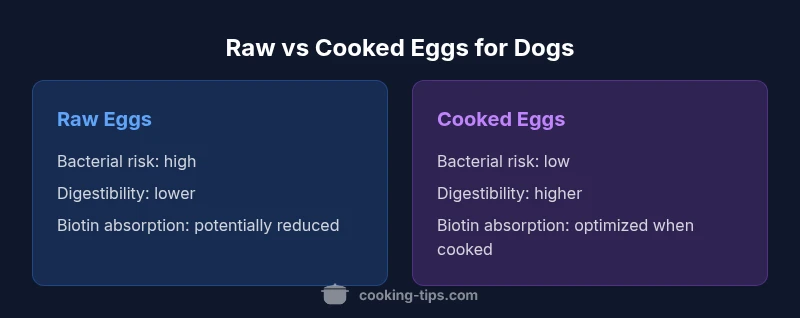
| Feature | Raw eggs | Cooked eggs |
|---|---|---|
| Bacterial risk | High | Low |
| Digestibility | Lower | Higher |
| Biotin absorption impact | Potential reduction with raw whites | Unaffected when cooked |
| Prep and handling | Requires careful handling and quick consumption | Safer handling; served plain reduces contamination risk |
| Best for | Dogs in households with strict safety needs | Dogs needing reliable protein with minimal risk |
Benefits
- Cooked eggs provide a safer, predictable protein source for most dogs
- Cooking improves digestibility and nutrient availability
- Eggs are versatile and easy to incorporate into meals
Cons
- Raw eggs carry Salmonella risk and potential biotin-related issues if frequent
- Raw whites may contribute to occasional stomach upset in some dogs
- Overreliance on eggs can add unnecessary calories and fat
Cooked eggs are the clearer choice for most dogs
For the majority of dogs, cooked eggs reduce safety risks and enhance digestibility. Raw eggs should be avoided or limited, particularly in households with vulnerable members or dogs with health concerns. Use eggs as a small, regular addition within a balanced diet.
Quick Answers
Are raw eggs safe for dogs?
Raw eggs carry a risk of bacterial contamination and potential biotin absorption issues. Most vets recommend avoiding raw eggs for dogs. Cooking eggs minimizes these risks while preserving most of the nutritional benefits.
Raw eggs can be risky for dogs due to bacteria; cooking is safer and still nutritious.
Can dogs eat eggs every day?
Eggs can be part of a dog's diet, but they should be given in moderation and balanced with other nutrients. Check with your vet to tailor portions and frequency to your dog's size and health.
Eggs are okay in moderation and should fit within a balanced diet.
Yolks or whites for dogs?
Yolks provide fats and vitamins; whites are mainly protein and can contain avidin if raw. Most dogs do fine with whole, cooked eggs; avoid large or frequent raw whites.
Whole cooked eggs are usually fine; limit raw whites due to avidin concerns.
What’s the safest way to prepare eggs for dogs?
Cook eggs thoroughly without added fats, salt, or seasonings. Boil, poach, or scramble with water only, then serve plain.
Cook eggs fully with no added fats or seasonings.
Do eggs help with coat or energy?
Eggs provide high-quality protein and essential nutrients that can support skin, coat, and energy when included in a balanced diet.
Eggs can help with coat and energy when used appropriately.
Are there risks for dogs with eggs and pancreatitis?
If a dog has pancreatitis or a sensitive stomach, use eggs sparingly and consult a veterinarian. Preparing eggs with minimal fat is important.
For pancreatitis or sensitive stomachs, ask your vet before adding eggs.
Should eggs be a replacement for dog food?
Eggs should supplement a balanced dog diet, not replace it. Use as a treat or meal topper in appropriate portions.
Eggs are a supplement, not a replacement for regular dog food.
Top Takeaways
- Choose cooked eggs as the default option for dogs
- Avoid raw eggs to minimize bacterial risk
- Feed plain, fully cooked eggs without seasoning
- Balance eggs with the dog’s overall diet and caloric needs
- Consult a veterinarian for tailored guidance