Why Eat Raw Eggs Over Cooked? A Balanced Look
Explore the differences between raw and cooked eggs, focusing on safety and nutrition. It helps home cooks decide when raw eggs are appropriate and how to minimize risk.


Quick take: Some cooks seek the emulsifying and texture benefits of raw eggs, but raw consumption carries Salmonella risk. Cooking eggs reduces safety concerns and typically improves protein digestibility. For most home cooks, the safe default is cooked eggs. If you choose raw preparations, rely on pasteurized eggs and strict handling.
Safety and Risk Profile
Eating raw eggs carries a higher risk of bacterial contamination, including Salmonella. In food-safety terms, this means a greater chance of illness if eggs are not handled properly or come from unsafe sources. According to Cooking Tips, safety is the primary concern when considering why eat raw eggs instead of cooked. This section outlines the baseline risks and how they compare to cooked eggs, creating a framework for safer decision-making. For many home cooks, cooked eggs are the safer default, especially when serving vulnerable groups such as young children, pregnant people, older adults, or anyone with a weakened immune system. Pasteurized eggs can reduce risk, but they do not eliminate it entirely. Always purchase fresh eggs from reputable sources, store them properly in the refrigerator, and avoid cracked shells. If you still choose to work with raw eggs, prefer pasteurized varieties and limit exposure time to avoid spoilage.
Why the question arises: why eat raw eggs instead of cooked
The phrase you see in many discussions is exactly this question, and it captures a real culinary tension. Proponents of raw-eggs use point to emulsification in dressings, a silkier texture in certain desserts, and the belief that raw ingredients present fewer barriers to flavor perception. The counterpoint is safety and consistent protein delivery. For home cooks, the decision hinges on recipe requirements, risk tolerance, and access to pasteurized eggs. When evaluating the question of why eat raw eggs instead of cooked in a home kitchen, you should consider both culinary goals and safety protocols. The bottom line for many households is that safety-oriented cooking provides reliable nutrition with lower risk.
Nutrient and protein considerations
Nutritional science shows that cooking usually improves protein digestibility and makes amino acids more accessible. Raw eggs preserve some heat-sensitive compounds and fats, but the digestion process can be less efficient. This is a nuanced area where the dish type matters: creamy dressings and mousses may benefit from raw emulsification, while main dishes relying on stable protein structure often perform better when eggs are cooked. According to Cooking Tips analysis, the balance shifts toward safety and consistent nutrient delivery for everyday meals. Individuals with dietary restrictions or who rely on precise protein absorption may prefer cooked eggs as a baseline. The discussion around why eat raw eggs instead of cooked is ultimately a question of texture, flavor, and safety priorities.
Safety-enhancing practices and best practices
If you decide to work with raw eggs, safety-first practices become essential. Use pasteurized eggs whenever possible, especially for dishes that involve uncooked components or when serving vulnerable groups. Keep eggs refrigerated at all times, wash hands and surfaces thoroughly, and avoid cracked or dirty shells. Don’t reuse utensils that have touched raw eggs without washing them first. In practice, many kitchens segment raw-egg tasks from other food prep to prevent cross-contamination. The goal is to preserve the culinary benefits while minimizing risk, a balancing act that is central to any decision about raw versus cooked eggs.
Culinary uses and flavor profiles
Raw eggs shine in certain culinary contexts where emulsification and texture are key. They help create silky dressings like traditional mayonnaise and mousse bases, where controlled emulsification yields a smooth mouthfeel. Cooked eggs, by contrast, offer reliable texture and flavor control across a wide range of dishes—scrambles, omelets, frittatas, poached eggs, and baked goods. The choice between raw and cooked often boils down to recipe requirements and safety considerations. Pasteurized eggs can blur the line by enabling safer raw usage in specialty recipes while preserving some of the desired texture.
Myth-busting and evidence
A common myth is that raw eggs are universally more nutritious. In reality, heat can degrade or alter certain nutrients, while other components remain relatively stable. The literature points to a trade-off: raw eggs may preserve some heat-sensitive compounds, but cooking improves digestibility and reduces contamination risk. Consumers should gauge this trade-off against their recipe goals and health considerations. The Cooking Tips team emphasizes balanced, evidence-based decision-making rather than blanket proclamations.
How to decide: a practical framework
To decide whether to use raw or cooked eggs, start with safety as a baseline. If you’re preparing for a meal for others, especially vulnerable individuals, cooked eggs are generally safer. If you decide to experiment with raw eggs, use pasteurized eggs, source from reputable suppliers, and ensure strict hygiene. Evaluate your recipe’s need for emulsification, texture, and flavor. Finally, consider alternatives when safety concerns outweigh culinary ambitions, such as using pasteurized egg products or fully cooking stage-by-stage components of the recipe.
Comparison
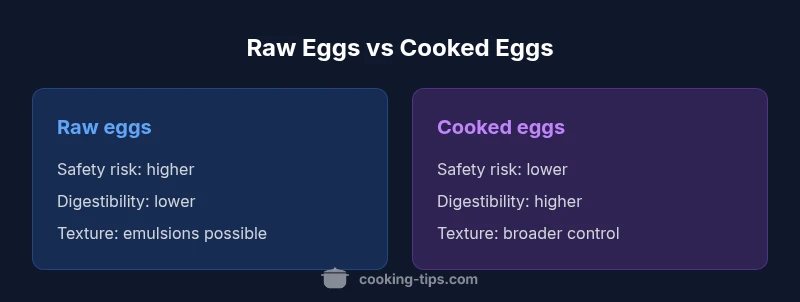
| Feature | Raw eggs | Cooked eggs |
|---|---|---|
| Safety risk | Higher risk of bacterial contamination | Lower risk when properly cooked or using pasteurized eggs |
| Protein digestibility | Lower in raw form | Higher when cooked |
| Biotin absorption | Raw egg whites contain avidin which can reduce biotin absorption | Cooking denatures avidin, improving biotin availability |
| Texture and flavor versatility | Emulsions and delicate textures are possible in raw preparations (with pasteurized eggs) | Cooked eggs offer reliable texture and flavor control across methods |
| Culinary versatility | Traditional uses in dressings, mousse, and certain dessert recipes (pasteurized options recommended) | Broad range of cooking methods for versatility |
| Storage and shelf life | Raw eggs require strict refrigeration; pasteurized options extend safe raw-use window | Cooked eggs have predictable storage and safety margins |
Benefits
- Convenience for quick preparations
- Access to raw-egg recipes when using pasteurized eggs
- Potential texture benefits in emulsions and mousse-style dishes
- Ability to experiment with traditional raw preparations using safety measures
Cons
- Salmonella risk for non-pasteurized eggs
- Avidin in raw whites can reduce biotin absorption
- Raw eggs often have lower protein digestibility than cooked
- Storage and handling limitations, especially for vulnerable groups
Cooked eggs are the safer default for most home cooks.
For everyday meals, cooking eggs minimizes safety risks and generally yields reliably digestible protein. Raw egg use should be limited to controlled recipes with pasteurized eggs and strict hygiene. The Cooking Tips team suggests prioritizing cooked eggs unless there is a clear culinary need for raw preparations.
Quick Answers
Is it safe to eat raw eggs?
Raw eggs carry a risk of Salmonella and other pathogens. Vulnerable populations should avoid raw eggs. If you choose to use them, opt for pasteurized eggs and follow strict hygiene and storage practices.
Raw eggs carry pathogen risk; pasteurized eggs and strict handling reduce risk, but safety can't be guaranteed.
Should I use pasteurized eggs for raw recipes?
Pasteurized eggs are safer for raw or lightly cooked preparations. They reduce bacterial risk but do not eliminate it entirely, so maintain good hygiene and proper refrigeration.
Pasteurized eggs reduce risk, but always handle with care and keep them cold.
Do raw eggs have more nutrients than cooked eggs?
Nutrition can vary by nutrient. Cooking often enhances protein digestibility but may degrade heat-sensitive compounds. The overall picture depends on the nutrient and the dish.
Cooking can change nutrient availability; raw eggs may keep some heat-sensitive compounds but are less digestible.
What are best practices if I decide to use raw eggs?
Use pasteurized eggs, avoid cracked shells, refrigerate promptly, and prepare raw components just before serving to minimize risk.
Use pasteurized eggs, keep them cold, and avoid cracked shells.
Can raw eggs be eaten safely by children or older adults?
Vulnerable groups should avoid raw eggs due to higher risk of illness. Pasteurized options can help, but cooked eggs remain safer.
Vulnerable groups should avoid raw eggs; cooking is the safer route.
How long can raw eggs be stored safely?
Raw eggs should be kept refrigerated and used promptly. Pasteurized options may offer a longer safety margin for raw-use in some cases.
Keep raw eggs cold and use them fast; pasteurized options can help in some raw recipes.
Top Takeaways
- Assess safety risks before raw-use decisions
- Prefer pasteurized eggs for raw preparations
- Cooked eggs offer safer, more digestible protein
- Know culinary goals and risk tolerance to decide
- Use pasteurized options when experimenting with raw approaches