Cooked vs Raw Chicken for Dogs: Is One Better?
An evidence-informed comparison of cooked and raw chicken for dogs, detailing safety, nutrition, risks, and practical feeding tips from Cooking Tips to help you decide the best approach for your pet.


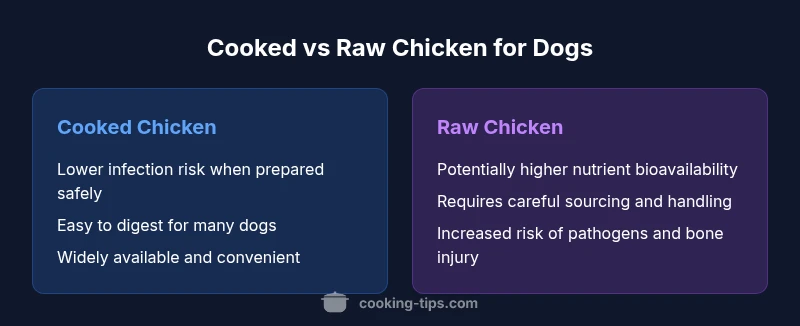
Many dog owners ask is cooked or raw chicken better for dogs, and the short answer is nuanced. Cooked chicken is generally safer and easier to digest for most dogs, while raw chicken can offer more bioavailable nutrients but carries higher risks of bacterial contamination and bone injuries. The best choice depends on your dog’s health, digestion, and your ability to manage safe handling. This guide compares safety, nutrition, and practical tips to answer this question.
Is cooked vs raw chicken better for dogs? The big question
Choosing between cooked and raw chicken for dogs hinges on risk management, digestion, and overall nutrition. While some dogs thrive on raw protein, many encounter fewer problems with cooked chicken when it is prepared safely and used as part of a balanced diet. This section introduces the core trade-offs and sets up a practical framework for decision-making. According to Cooking Tips, the safest path for most households is to prioritize proper cooking and clean handling, while acknowledging that some owners pursue raw feeding under veterinary supervision. The aim is to minimize illness risk while meeting protein needs, with flexibility to adapt as your dog ages or changes health status.
Safety considerations: pathogens, bones, and contamination
Raw chicken introduces a higher risk of Salmonella and Campylobacter exposure for both dogs and humans in the household. Even with careful sourcing, raw chicken can harbor bacteria that are difficult to detect before feeding. Cooking destroys most surface and internal bacteria, and deboning cooked meat significantly reduces choking or bowel injury risks. When you feed raw, bone fragments can cause choking or gastrointestinal damage, especially in small dogs. Proper hygiene, separate prep areas, and regular vet guidance are essential for any raw approach. For most families, cooked chicken that is boneless and free of seasoning remains the safer baseline.
Nutritional differences: protein, fat, minerals, and moisture
When you compare nutrition, raw chicken may offer higher moisture and certain enzymes, while cooking tends to reduce moisture but can concentrate protein and fat differently. Cooking can also reduce some heat-sensitive vitamins, changing the exact nutrient balance. The key takeaway is that neither form should be your sole dietary staple; chicken should be part of a well-rounded diet that includes fiber, other protein sources, and vegetables as appropriate for your dog’s life stage. As Cooking Tips analyzes common feeding patterns, most dogs receive a significant protein contribution from chicken regardless of whether it is cooked or raw, provided the diet is balanced.
Digestibility and how dogs absorb nutrients
Digestibility varies by dog. Some dogs tolerate well-cooked chicken, showing steady stool patterns and steady energy. Others may respond better to raw protein if their gut is well-adapted and the meat is sourced responsibly. It’s important to monitor stool quality, energy levels, and coat condition after any dietary change. If you notice GI upset after a switch, consult a veterinarian. Remember, the presence of moisture in raw chicken can affect digestion differently from cooked meat, so observe your pet’s individual response.
Common risks and how to mitigate them
Key risks with raw feeding include bacterial exposure, cross-contamination in the home, and potential pathogen transfer to humans. Cooking reduces these concerns, but does not remove all hazards if the meat is contaminated beforehand or prepared with unsanitary practices. Regardless of cooking state, never feed seasoned or spicy foods, onions, garlic, or bones that can splinter. Always cut meat into appropriate shapes, avoid excessive fat, and store portions safely to prevent spoilage. Regular veterinary oversight helps tailor risk management to your dog’s health status.
Practical feeding guidelines: when to choose cooked or raw
Practical guidelines favor cooked chicken for most dogs, with boneless portions and simple ingredients. If you are considering raw feeding, work with a veterinarian or veterinary nutritionist to design a balanced, safe plan that includes bone handling, micronutrient coverage, and disease prevention strategies. Cooked chicken is easily integrated into meals with rice, vegetables, or commercial diets, whereas raw feeding requires precise sourcing and strict hygiene. Use chicken as a protein component, not the sole food, to maintain nutritional balance.
Cooking methods and safety tips
Safe cooking methods include boiling, poaching, or baking plain chicken without seasonings. Cook until the meat is opaque and reaches an internal temperature that ensures safety. Remove skin and fat to reduce fat intake, and debone thoroughly to prevent choking hazards. Cool the meat before serving, and portion out meals to avoid rapid changes in caloric intake. Use separate utensils and cutting boards for raw vs cooked meat to prevent cross-contamination.
Homemade chicken recipes for dogs (with caution)
Simple, dog-friendly recipes include plain boiled chicken mixed with plain rice, or shredded chicken added to a balanced dog-safe vegetable mix. Always test small portions first and monitor for GI tolerance. Avoid sauces, salt, or flavorings that can upset dogs’ stomachs. Rotate protein sources to prevent overexposure and potential allergies, and consult a veterinary nutritionist if you’re altering the diet significantly.
Veterinary perspectives and general guidance
Veterinarians emphasize safety and nutrition when choosing between cooked and raw chicken. While some clients report positive responses to raw feeding, the consensus in many clinics stresses disease prevention, proper sourcing, and a balanced diet. The Cooking Tips team notes that professional guidance is essential for dogs with immune compromise, chronic disease, or special dietary needs. A caregiver’s priority should be the dog’s long-term health and safety.
Myths vs facts about chicken for dogs
Myth: raw is always better for digestion. Fact: for many dogs, cooked chicken is easier on the stomach and safer overall. Myth: any raw diet is ideal. Fact: raw diets require strict sourcing, handling, and veterinary oversight. Myth: chicken alone can meet all nutritional needs. Fact: dogs need a complete diet with varied protein, fats, fiber, and micronutrients.
Introducing chicken to a dog’s diet gradually
Introduce chicken slowly over 7–14 days. Start with small portions mixed into existing food, watch for GI signs, and gradually increase if well tolerated. This gradual approach helps you determine whether your dog benefits from cooked or raw chicken without triggering adverse reactions. Record any changes in appetite, stool, or energy to discuss with your veterinarian.
Special cases: puppies, seniors, and dogs with allergies
Puppies require careful protein balancing and energy intake to support growth. Seniors may need easier-to-digest options and portion control. If your dog has a known poultry allergy, chicken should be avoided, and a different protein should be chosen. Poultry-sensitive dogs demand careful testing under veterinary supervision to avoid allergic reactions or GI stress.
How to choose: making the decision with confidence
Decision factors include your household’s ability to maintain clean handling, your dog’s digestive history, and any health conditions. If you choose cooked chicken, ensure it is deboned and unseasoned; if raw, source from reputable suppliers and work with a vet. The healthiest path is one that aligns with safety, balance, and your dog’s unique needs.
Next steps: staying aligned with your dog’s health goals
Use chicken as part of a balanced diet, monitor health indicators, and schedule regular veterinary checkups. Adjust portions and protein variety as your dog ages or if health status changes. The ultimate aim is to support a thriving, energetic dog with a safe and practical feeding plan.
Comparison
| Feature | Cooked chicken | Raw chicken |
|---|---|---|
| Safety & pathogens | Lower risk with proper cooking and handling | Higher risk of bacterial contamination if not handled or sourced carefully |
| Bone safety | Typically boneless; safer for choking and GI injury | Raw bones can splinter; higher choking risk and GI injury |
| Digestibility | Usually easier on the stomach; gentler digestion | Can be harder to digest; may be suitable for some dogs with the proper handling |
| Nutrient availability | Protein and minerals accessible with controlled cooking | Some nutrients may be more bioavailable in raw form, but risks apply |
| Preparation & safety | Cooked at home or store-bought; easy to portion | Raw requires careful sourcing, handling, and freezer management |
| Cost & practicality | Often economical and convenient; consistent safety | Can be expensive and time-consuming; requires strict safety protocols |
Benefits
- Reduces bacterial risk through proper cooking and handling
- Easy to control ingredients and portions
- Wide availability and predictable shelf-life
- Simple to implement in meals with rice or vegetables
- Low bone-risk when bones are removed from cooked meat
Cons
- Raw feeding can offer perceived nutrient benefits but carries higher safety risks
- Cooking may reduce some heat-sensitive nutrients
- Chicken alone is not a complete diet for dogs and must be balanced with other nutrients
- Raw feeding requires close veterinary supervision and sourcing discipline
Cooked chicken generally provides a safer, easier-to-manage option for most dogs, with raw chicken as a specialized approach under veterinary guidance
For the average dog, cooked, boneless chicken is the more reliable choice due to lower infection risk and simpler preparation. If you’re considering raw chicken, partner with a veterinarian to ensure a balanced, safe program and to monitor health outcomes over time.
Quick Answers
Is cooked or raw chicken safer for dogs overall?
In general, cooked chicken is safer for most dogs because proper cooking greatly reduces harmful bacteria and bone hazards. Raw chicken can be an option only under veterinary supervision with strict handling, sourcing, and nutrition planning.
Cooked chicken is safer for most dogs; raw feeding should be supervised by a veterinarian.
Can dogs eat chicken bones?
Never feed cooked chicken bones to dogs; they can splinter and cause internal injuries. Raw bones are also risky and can break teeth or cause choking. Always remove bones or choose boneless portions.
Avoid any chicken bones for dogs, cooked or raw.
How should I introduce chicken into my dog's diet?
Start with small portions and mix into your usual meals. Watch for GI signs over 7–14 days. If tolerated, gradually increase; if not, consult a vet and consider alternative proteins.
Introduce chicken slowly and monitor for signs of intolerance.
Are there dogs that should not eat chicken?
Dogs with poultry allergies or certain digestive issues may not tolerate chicken. Always discuss new protein introductions with a veterinarian, especially for puppies, seniors, or dogs with chronic illness.
Some dogs can be allergic to poultry; check with a vet.
Can chicken be part of a puppy’s diet?
Yes, chicken can be part of a puppy’s protein source, but puppies need balanced minerals and calories for growth. Avoid excessive fat and ensure meals are appropriate for age and size; always follow veterinary guidance.
Chicken can be in a puppy’s diet, under vet guidance.
How long does cooked chicken stay good for in the fridge?
Cooked chicken should be stored in a clean container and used within 3–4 days in the fridge, or frozen for longer storage. Reheat to a safe temperature before serving to a dog.
Store cooked chicken safely and reheat before feeding.
Top Takeaways
- Prioritize safety: cooked, boneless chicken is the default choice for most dogs
- Balance matters: chicken should be part of a complete diet, not the sole protein
- If considering raw chicken, seek veterinary guidance and strict hygiene practices
- Monitor dog health after any diet change and adjust as needed
- Avoid seasoned foods and avoid feeding cooked bones to dogs