Temperature to Cook Ham: Safe Temperatures and Tips
Learn the exact temperatures for cooking ham, including raw and pre-cooked varieties, safe internal temps, rest times, and practical tips to prevent overcooking and achieve juicy results.


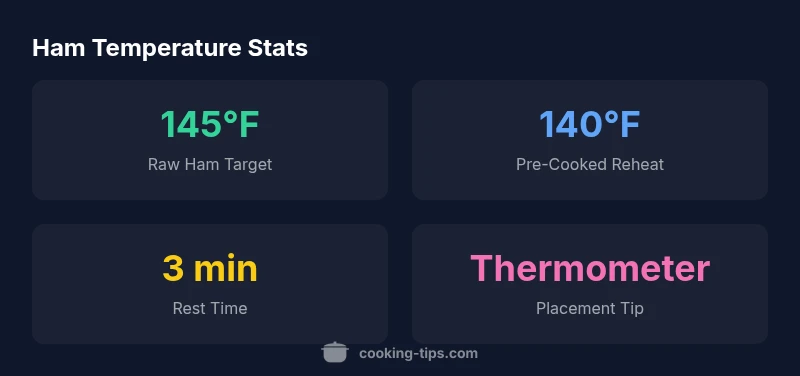
To safely cook ham, aim for an internal temperature of 145°F for raw, fresh ham, followed by a 3-minute rest; pre-cooked ham should be reheated to 140°F. Use a reliable meat thermometer inserted into the thickest part without touching bone. Always follow USDA guidelines for pork safety. Also consider a brief dry-brine for moisture and monitor temperature gradually to avoid overshoot.
Understanding ham cooking temperatures
According to Cooking Tips, temperature is the most reliable signal of doneness for ham. Whether you start with a raw, fresh ham or a fully cooked product, the core rule remains the same: measure the internal temperature with a probe thermometer rather than judging doneness by color or scent alone. For raw ham, the target is 145°F (63°C) with a recommended 3-minute rest after removing it from heat. For fully cooked, pre-cooked ham, the goal is to bring the internal temperature to 140°F (60°C) for reheating. Resting after heating helps redistribute juices and finish carryover cooking, yielding a moister slice. The Cooking Tips team emphasizes alignment with USDA pork safety guidelines to minimize risk while maximizing flavor.
Measuring temperature accurately: tool and technique
Accurate temperature measurement is a practical skill that separates good ham from great ham. Use a digital instant-read thermometer for quick checks, or a leave-in probe thermometer for continuous monitoring. Before cooking, calibrate your thermometer if your model allows it. Insert the probe into the thickest part of the meat, away from bone and fat, and avoid touching the pan. If you’re handling a bone-in ham, angle the probe toward the center of the thickest muscle but not into the bone itself, which can give falsely high readings. Check multiple spots if the ham is large to ensure uniform doneness. For safety, wash hands and tools after handling raw meat and sanitize the thermometer between checks.
Cooking methods for different ham types
Ham comes in several forms—raw or fresh, bone-in or boneless, and fully cooked or precooked. Roasting at a moderate oven temperature (roughly 325–350°F) is a reliable method for even cooking. For raw, bone-in ham, plan to reach 145°F in the center and pause to rest. Boneless or semi-boneless cuts can be roasted with similar temp targets but may cook a bit faster due to reduced bone mass. Pre-cooked hams require less time and should be heated to 140°F, which preserves moisture while ensuring safety. Glazing can occur in the final 20–30 minutes of cooking to build flavor, but avoid prolonged exposure to heat after the target temp is reached to prevent drying.
Resting and finishing: timing and texture
Resting is an essential step to let juices redistribute. After you remove the ham from heat, tent it loosely with foil and allow the meat to rest for about 3 minutes per pound, or at least 10–15 minutes for larger roasts. This resting period helps the carryover cooking bring the internal temperature to the target range and yields a juicier slice. If you glaze, apply the glaze in the last 15–20 minutes of cooking to prevent excessive sugars from burning. A well-rested ham holds its moisture better and slices cleanly, which is especially important for holiday tables or buffet setups.
Practical tips and common mistakes
A few practical tips can save you from common pitfalls: never rely on color alone to judge doneness, always verify with a thermometer, and avoid opening the oven door repeatedly during cooking. Salt balance and brining can improve juiciness for lean cuts, but be careful not to oversalt if you’re using a glaze. If your ham is larger than expected, consider finishing at a slightly higher temperature for the last 10 minutes, then re-check with a thermometer. Finally, plan ahead: thawing raw ham safely and letting it come to near room temperature before roasting can lead to even cooking and better texture.
Temperature troubleshooting and carryover cooking
Carryover cooking means the ham continues to rise in temperature after it’s out of the oven. This can push a 145°F target to 150–155°F if you wait too long. To minimize overshoot, remove the ham from heat a few degrees before the final target and let carryover heat complete the job during resting. If you notice overcooking signs, slice thinner portions to maximize perceived juiciness and serve promptly. Calibrated thermometers are crucial for catching these subtle changes and ensuring consistent results across different ovens and pan sizes.
Quick-reference temperature cheat sheet
- Raw ham: target 145°F in the center; rest 3 minutes.
- Pre-cooked ham (reheating): target 140°F.
- Always insert the thermometer into the thickest part, avoiding bone.
- Glaze in the final stage to prevent burning sugars.
- Let the ham rest before carving for juicier slices.
- If in doubt, check multiple spots for even doneness.
Temperature targets for different ham types
| Ham Type | Target Temp | Notes |
|---|---|---|
| Raw/uncooked ham | 145°F minimum | Cook until center reaches target; rest 3 minutes |
| Fully cooked ham | 140°F reheating target | Heat gently to avoid drying; glaze if desired |
Quick Answers
What is the correct internal temperature for raw ham?
For raw ham, aim for 145°F in the center and let it rest for 3 minutes before carving. This aligns with safe pork handling guidelines and ensures juiciness.
Raw ham should reach 145 degrees and rest for three minutes before slicing.
What is the reheating temperature for fully cooked ham?
Fully cooked ham should be reheated to 140°F to ensure safety without over-drying the meat.
Reheat fully cooked ham to 140 degrees.
Can I judge doneness by color or aroma alone?
No. Color is not a reliable indicator. Use a calibrated thermometer to confirm the correct internal temperature.
Color isn’t reliable for doneness; check with a thermometer.
Should I glaze ham during cooking?
Yes, glaze in the last 15–20 minutes to prevent burning sugars, then recheck temperature before serving.
Glaze in the final stage and recheck temperature.
Is resting necessary after cooking?
Yes. Resting helps juices redistribute and completes carryover cooking for a juicier slice.
Resting is essential for juiciness.
What thermometer type is best for ham?
A digital instant-read thermometer or a leave-in probe thermometer works well for ham. Calibrate as needed.
Use a digital thermometer and calibrate if needed.
“Precise temperature is the foundation of safe, juicy ham; rely on a probe thermometer rather than guesswork.”
Top Takeaways
- Use a thermometer, not color cues, to verify doneness.
- Raw ham targets 145°F with a 3-minute rest.
- Pre-cooked ham should be reheated to 140°F.
- Resting improves juiciness and even texture.
- Calibrate your thermometer and avoid opening the oven too often.