How Long to Cook a Pre-Cooked Ham: A Practical Guide
Learn precise times and temperatures for reheating a pre-cooked ham, glaze ideas, safety tips, and practical steps to ensure juicy, safe results.


To reheating a pre-cooked ham safely and evenly, aim for an internal temperature of 140°F (60°C) in the center. Use a meat thermometer, keep the ham loosely covered to prevent drying, and glaze toward the end if desired. Plan on gentle heat and a brief rest before slicing for best juiciness. Total time typically ranges from 10–15 minutes per pound at 325°F, plus 10 minutes rest.
Understanding Why Timing Matters
Reheating a fully cooked ham is not just about making the meat warm; it’s about safety, texture, and flavor. The Cooking Tips team emphasizes that timing should be guided by temperature, not by guesswork. A properly heated ham remains juicy rather than drying out, while under-heating can leave unsafe cold spots. If you start with meat that has been refrigerated rather than room temperature, the heating time will be longer, so plan accordingly. Before you begin, consider whether you want to apply a glaze, and how your kitchen setup will influence heating (oven, microwave, or slow cooker). According to Cooking Tips, letting the ham sit for 15-30 minutes after heating helps redistribute moisture and makes carving easier. With the right approach, a precooked ham can taste festive and succulent without overcooking. This section lays the groundwork for safe reheating by explaining core concepts: internal temperature targets, heat conduction, and resting time.
Note: Throughout this guide, the Cooking Tips team emphasizes reliability and practical steps that home cooks can implement without specialized equipment.
Temperature Targets for Reheating Pre-Cooked Ham
The safest approach starts with clear temperature targets. For a ready-to-eat, fully cooked ham that you’re reheating for serving hot, aim for an internal center temperature of 140°F (60°C). If you are reheating leftovers or suspect uneven heating, you can cook toward 165°F to be extra cautious. Always measure in the thickest part of the ham, away from bones, and avoid touching metal bones with the thermometer. Glazing should be added only after the ham has reached the target temperature to prevent burning. The Cooking Tips analysis shows that thermometer-based heating produces more consistent juiciness than guessing times, especially when starting with cold meat from the fridge. If you’re working with a bone-in ham, account for the extra heat needed near the bone, which can heat more slowly. Remember: rest briefly after heating to let juices redistribute. According to Cooking Tips, following a thermometer-driven plan reduces guesswork and yields better slices.
Oven Method: Step-by-Step for Even Heating
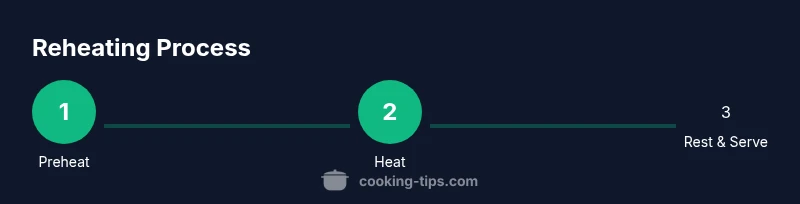
- Preheat your oven to 325°F (165°C). This moderate temperature helps heat the ham evenly without drying the exterior. 2) Place the ham in a roasting pan on a rack, with a small amount of water or broth to add humidity. 3) Tent loosely with aluminum foil to prevent the surface from over-browning during the long heat. 4) Heat until the center reads about 140°F (60°C). 5) Remove foil, brush with glaze if desired, and return to the oven for 5–15 minutes to set the glaze. 6) Check the thermometer again; once it hits 140°F in the center, remove from the oven. 7) Let the ham rest for 10–15 minutes before carving. 8) Carve and serve. 9) If your ham is larger, repeat checks every 15 minutes until it reaches the target temperature. 10) Refrigerate any leftovers promptly. Pro tip: keep the pan juices for a quick pan sauce or glaze base.
Microwave and Other Methods: Pros and Cons
Microwaving a pre-cooked ham can save time for small portions, but even heating is a challenge due to density and bone, which can lead to cold spots. If you choose microwave, slice the ham into uniform pieces and heat in short intervals (2–3 minutes), turning the pieces to promote even heating. For larger pieces, a slow cooker or stovetop method can work, but they require more planning and moisture management. The goal remains the same: reach an internal temperature of 140°F (60°C) in the center. The Cooking Tips team notes that while the oven yields the best texture, microwave or slow-cooker methods are convenient when time is tight.
Glazing and Flavoring: When to Apply
Glazes add color and flavor, but sugar can burn at high heat. Apply glaze after heating to the target temperature, not during early reheating. If your glaze contains sugar, consider a brief glaze session at a lower oven temperature or in the final minutes of heating. For best results, brush on glaze in thin layers and let it set for a few minutes before carving. This approach preserves moisture while delivering a glossy, flavorful crust.
Weight-Based Time Guidelines and Practical Ranges
Time estimates for reheating depend on weight, shape, and starting temperature. A common rule of thumb is about 10–15 minutes per pound at 325°F for a fully cooked ham from refrigerated storage. If the ham is at or near room temperature, it will cook faster; if frozen or partially frozen, expect roughly 50–75% longer. Always confirm with a thermometer for safety. For example, a 8–10 lb ham would typically take approximately 1 hour 20 minutes to 1 hour 50 minutes, plus resting time. Adjust as needed based on your oven and the ham’s shape. Cooking Tips’s guidance emphasizes thermometer checks over fixed times to accommodate variations.
Resting, Carving, and Serving Juicy Ham
Resting is essential for juiciness. After heating, loosely tent the ham with foil and let it rest for 10–15 minutes. Resting allows juices to redistribute throughout the meat and makes carving easier and cleaner. Use a sharp carving knife and cut across the grain into thin slices for the best texture. Serve with light pan juices or a simple glaze. Resting time helps prevent a dry finish and yields cleaner slices for plating.
Common Mistakes and How to Avoid Them
Common mistakes include heating too aggressively, which dries out the meat; not checking temperature early and often; and glazing too soon, causing sugars to burn. Prevent these by using a thermometer, checking the center at regular intervals, and applying glaze only after reaching 140°F. Always thaw thoroughly and avoid reheating from frozen unless you are prepared for much longer cooking times. If you notice uneven heating, rotate the ham or rearrange pieces to optimize air flow in the oven.
Quick Reference: At-a-Glance Times, Temps, and Tips
- Ready-to-eat ham (reheat): target center 140°F (60°C). - Oven at 325°F (165°C). - Plan 10–15 minutes per pound for refrigerated ham. - Rest 10–15 minutes before carving. - Glaze in the final minutes if desired. - Always use a thermometer and verify across the thickest part of the ham.
AUTHORITY SOURCES
To support the guidance in this article, consult authoritative sources on food safety and culinary best practices. For example, the USDA and university extension publications offer verified recommendations on reheating, safe temperatures, and handling of ready-to-eat meats. These resources reinforce the thermometer-based approach and help home cooks apply best practices in real kitchens.
Tools & Materials
- Meat thermometer(Instant-read preferred; insert into the center of the ham without touching bone)
- Roasting pan with rack(Large enough for your ham; adds moisture and drippings)
- Aluminum foil(Tent the ham to prevent surface drying during reheating)
- Basting brush or spoon(Optional for applying glaze during finishing)
- Carving knife and fork(For clean, even slices after resting)
Steps
Estimated time: Estimated total time: 1 hour 45 minutes to 2 hours depending on weight
- 1
Preheat and prep the ham
Preheat your oven to 325°F (165°C). If the ham is refrigerated, let it sit out 15-20 minutes to promote even heating. Remove any packaging and pat dry the surface to encourage browning where desired.
Tip: Room-temperature meat heats more evenly, reducing large temperature gradients. - 2
Position in the pan
Place the ham on a rack in the roasting pan with a small amount of liquid to create humidity. Position it in the center of the oven to promote even heat distribution.
Tip: Elevate the ham to maximize air circulation around all sides. - 3
Tent with foil
Loosely tent the ham with aluminum foil to prevent surface over-browning during the initial heating phase. This helps keep the exterior from drying out while the inside warms.
Tip: If the foil touches the glaze, consider applying the glaze after removing the foil. - 4
Check internal temperature
Heat until the center reads about 140°F (60°C). Use the thermometer in the thickest part away from bone for accuracy.
Tip: Check early in the process if the ham is very large; temperature will rise gradually. - 5
Apply glaze (optional)
If you’re using a glaze, brush it on after the ham reaches the target temperature and return to the oven just long enough to set the glaze.
Tip: Apply thin layers and allow a few minutes between coats to prevent burning sugar. - 6
Finish heating with glaze
Return to the oven uncovered for 5–15 minutes to set the glaze and deepen color. Monitor closely to avoid scorching sugar.
Tip: Keep an eye on edges and the glaze to prevent hotspots. - 7
Re-check temperature
Even after glaze, re-check the center. If still below 140°F, continue heating in short intervals (5 minutes at a time).
Tip: Avoid overcooking by relying on thermometer rather than time alone. - 8
Rest the ham
Remove from heat and tent loosely with foil. Let it rest for 10–15 minutes to allow juices to redistribute.
Tip: Resting makes carving easier and preserves juiciness. - 9
Carve for serving
Carve across the grain with a sharp knife for tender slices. If the texture seems firm, give it a few minutes more to soften in the pan juices.
Tip: Slice thinly for the best mouthfeel and presentation. - 10
Store leftovers
Store any leftovers in shallow, airtight containers in the fridge within two hours of serving. Reheat promptly if needed.
Tip: Label with date and enjoy within 3–4 days; freeze for longer storage.
Quick Answers
What is the recommended internal temperature when reheating a pre-cooked ham?
Aim for a center temperature of 140°F (60°C) for hot serving. If you’re reheating leftovers or are unsure about even heating, you can go to 165°F for safety. Always verify with a thermometer away from bones.
Heat the ham until the center reaches about 140 degrees Fahrenheit, then rest before serving.
Can I reheat a frozen pre-cooked ham?
Reheating from frozen takes longer and should be done cautiously. Thaw the ham fully in the refrigerator before reheating, or use thawed portions to reduce total time. Check the center temperature with a thermometer as you proceed.
If the ham is frozen, thaw completely before reheating and check the center with a thermometer.
Should I glaze before or after reheating?
Glaze after the ham has reached the target internal temperature to avoid burning sugars. You can return it to the oven briefly to set the glaze if you want a glossy finish.
Apply glaze after heating to avoid burning sugar and reheat briefly to set it.
How can I tell if the ham is heated through without overcooking it?
Use a reliable meat thermometer to check the center. If it reads 140°F (60°C) and the meat is steaming, it’s ready. Avoid relying on time alone, as ovens vary.
A thermometer check at 140 degrees tells you it's heated through without overcooking.
How long will leftovers keep in the fridge?
Leftover reheated ham should be consumed within 3–4 days when stored properly in the fridge. For longer storage, freeze slices in airtight containers.
Keep leftovers for 3–4 days, or freeze for longer storage.
Watch Video
Top Takeaways
- Check center temp with a thermometer before serving
- Heat to 140°F center for hot serving
- Rest 10–15 minutes before carving
- Glaze after heating to prevent burning