How Long to Oven-Cook Ham: A Practical Home Guide!
Learn exactly how long to oven-cook ham, how weight and bone affect timing, safe temperatures, glazing, and resting for juicy slices. A practical guide for home cooks.


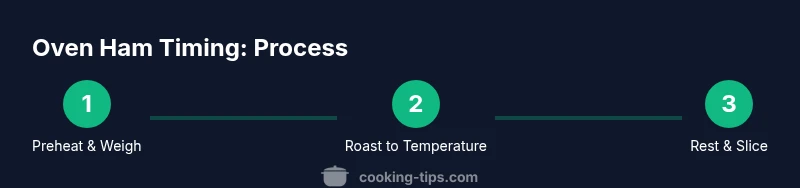
This guide shows you how long to oven-cook ham and how to do it without drying it out. Preheat your oven to 325°F, place the ham on a rack, and use a meat thermometer to aim for 140°F if the ham is fully cooked (or 145-160°F for raw). Roast about 10-15 minutes per pound, then rest 10-15 minutes before slicing.
Understanding ham types and safety temperatures
Ham comes in several forms, and the target internal temperature you aim for depends on whether the ham is fully cooked, partially cooked, or raw. The most common in home kitchens are fully baked, bone-in or boneless; these are often labeled "fully cooked" and intended to be reheated rather than raw. If you’re starting with raw ham, you’ll need longer cooking time and a higher final temperature to ensure doneness. Regardless of type, always measure with a reliable meat thermometer. Insert the thermometer into the thickest part of the ham, avoiding bone and fat so you get an accurate reading. As a rule of thumb, fully cooked hams should reach 140°F when reheated; raw hams typically require 145°F to 160°F depending on cut and curing. Letting the ham rest briefly after oven removal lets juices redistribute, improving flavor and slicing ease. If you are uncertain about the labeling, rely on an instant-read thermometer rather than the clock. Safety first means avoiding overcooking, which dries the meat and mutes flavor. For smaller cuts or spiral hams, the same principles apply, but the time per pound will be shorter; always verify with a thermometer to adapt as needed.
How to estimate oven time based on weight
Estimating oven time starts with knowing the weight and whether the ham is pre-cooked. A standard starting point for fully cooked, bone-in or boneless hams at 325°F is roughly 10-15 minutes per pound. For a raw ham, plan closer to 20-25 minutes per pound. These are guidelines; ovens vary, as do shapes. A tall, thick-cut ham distributes heat differently than a flat-half or spiral-cut ham. The most reliable method is to calculate approximate minutes per pound, then check internal temperature early and often. For example, a 6-pound fully cooked ham would typically require about 60-90 minutes, while a 12-pound raw ham could reach 240-300 minutes. Always finish with a thermometer toward the end of roasting and remove the ham once it hits the target temperature. If you’re glazing, plan additional minutes after you remove the outer foil, as sugar-based glazes can burn if left uncovered for too long. The key is to combine weight-based estimates with real-time temperature checks to avoid dry or undercooked meat.
Prepping the ham and equipment
Before you start, gather your tools and prep the ham. Remove packaging and pat the surface dry to encourage even browning. If the ham has skin, score the fat in a shallow diamond pattern to help render fat and take on a glaze more evenly. Bring the ham to near room temperature for 20-30 minutes so heat distributes evenly during roasting. Preheat the oven to 325°F and place a rack in a roasting pan to lift the ham off the bottom where heat concentrates. If you’re using a glaze, have it ready for the final stage. Handling raw meat safely means washing hands and all surfaces that contact the ham, then sanitizing tools afterward. A well-prepped cook-space minimizes surprises and ensures consistent results.
The roasting process: steps and timing
Start by placing the ham on the rack in the roasting pan. If you’re using a skin-on ham, you can leave the skin on to help retain moisture, but score it as described above. Insert an instant-read thermometer into the thickest part of the ham, away from bone. Loosely tent the ham with aluminum foil to keep moisture in during the early to middle stages; remove the foil in the last 20-30 minutes to promote browning and glaze caramelization. Roast at 325°F, checking the internal temperature with the thermometer as you approach the expected finish time. Fully cooked ham should reach 140°F for reheating; raw ham should reach 145-160°F depending on cut. When the thermometer hits the target temperature, remove the pan and let the ham rest for 10-15 minutes before carving. Resting allows juices to reabsorb, resulting in juicier slices. If you plan a glaze, brush it on during the final minutes and return to the oven briefly to caramelize without burning.
Finishing touches: glazing, resting, slicing
Glazing is optional but adds flavor and color. Apply the glaze during the last 20-30 minutes of roasting, then return to the oven until the glaze is glossy and caramelized. After removing the ham from the oven, don’t rush to slice. Cover loosely with foil and let it rest for 10-15 minutes. Resting seals in juices; slicing too soon invites juices to run out and leaves the meat dry. Slice against the grain for maximum tenderness, and serve with pan juices or a simple glaze. If your ham is bone-in, the slices near the bone finish differently from the ones toward the outer edge, so plan to carve away from the bone to keep slices uniform.
Troubleshooting and common mistakes
Common mistakes include cooking at too high a temperature, which dries the ham; over-basting, which can overpower flavor and burn sugars; and ignoring the thermometer, trusting time alone. Ovens vary, so use the thermometer as your primary guide rather than a clock. For very large hams, consider two-stage roasting: a long initial roast, then a shorter warm phase with glaze. If your glaze is browning too quickly, cover with foil for a few minutes and reduce oven heat slightly. Always verify final internal temperature with a thermometer, then rest before slicing.
Tools & Materials
- Meat thermometer (instant-read preferred)(Insert into the thickest part away from bone; target 140°F for reheating fully cooked ham or 145-160°F for raw.)
- Roasting pan with rack(Elevates ham for even heat and collects drippings.)
- Aluminum foil(Tent the ham during roasting to prevent over-browning; remove near the end for glaze.)
- Oven-safe carving knife(For clean slices after resting.)
- Oven mitts(Protect hands when handling hot pan.)
- Kitchen timer(Track total roasting time and alert when near finish.)
- Glaze ingredients (optional)(Prepare your glaze ahead of time if using.)
- Clean towels or paper towels(Keep workspace tidy and wipe drips as needed.)
Steps
Estimated time: 2.5-3.5 hours
- 1
Weigh and verify packaging
Check the ham’s weight and read the label for any special instructions; this helps refine total time. If the label gives a guideline, use it in combination with thermometer checks.
Tip: Always verify the weight on packaging if a scale is available. - 2
Preheat the oven
Preheat to 325°F before loading the ham so heat distribution starts immediately. A steady oven temperature promotes even browning and avoids hot spots.
Tip: Preheating helps ensure consistent results from edge to center. - 3
Position ham on rack
Place the ham on a rack inside a roasting pan to keep it elevated and promote even cooking. Avoid placing it flat on foil or pan; elevation matters for even heat.
Tip: If bone-in, orient the bone toward the pan center for consistent heat transfer. - 4
Insert thermometer
Insert the thermometer into the thickest part of the ham, avoiding bone and fat. This provides a reliable read on doneness during roasting.
Tip: Check after the first 60-90 minutes to gauge pace and adjust time accordingly. - 5
Cover and roast
Loosely tent with foil to keep moisture in; remove foil during the last 20-30 minutes to glaze and brown. Continue roasting until the thermometer reads the target temperature.
Tip: If the surface browns too quickly, loosely cover again and reduce oven heat. - 6
Glaze and finish (optional)
Brush on glaze in the final 20-30 minutes if using; this caramelizes and adds flavor. Avoid glazing too early to prevent burning.
Tip: Choose a glaze with balanced sugar and acidity to prevent scorching. - 7
Rest and carve
Remove the ham from the oven when the thermometer hits the target, then cover loosely and rest 10-15 minutes. Slice against the grain for tender servings.
Tip: Resting is essential for juicy slices; don’t skip this step.
Quick Answers
What is the safe internal temperature for ham?
Fully cooked ham should be reheated to 140°F; raw pork ham should reach 145°F with a rest. Always verify with a thermometer.
Heat the ham to about 140 degrees for cooked ham, or 145 to 160 for raw, and always check with a thermometer.
How long should I roast ham per pound?
Roast at 325°F for roughly 10-15 minutes per pound if the ham is fully cooked; raw ham may require 20-25 minutes per pound. Check temperature early and adjust.
Roast around 10 to 15 minutes per pound for cooked ham, longer for raw, and monitor with a thermometer.
Should I glaze the ham?
Glaze during the final 20-30 minutes to avoid burning sugars. Brush on and return to the oven until glossy and caramelized.
Yes—glaze in the last 20 to 30 minutes for best color and flavor.
Is foil coverage necessary?
Loosely tent with foil during bulk roasting to retain moisture; remove foil near the end for browning and glaze.
Cover it with foil for most of the roast and uncover near the end to brown and glaze.
What if my ham is already cooked?
If already cooked, you mainly need to reheat to 140°F and avoid overcooking to prevent dryness.
If it’s already cooked, just reheat to around 140 degrees and don’t overdo it.
Watch Video
Top Takeaways
- Use a thermometer as the guide for doneness
- Roast at 325°F for even results
- Rest 10-15 minutes before slicing
- Glaze in the final minutes for caramelization
- Plan roughly 10-15 minutes per pound for timing