Cooking Corn on the Cob: A Practical Guide
Learn reliable methods to cook corn on the cob: boil, steam, grill, or microwave. Practical tips for selecting ears, prepping husks, and finishing with flavor to ensure tender, sweet kernels every time.


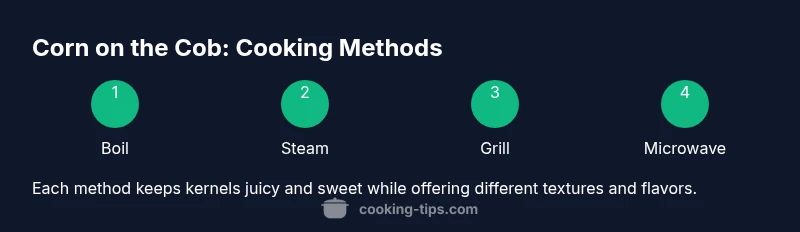
According to Cooking Tips, you can cook corn on the cob using four common methods—boiling, steaming, grilling, and microwaving. This quick guide teaches how to select sweet ears, prep them, and finish with flavor, plus simple timing for each method. Whether you want speed, sweetness, or smoky notes, choose the method that fits your kitchen.
Why cooking corn on the cob matters
Fresh corn on the cob is a seasonal delight that shines when handled with simple techniques. For best results, select ears with bright green husks and plump kernels that release a sweet aroma when you peel back a few husks. The Cooking Tips team emphasizes that the flavor and texture depend as much on how you prepare as on the corn itself. If you want a reliable baseline, you should treat corn as a short, bright window in late summer; once the ears lose their sweetness, they won't taste as vibrant.
To pick your ears, look for ears with tight husks, dark green silk, and kernels that feel full when pressed. Avoid ears with dry husks or pale kernels. If you have a choice, buy corn on the day you plan to cook it. Quick handling — shuck, rinse, and trim just before cooking — helps preserve moisture and sweetness. Moreover, understanding the variety matters: sweet corn varieties vary from sugary to creamy in texture; the flavor profile you want will guide your method (grilling for char, boiling for tenderness, microwaving for speed).
According to Cooking Tips, fresh ears are best cooked soon after purchase to preserve natural sugars and crisp textures. A quick test for sweetness is to nibble a kernel or two from a sample ear (without removing all the kernels), which should hint at the overall flavor you’ll get when cooked.
This section sets the stage for practical, hands-on guidance that works whether you’re cooking for a weeknight family dinner or a weekend barbecue. The goal is simple: select great corn, prep efficiently, and finish with a flavor boost that complements your meal.
note”:null},
Four common cooking methods for corn on the cob
Different methods deliver distinct textures and flavors. Here’s a practical comparison to help you pick quickly:
- Boiling: Quick, forgiving, and great for large batches; kernels stay tender with minimal effort but can lose some sweetness if overcooked.
- Steaming: Gentle on kernels, preserves more sweetness and moisture, and works well when you want to flavor with steam-infused aroma.
- Grilling: Adds smoky char and depth; best for a quicker cook with direct heat, but requires attention to avoid scorching.
- Microwave: Fastest option with minimal equipment; ideal for small quantities and when you’re short on time, but may yield a less uniform texture if ears vary in size.
When deciding, consider your crowd size, available equipment, and whether you crave char from grilling or the simplicity of boiling. Cooking Tips recommends a small, nonstick or well-salted boil for consistent results if you’re new to corn on the cob. You can also combine methods: pre-cook by steaming, finish with a quick grill for color, then brush with butter for a glossy finish.
Each method has its nuances, but all yield delicious corn on the cob when you follow proper prep and timing. In the next section, we’ll cover how to prep ears for any method and what to watch for in doneness to keep kernels juicy and sweet.
How to prep corn for perfect results
Prepping corn properly is as important as the cooking method you choose. Start by removing the husks and silk, then rinse the ears under cool water to wash away any silk fragments. If you’re grilling or roasting, trim the stalk end and shape the ears so they sit evenly on the grill rack or in the roasting setup. For boiling or steaming, keep some of the outer husk intact if you prefer a little extra protection against splatter, then trim before serving.
Tip: If you’re new to corn on the cob, husk removal right before cooking helps preserve sweetness. For a more uniform cook, try ears of similar size in the same batch. If you plan to grill, you can pre-soak ears in cold water for 15-30 minutes to reduce flare-ups and help maintain moisture. Butter and seasonings should be added after cooking to avoid breaking down the kernels during heat.
Finally, consider corn size and freshness. Smaller, tender ears typically cook more quickly and evenly, especially in microwaves and steamers. Fresh corn also tends to be sweeter than older ears, so prioritize harvest time and storage strategy for peak flavor.
Doneness cues and timing by method
Understanding when corn is perfectly cooked helps avoid undercooked, crunchy kernels or mushy, waterlogged cobs. For each method, look for consistent golden kernels, plumpness, and a milky aroma that intensifies as the corn finishes.
- Boiling: Target a brief window of tenderness; the kernels should be tender but still crisp when pierced with a fork. Overcooking causes the kernels to split or become limp. Finish with a quick pat of butter and a pinch of salt.
- Steaming: Expect tender kernels with a touch more moisture retention than boiling. (If you’ve pre-soaked, monitor steam time closely to avoid soggy edges.) Remove from heat as soon as you can pierce a kernel with slight resistance.
- Grilling: Look for a light char and bright color with a slight sweetness releasing from the kernels. Turn frequently to prevent scorching and ensure even heat distribution. After removing from the grill, rest for a minute to let juices redistribute.
- Microwave: Check after the initial cooking window, then continue in short bursts if needed. Resting helps the kernels finish steaming in their own heat, keeping them juicy. Butter and salt finish the dish nicely.
Tip: Always test a kernel from the middle of the cob for doneness rather than relying on the ends alone. Ideal corn should be fragrant, bright in color, and tender through the center without being mushy.
Flavor boosters and serving ideas
Corn on the cob shines with simple toppings and smart seasoning. Try these ideas to elevate flavor without masking the corn’s natural sweetness:
- Classic butter and sea salt: A thin layer of melted butter followed by a pinch of kosher salt enhances sweetness and richness.
- Herb and citrus finish: Mix softened butter with chopped parsley, chives, or cilantro and a splash of lime or lemon juice for a bright, fresh note.
- Spicy kick: A light dusting of chili powder or smoked paprika plus a squeeze of lime adds heat and depth.
- Cheese and pepper:** A light dusting of grated Parmesan or cotija with cracked black pepper for a savory twist.
- Grilled corn variations: Brush ears with a mixture of olive oil, garlic, and herbs before grilling for a deeper aroma.
For a side dish option, consider pairing corn with light, bright sides like tomato-cucumber salad or a lemony herb rice. Leftovers can be used in fajitas, salads, or corn salsas for the next day.
Flavor boosters are about pairing corn’s natural sweetness with bright, contrasting flavors. Start simple and build complexity with toppings that complement your main dish.
Troubleshooting and common mistakes
Even the best cooks encounter a few pitfalls when cooking corn on the cob. Here are common issues and how to avoid them:
- Overcooking: This leads to mushy kernels and a dull flavor. Set a timer and taste-test a kernel during cooking to avoid overdoing it.
- Dull flavor: If corn tastes flat, consider finishing with a flavored butter or a splash of citrus juice to brighten the sugars.
- Uneven cooking: When ears vary in size, a two-stage strategy helps — cook the larger ears longer and rotate others for even heat exposure.
- Grilling without moisture: If your ears burn or dry out, reduce heat slightly and brush with oil or butter to maintain moisture.
- No seasoning: Do not rely on salt during cooking; always season after cooking when possible to preserve kernel texture.
With a quick adjustment, you can salvage a batch that’s closer to perfect and enjoy consistent results across your corn-on-the-cob occasions.
Authoritative sources
To verify cooking recommendations and expand your understanding, consult credible sources from government and educational institutions. These resources provide science-based guidance on cooking techniques, food safety, and corn varieties.
- https://www.usda.gov
- https://extension.ucdavis.edu
- https://www.fda.gov
Tools & Materials
- Large pot with lid(6+ quart to comfortably fit multiple ears; lid needed for steaming/boiling)
- Steaming insert or basket(Fits the pot and allows ears to be elevated above boiling water)
- Grill (gas or charcoal)(Preheat to medium-high; use tongs for turning)
- Microwave-safe dish with cover(Dish large enough for the ears; damp paper towels help retain moisture)
- Sharp knife or kitchen shears(Trim stalks and remove silk cleanly)
- Butter, salt, and optional herbs(For finishing and flavor enhancement)
- Corn holders (optional)(Useful when serving hot, especially for kids)
Steps
Estimated time: 30-40 minutes
- 1
Choose your cooking method
Decide which method best fits your timing, crowd size, and equipment. Boiling, steaming, grilling, and microwaving each have distinct pros and cons, so pick the one that aligns with your priorities (speed, flavor, or texture). If you’re unsure, start with boiling for a quick baseline and experiment with others later.
Tip: If cooking for a crowd, boiling in a large pot is efficient and easy to scale. - 2
Prep the ears
Remove the husks and silk from each ear. Rinse under cold water to wash away silk remnants. Trim the stalk end so the ears sit flat on a grill rack or in a pot; this helps even heat exposure during cooking.
Tip: Handling ears promptly after purchase preserves sweetness and moisture. - 3
Boil the corn on the cob
Fill a large pot with water, bring to a rolling boil, and add the ears. Maintain a steady boil for the recommended duration until kernels are tender but not mushy. Remove with tongs and pat dry before serving or finishing with butter.
Tip: Add a pinch of salt to the water if you like subtle seasoning without masking sweetness. - 4
Steam the corn on the cob
Place ears in a steamer basket above simmering water. Cover and steam until kernels are tender and plump. Remove carefully and let rest briefly before seasoning.
Tip: Steaming preserves moisture and sweetness better than boiling in some cases. - 5
Grill the corn on the cob
Preheat grill to medium-high and place ears directly on grates, turning every few minutes for even char. Cook until kernels blister and color deepens slightly. Remove and rest a minute before brushing with butter.
Tip: Soak naked ears for 10-20 minutes if you worry about flare-ups and hydration. - 6
Microwave the corn on the cob
Place each ear on a microwave-safe plate with a splash of water; cover with a microwave-safe lid or damp paper towel. Microwave in short bursts, checking for tenderness and rotating if possible. Let rest a minute before serving.
Tip: Microwave in batches if needed; uniform ear sizes improve consistency. - 7
Check doneness and finish with flavor
Test one kernel for tenderness and adjust cooking time if needed. While hot, brush with melted butter and a light sprinkle of salt or herbs to finish—this enhances sweetness and aroma.
Tip: Butter should melt smoothly over hot kernels; avoid pooling liquid. - 8
Serve and store leftovers
Serve immediately for best texture and flavor. If you have leftovers, cool quickly and refrigerate in airtight containers; reheat gently to avoid rubbery kernels.
Tip: Leftovers can be repurposed in salads, salsas, or bowls to extend flavor.
Quick Answers
What is the best method to cook corn on the cob for a busy weeknight?
Microwaving is typically the fastest option for a single or small batch, while boiling is convenient for larger quantities. Grilling adds flavor if you have the time and space.
Microwaving is quick for small batches. If you’re cooking for many people, boiling works well and faster than other methods.
Can you cook corn on the cob with the husks on?
Yes, you can cook corn with husks on for methods like steaming or grilling; husks protect kernels and add a roasted flavor when left on. Remove husks and silk after cooking for serving.
You can cook with husks on for some methods, but you’ll want to remove them before serving.
Should corn be salted during cooking?
It’s fine to add a pinch of salt to the cooking water, but most flavor comes from finishing with butter or herbs after cooking. Salt lightly to avoid drawing out sugars too quickly.
A pinch of salt in cooking water is optional; finish with flavorful toppings for best taste.
How long does corn stay good after picking?
Fresh corn tastes best within a day or two of picking. Refrigerate in the husk to preserve moisture and sweetness.
Fresh corn tastes best if eaten soon after picking; keep it in the husk in the fridge to maintain sweetness.
Is it safe to freeze cooked corn on the cob?
Yes, you can freeze cooked corn, but flavor and texture may change. For best results, freeze kernels or cut corn from the cob and use in soups or salsas later.
You can freeze cooked corn, but expect some texture changes; use in recipes later.
Watch Video
Top Takeaways
- Choose the right method for your timing and crowd
- Prep ears properly for even cooking and sweetness
- Avoid overcooking to keep kernels tender and juicy
- Finish with butter or seasonings for best flavor
- Experiment with methods to discover your preferred texture