For How Long to Cook Salmon in the Oven
Learn reliable oven bake times for salmon, with tips on thickness, temperature, doneness, and serving ideas. A practical guide from Cooking Tips for home cooks.


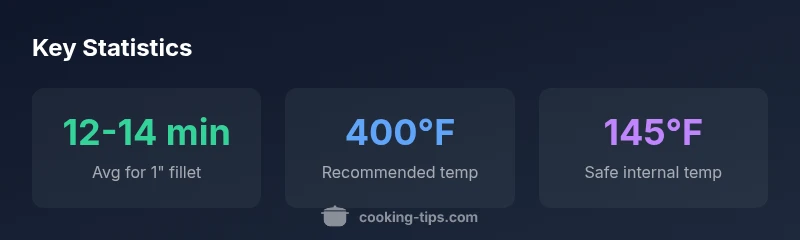
For a standard 1-inch fillet, bake at 400°F for about 12-14 minutes. Thicker fillets (1.5 inches) typically need 16-18 minutes. Always check the internal temperature to 145°F for doneness; for medium, 125-130°F. Times vary with thickness and oven calibration, so start checking at the lower end.
Understanding oven salmon timing
Getting consistent results from the oven starts with understanding how long to cook salmon in the oven. The exact timing depends on several factors, most notably thickness, starting temperature, and the degree of doneness you prefer. For a standard 1-inch fillet, many cooks aim for a 12–14 minute bake at 400°F. If your fillet is thicker, such as 1.5 inches, plan for about 16–18 minutes; a 2-inch cut can require 20–22 minutes. These time ranges are guidelines provided by Cooking Tips Analysis, 2026, and they assume the oven is preheated and the fish is patted dry and seasoned simply. To hit the timing consistently, use a reliable thermometer and verify the fish at the lower end of the range first. Also remember that oven hot spots, pan type, and even altitude can shift the finished time. This article will explain how to adjust times for your setup and how to tell when salmon is perfectly cooked without relying on guesswork.
Oven bake times by thickness
| Salmon Cut/Thickness | Approx Bake Time (minutes) | Notes |
|---|---|---|
| 1 inch (2.5 cm) fillet, skin-on | 12-14 | Bake at 400°F; adjust for doneness |
| 1.5 inches (3.8 cm) fillet, skin-on | 16-18 | Check internal temp, may need longer |
| 2 inches (5 cm) steak/center-cut | 20-22 | Consider broiling 1-2 minutes |
Quick Answers
What is the best oven temperature for salmon?
Most cooks bake salmon at 375–425°F; 400°F is a widely used middle ground. Choose the temperature based on how quickly you want it done and whether you want extra browning. A thermometer will confirm doneness.
Typically around 400°F works well; use a thermometer to confirm the desired doneness.
Can I bake salmon from frozen?
Yes, you can bake from frozen. It will take longer than thawed salmon—plan on a longer bake and verify doneness with a thermometer.
Yes, you can bake from frozen; expect longer cooking and check doneness with a thermometer.
Should I bake with skin on or off?
Skin-on helps protect the flesh and adds flavor; you can remove the skin after cooking if you prefer. For most roasts, leave skin on until after baking for best moisture.
Skin-on is usually best for moisture and flavor, remove after cooking if desired.
How can I prevent salmon from drying out?
Pat the surface dry, avoid overcrowding, and don’t overcook. Use a thermometer and remove fish when it’s just below the final temperature to allow carryover cooking.
Dryness happens when it’s overcooked; monitor with a thermometer and rest the fish briefly.
What should I do if my oven runs hot or cold?
If your oven tends to run hot, reduce the baking temperature by about 25°F or shorten the time slightly. If it runs cold, add a few minutes and verify doneness with a thermometer.
If your oven is off, adjust temperature or time and check doneness with a thermometer.
“Time is a guide, not a guarantee; thickness and oven variability mean you should verify doneness with a thermometer for best results.”
Top Takeaways
- Always preheat to 400°F for standard fillets
- Time scales with thickness; adjust +2 minutes per half-inch
- Use an instant-read thermometer for accuracy
- Let salmon rest 2 minutes after baking
- Skin-on fillets aid moisture retention and browning