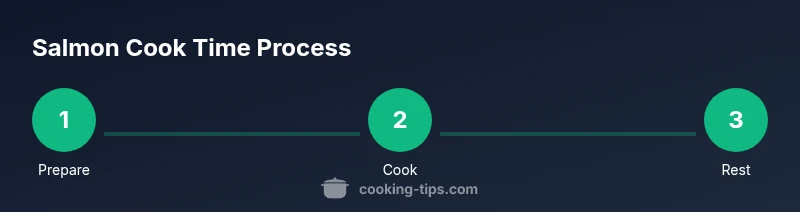
How Long to Cook Salmon: A Practical Doneness Guide
Learn reliable salmon cooking times for pan-seared, baked, grilled, and poached fish. Explore thickness, doneness, and safety tips to cook salmon perfectly every time.


To achieve reliable results, plan for salmon doneness with method-based times and a thermometer. A 1-inch fillet typically needs about 4–6 minutes per side on the stove, 10–12 minutes in a hot oven (425°F), or 3–4 minutes per side on the grill. Target 125–130°F for medium-rare, and 145°F for well done.
Why Timing Matters for Salmon
Timing is the hinge on which salmon cooking swings between silky tenderness and dry, crumbly texture. If you ask yourself for how long to cook salmon, remember that there isn’t a single universal answer. Thickness, cut, starting temperature, and heat source all influence the needed minutes. Overcooking forces moisture out and creates a tough bite, while undercooking risks a translucent center. With a firm plan and a reliable thermometer, you can hit your preferred doneness consistently. In this guide from Cooking Tips, we translate chef-tested timings into home-cook friendly steps, so you can finish salmon with confidence. The core principle is simple: define a finish temperature first, then translate that into time for your method and thickness. The thermometer is the most dependable tool, but you’ll also learn to read color and texture cues when a probe isn’t handy, and to adjust times for pan, oven, grill, or poaching.
Key Variables That Change Cook Time
Several variables push cook times up or down. Thickness is the biggest factor: a 1-inch fillet cooks much faster than a 2-inch cut. The cut matters too: a skin-on fillet loses heat differently than a skinless steak, and bone-in portions retain heat longer. Starting temperature matters: frozen salmon will take longer to reach doneness than thawed fillets (always thaw for even cooking when possible). The heat source and pan type affect sear and heat transfer; preheating your pan to a steady medium-high or high heat reduces variability. Finally, the presence of skin, altitude, and even the salmon’s fat content influence how quickly moisture is released. By understanding these variables, you’ll know how to tailor the standard times to your specific piece of fish.
Time Guidelines by Cooking Method
Use these method-based baselines as starting points, then adjust for thickness and stove/oven efficiency. Always aim for a safe internal finish and use a thermometer when possible.
- Pan-seared or stovetop: Typical 1-inch fillet requires about 4–6 minutes total (2–3 minutes per side) over medium-high heat. For thicker cuts, add time in 1–2 minute increments. The goal is a golden crust with an opaque center.
- Baked: A 1-inch fillet usually needs 10–12 minutes at 425°F (220°C). Increase by 2–4 minutes per additional 0.5 inch of thickness. For very thin portions, start checking at 8–9 minutes.
- Grilled: Grill over medium-high heat for about 3–4 minutes per side for 1-inch fillets. Thicker pieces require longer, and a direct high-heat finish can help crisp the exterior.
- Poached: Delicate but forgiving, poach 6–10 minutes depending on thickness; the fish should be opaque and separate easily with a fork.
- Air fryer or convection: Plan for 7–9 minutes at 400°F (200°C) for 1-inch fillets, checking early to prevent overcooking.
Remember: these are starting points. Always adapt based on thickness and your oven or pan performance.
How to Check Doneness Without a Thermometer
If you don’t have a probe handy, use color, texture, and flaking as cues. A perfectly cooked fillet turns opaque with a slight translucence near the center. The flesh should be firm but still yield slightly to pressure. When you slice into the thickest part, the center may appear pinkish, but it should not be raw or jelly-like. Practice with small pieces first to learn your preferred doneness level. A thermometer makes this process precise, but you can still reliably gauge doneness by touch and color in casual cooking.
Common Mistakes and How to Fix Them
Overcooking is the most frequent error. Salmon dries quickly when left on heat too long. If you’ve overshot the target, finish on lower heat for a minute or two and remove from heat to rest. Undercooking leaves a translucent center and a soft texture; reduce heat slightly and extend cooking time by short intervals, regularly checking color and flake. Uneven thickness can also cause uneven doneness; consider pinching thicker portions with tongs and pushing thinner edges to cooler areas of the pan or oven to distribute heat evenly. Finally, avoid crowding the pan, which traps steam and produces a steamed, rather than seared, exterior.
Resting and Serving for Best Texture
Resting salmon for 2–3 minutes after cooking allows juices to redistribute, preventing a dry finish. During resting, the internal temperature may rise a few degrees, so plan to pull salmon off heat just shy of your target. Serve with bright, complementary flavors like lemon, dill, capers, or a light beurre blanc. If you’re meal-prepping, portion the fish and store it in shallow containers to cool quickly and maintain texture. A light drizzle of olive oil or a dab of butter can finish the fish with gloss and flavor.
Planning for Meal Prep and Cook Times
If you regularly cook salmon for a weeknight dinner, perfecting times for your favorite thickness makes weeknights easier. Have your oven preheated and your pan hot before cooking, so you can move quickly from thawed to done without losing moisture. When planning, consider pairing fish with sides that tolerate a similar cook time (roasted vegetables, quinoa, or a quick greens sauté). Batch-cooking two 1-inch fillets at a time in the oven can save time. Always label containers with the doneness preference you achieved, so you can reheat to the correct temperature later without overcooking.
Safety, Storage, and Reheating Guidelines
Cooked salmon should be cooled within two hours and stored in the refrigerator at or below 40°F (4°C). Consume leftovers within 3–4 days for best quality. Reheat gently to avoid drying; the goal is to reach about the same doneness you achieved initially, ideally around 125–130°F (52–54°C). If you’re freezing salmon, freeze promptly after cooking to preserve texture, and thaw slowly in the refrigerator before reheating. When handling raw salmon, keep utensils and cutting boards separate from cooked foods to prevent cross-contamination.
Tools & Materials
- Food thermometer (instant-read preferred)(Target 125–130°F for medium-rare, 145°F for fully cooked)
- Heavy skillet (cast iron or stainless)(Preheat to medium-high for searing)
- Baking sheet with rack(For oven-baked salmon)
- Tongs(Flip fillets gently)
- Sharp chef’s knife(Trim and portion salmon evenly)
- Cutting board(Stable surface for chopping)
- Oven mitts(Protect hands when handling hot equipment)
- Measuring spoons(For seasoning blends)
Steps
Estimated time: Total time: 15-25 minutes (plus resting)
- 1
Prepare salmon and bring to room temperature
Pat salmon dry and season evenly. Let sit 10–15 minutes to take on flavors and ensure even cooking. This reduces the temperature differential between the center and surface, which helps achieve uniform doneness.
Tip: Pat dry with paper towels to promote better browning. - 2
Choose your cooking method and preheat
Select your method (pan-sear, bake, grill, or poach) and preheat equipment to the recommended temperature. A properly heated pan or oven ensures a quick sear or steady oven heat, reducing the chance of overcooking.
Tip: Preheat oven to 425°F (220°C) for consistent baking. - 3
Season salmon evenly
Lightly oil and season with salt, pepper, and any herbs or citrus zest you like. Even seasoning across both sides promotes balanced flavor with minimal moisture loss.
Tip: Use a light coating of oil to prevent sticking and help browning. - 4
Cook with timer according to method
Set a timer based on thickness and method. Work in increments if needed, especially for thicker cuts, to avoid overshooting the target doneness.
Tip: Start checking a minute or two before the lower end of the range. - 5
Check doneness with thermometer or visuals
Insert the thermometer into the thickest part without touching bone. If using visuals, look for an opaque color and a gentle flake around the center.
Tip: When in doubt, remove salmon a few degrees early; it will rise slightly while resting. - 6
Rest briefly after cooking
Let salmon rest 2–3 minutes off heat. Resting redistributes juices and improves the texture, preventing a dry bite.
Tip: Cover loosely with foil to keep warmth without steaming. - 7
Plate and serve with complementary sides
Pair salmon with bright greens, citrus, or light starch to balance richness. Keep portions uniform for even plating and consistent leftovers.
Tip: Zest a lemon over the fish for a fresh finish. - 8
Clean up and refrigerate leftovers safely
Cool leftovers quickly and store in shallow containers. Refrigerate within two hours and reheat gently for best texture.
Tip: Label containers with date and doneness level to guide reheating.
Quick Answers
What is the best doneness for salmon?
Many cooks prefer salmon at medium doneness, around 125–130°F, which yields a moist, pink center. Some enjoy a slightly more opaque center at 135–145°F. Always balance texture with safety preferences.
Most people like salmon at medium doneness, around 125 to 130 degrees for a moist center. You can go a bit higher if you prefer fully opaque texture.
Can I cook frozen salmon directly?
Cooking from frozen is possible, but it generally requires longer times and may result in uneven doneness. If possible, thaw in the fridge or under cold water before cooking for the most uniform results.
You can cook from frozen, but thawing first helps ensure even cooking and better texture.
How thick should fillets be for best results?
Aim for about 1 inch (2.5 cm) thick fillets for straightforward, even cooking. Thicker cuts require longer times, thinner cuts finish quickly; adjust according to thickness and method.
One-inch fillets are easiest to cook evenly; adjust time if your fillet is thicker or thinner.
Why does salmon overcook so easily?
Salmon contains delicate proteins that tighten and lose moisture quickly when heated. A short burst of heat or leaving it on heat past the target temperature leads to a dry texture.
Salmon dries out fast because its proteins tighten quickly when heated; avoid going past doneness.
Is it safe to eat salmon rare?
The USDA recommends cooking to 145°F for safety, but many people enjoy salmon around 125–130°F for a medium-rare center. If you’re pregnant or cooking for vulnerable groups, follow official guidelines.
Safety guidelines vary; many prefer 125–130°F, but follow official recommendations if you're in a high-risk group.
Should I remove the skin before cooking?
Cooking with the skin on helps protect the flesh, retain moisture, and can crisp beautifully. If you prefer skinless, you can remove it after cooking for a lighter texture.
Keep the skin on for moisture and crispiness, or remove it after cooking if you want skinless fillet.
Watch Video
Top Takeaways
- Know your thickness and adjust times accordingly.
- Use a thermometer to hit your target doneness.
- Different methods require distinct finish temperatures.
- Rest briefly to preserve juiciness.
- Plan meals with compatible sides for efficient weeknight cooking.