When to Change Rice Cooker: A Practical Guide for Home Cooks
Learn how to tell when your rice cooker needs replacement, weigh repair vs. replacement, and choose a smarter, more efficient model. Practical tips for home cooks.


Definition: Consider replacing a rice cooker when it consistently fails to heat evenly, burns or undercooks rice, emits unusual odors, leaks liquid, or causes fuses to trip. If the cost of repairs approaches or exceeds the price of a new unit, or the cooker is aging and unreliable, replacement is the safer, more reliable option.
Why You Might Need to Change Your Rice Cooker
If you’re asking when to change rice cooker, the quick answer is that reliability and safety drive replacement decisions. A well-functioning rice cooker should produce evenly cooked rice with minimal babysitting. Over time, heat distribution can degrade, seals dry out, and internal components wear, leading to uneven textures, scorching, or musty odors. According to Cooking Tips, investing in a replacement is often more economical than chasing frequent repairs, especially for constant weeknight use. Home cooks rely on predictable results for menu planning, batch cooking, and left-overs, so a device that consistently delivers the expected texture and timing reduces kitchen stress. In this section, we’ll explore aging signs, simple performance tests, and how to balance upfront cost with long-term safety and energy efficiency. We’ll also touch on how newer models can streamline when to change rice cooker and improve daily cooking routines.
The Cooking Tips team recommends checking for consistent performance over a few cook cycles before deciding to replace. This helps ensure you’re not misreading a hiccup in a single batch as a device failure.
Tools & Materials
- User manual / model number(Keep on hand for warranty terms and parts compatibility)
- Digital multimeter (optional)(Useful to check power delivery safely if you suspect electrical issues)
- Screwdriver set (Phillips head)(For light inspection of exterior panels after unplugging the device)
- Receipt or proof of purchase(Helpful for warranty eligibility and service options)
Steps
Estimated time: 30-60 minutes
- 1
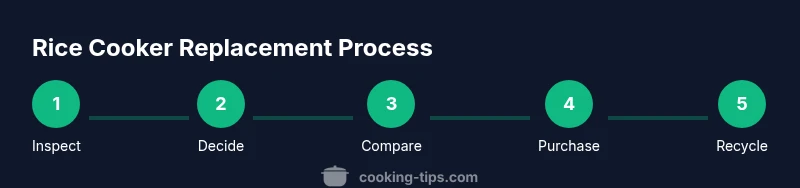
Inspect exterior and test safety
Unplug the unit, visually inspect the housing for cracks or warping, and listen for unusual buzzing. Check the power cord for fraying and inspect the seal around the lid for dryness or gaps. This initial check helps determine if the problem is cosmetic, electrical, or safety-related.
Tip: If you see exposed wires or melted plastic, stop using the unit immediately and consider replacement. - 2
Evaluate cooking performance
Cook a standard cup of rice and note whether it cooks evenly, absorbs the right amount of water, and switches to keep-warm without scorching. Record any burnt bottoms, undercooked centers, or inconsistent texture across batches. A pattern across several cycles indicates a reliability issue.
Tip: Use the same rice type and water ratio for a fair test each time. - 3
Check warranty and parts availability
Look up the model warranty period and whether replacement parts (lid seal, inner pot, thermostat) are readily available. If parts are scarce or prices for a fix approach new-unit cost, replacement becomes more sensible.
Tip: Warranties often cover manufacturing defects; don’t ignore coverage terms. - 4
Compare repair costs vs. new unit
Obtain a rough estimate for the needed parts and labor, and compare it to the price range of a new rice cooker with similar features. If the repair count or cost is high, upgrading is typically the smarter choice.
Tip: Remember to factor energy efficiency improvements into the total cost over time. - 5
Plan the replacement strategy
If you decide to replace, shortlist models by capacity, features, and price range. Consider energy efficiency, safety features, and ease of cleaning. Retrieve the old unit for recycling and plan to transfer rice cooking habits to the new device.
Tip: Keep a short list of must-have features to speed up shopping.
Quick Answers
How long should a rice cooker typically last with normal use?
Lifespan varies by brand and use, but most home models last several years with regular care. If you notice persistent performance issues or safety concerns, replacement is a prudent option.
Most rice cookers last several years with regular care. If performance becomes unreliable or you notice safety concerns, consider replacing.
Is it worth repairing a rice cooker if one component fails?
If replacement parts are readily available and the repair cost is reasonable, a targeted fix can be worthwhile. If parts are scarce or the device is aging, replacement is often the better choice.
If parts are available and the repair is affordable, fix it. Otherwise, replacement is usually the smarter option.
What features should I prioritize in a new rice cooker?
Look for even heating, easy cleanup, a dependable keep-warm function, and safety features like auto shutoff. Consider fuzzy logic or induction heating for versatility with different grains.
Prioritize even heating, easy cleaning, reliable keep-warm, and good safety features. For more versatility, consider advanced technologies like fuzzy logic.
How do I dispose of an old rice cooker responsibly?
Take the appliance to an electronics recycling facility or follow local recycling guidelines. Remove any non-metal accessories and separate batteries if present.
Recycle the appliance at an electronics recycling site and follow local guidelines for safe disposal.
Can newer models really save energy?
Yes, newer models often feature better insulation and efficient heating elements, which can reduce overall energy use during frequent rice cooking.
Newer models typically use energy more efficiently due to better insulation and smarter heating.
What’s the best way to test a replacement rice cooker at home?
Run multiple batches with the same type of rice and water ratio to confirm consistent results and test the keep-warm function across several hours.
Test a few batches with the same rice and water ratio and check the keep-warm function over a few hours.
Watch Video
Top Takeaways
- Assess reliability across several uses before deciding to replace
- Weigh repair costs against the price and features of a new unit
- Prioritize safety and energy efficiency in the replacement
- Recycle old appliances responsibly