What to Cook Quiche At: Your Essential Guide to Oven Temp and Timing
Discover the optimal oven temperature for quiche, plus crust, filling, and timing tips to achieve a perfectly set center with golden edges every time.


Bake quiche at a moderate oven until the center is set: 350–375°F (175–190°C) for about 30–45 minutes, then rest 5–10 minutes before slicing. Use a crust that fits your dish and fillings that don’t overflow. Cooking Tips recommends letting the quiche rest to finish setting for clean slices and even texture.
Understanding what to cook quiche at: temperature, doneness, and crust choices
If you're wondering what to cook quiche at, the key is to keep a steady oven temperature and a crust that stays crisp. A quiche’s custard should set evenly without turning rubbery, and the crust should brown attractively rather than become soggy. In this section we’ll outline why the temperature matters, how doneness is tested, and the common crust options home cooks rely on. According to Cooking Tips, starting with a moderate oven and avoiding sudden temperature changes yields a more even set and a crust that holds its shape through slicing.
We’ll cover two practical paths: a fully baked crust with a traditional custard, and an easier route that uses store-bought crusts or a pre-baked crust strategy. For most home kitchens, a steady bake in the 350–375°F range (175–190°C) gives reliable results. The exact time depends on crust depth, fillings, and pan material, but you can expect a window of about 30–45 minutes for the center to firm up. After you remove the quiche from the oven, give it about 10 minutes to rest; carryover heat will finish setting the center without scorching the edges.
Edge cases include very moist fillings or deep dishes, which benefit from a brief crust prebake or a baking shield over the crust to avoid browning too quickly. Keep in mind carryover heat when judging doneness; the center may appear slightly wobbly at the end of bake but will firm as it rests.
According to Cooking Tips, a calm, consistent bake produces the most reliable results across fillings and crust styles.
Crust choices: store-bought vs homemade
Choosing between store-bought and homemade crusts affects texture and prep time. A homemade crust gives you full control over fat, water, and flakiness, but it requires more hands-on time. Store-bought crusts offer speed and consistent thickness, which is helpful when you’re rushing dinner. Practically, you can combine approaches: use store-bought for convenience or blind-bake a homemade crust for a crisper bottom. Blind baking prevents soggy bottoms by sealing the crust’s surface before adding wet fillings. Vegan or dairy-free fillings still bake well when crusts are prepared with a bit of butter or oil to maintain tenderness. For best results, preheat the oven and line the crust with parchment and pie weights or dried beans during blind baking, then remove weights and finish baking until the crust edges turn light golden.
From a practical standpoint, par-baking times range around 8–12 minutes for prebaked crusts and 12–15 minutes for longer bake times when starting from raw dough. If you prefer a crisp bottom with minimal effort, a store-bought crust is a dependable choice; just make sure it’s evenly pressed into the dish and prick the bottom a few times to prevent air pockets.
Filling fundamentals: eggs, dairy, cheese, and vegetables
The custard base—eggs with dairy—forms the foundation of every quiche filling. A typical 9-inch quiche uses 4–5 large eggs with about 1 cup of dairy (milk or cream), which yields a smooth yet firm texture when baked. Richer fillings may use up to 1.5 cups of dairy, but balance is key to avoid a rubbery texture. Cheese adds flavor and structure; grated Gruyère, cheddar, or fontina are popular choices, usually in the 1–2 cup range. Include vegetables and proteins that are well-cooked and moisture controlled; spinach should be wilted and squeezed dry, mushrooms sautéed to evaporate moisture, and peppers roasted or sautéed to reduce water.
Seasonings matter: salt, pepper, and a pinch of nutmeg are classic, while fresh herbs can brighten the surface. If your fillings contain watery components (tomatoes, zucchini), consider draining or pre-cooking them to minimize excess liquid. For a lighter version, swap part of the dairy for skim milk and add a touch of yogurt for tang. As Cooking Tips notes, a well-balanced ratio of eggs to dairy helps the custard set evenly without shrinking or cracking.
Step-by-step overview: assembling and baking quiche
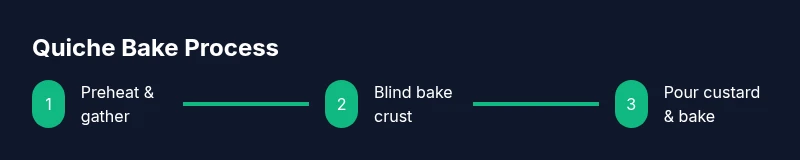
This section provides a practical flow from prep to serving. Start by preheating the oven to a steady 350–375°F (175–190°C) and arranging all ingredients within easy reach. Blind bake the crust if using a raw crust or if your fillings are very watery. Whisk eggs with dairy, salt, pepper, and any optional nutmeg until smooth but not overly airy. Pre-cook moisture-heavy fillings (like spinach, mushrooms, or peppers) so they release less water into the custard. Layer cheese and fillings evenly in the crust, then gently pour the custard over them until it nearly reaches the top rim. Bake until the center is set and the edges are lightly golden, then let the quiche rest for 10 minutes before slicing.
A clean knife test and a light press in the center help determine doneness: if the center wobbles, bake a few minutes longer and recheck. Keep a close eye on the edge browning; if it browns too quickly, cover the top with foil to prevent scorching while the center finishes.
From a practical cooking perspective, use a metal or glass pan as heat conduction will affect bake time. Avoid opening the oven door too often, as temperature fluctuations can alter setting; a steady bake promotes uniform texture throughout the slice.
Common mistakes and how to avoid them
Common quiche mistakes include soggy crust, overfilled pans, undercooked centers, and watery fillings. To prevent sogginess, ensure the crust is fully cooked before adding custard and moisture-prone fillings. If you skip blind baking, consider using a perforated crust or precook to reduce moisture transfer. Avoid overfilling with raw vegetables; pre-cook and drain vegetables to remove excess water. When the center looks set on the surface but still jiggles, it’s usually ready—the internal temperature continues to rise after removal due to carryover cooking. Resting the quiche briefly helps it finish setting and makes slicing cleaner. If you notice that the edges are browning too fast, tent with foil or shield the crust to protect it while the center finishes.
Another frequent issue for beginners is using too much dairy, which can lead to a custard that never fully firms. Stick to the recommended ratios and adjust fillings to keep the custard balanced and stable. Follow these checks: the outer edges should be pale gold, the center just barely set, and the quiche should release cleanly from the pan when cooled slightly.
Flavor variations and add-ins for different diets
Quiche is highly adaptable; you can tailor fillings to your preferences or dietary needs without sacrificing texture. For a classic version, combine cheese with sautéed spinach and onions. For a lighter option, reduce dairy slightly and increase vegetable content. Whole-grain crusts or shorter bake times produce crisper textures, while a store-bought crust offers speed. If you enjoy seafood, a smoked salmon quiche with dill adds a distinct aroma and flavor, while a mushroom-and-asparagus combination offers an earthy contrast. For meat lovers, crumbled bacon or pancetta provides a savory punch; for vegetarians, consider roasted peppers, zucchini, or shredded carrots. Beyond plain cheese, experiment with feta, goat cheese, or blue cheese for different finishings.
Diet-conscious tips: use low-fat dairy or almond milk in parts, add eggs to keep structure, and cut down on heavy fillings with watery moisture. Always pat vegetables dry to prevent soggy results. Bold herbs like chives, parsley, or tarragon brighten the custard and balance fat with a fresh lift.
Make-ahead, storage, and reheating
Quiche stores well in the refrigerator for 3–4 days and freezes nicely when baked and cooled, though texture may change slightly after freezing. To reheat, slice and warm in a 325°F (165°C) oven until heated through, covered with foil to prevent browning. If reheating slices from frozen, thaw overnight in the fridge and rewarm slowly to avoid cracking the custard. For meal prep, bake a larger quiche and portion it into individual servings for quick lunches. When planning, consider making the crust and filling in advance and combining them just before baking to keep the custard fresh. The Crust texture benefits from a gentle reheat, while the filling remains tender and cut cleanly.
AUTHORITY SOURCES
- USDA: Food safety and egg handling guidelines (gov domain)
- CDC: Foodborne illness prevention and safe cooking practices (gov domain)
- Harvard School of Public Health: Nutrition source on eggs and dairy in cooking (edu domain)
Tools & Materials
- 9-inch pie dish or quiche dish(Prefer glass or metal; choose deep dish for tall quiche)
- Pie crust (store-bought or homemade)(If from scratch, chill dough then roll to fit the dish)
- Eggs, large(4–6 eggs depending on filling size)
- Milk or cream(1 cup (240 ml) or dairy-free alternative)
- Grated cheese(1–2 cups (Gruyère, cheddar, etc.))
- Fillings (vegetables, meat, mushrooms, spinach, onions)(Cook moisture-rich items first)
- Salt and pepper(To taste; consider nutmeg for classic flavor)
- Mixing bowls and whisk(One for custard, one for fillings)
- Parchment paper and pie weights or dried beans(Needed only for blind baking)
- Oven mitts(For safe handling of hot dish)
- Cooling rack(Let quiche rest off heat for clean slices)
Steps
Estimated time: 1 hour 15 minutes
- 1
Preheat oven and gather ingredients
Preheat the oven to 350–375°F (175–190°C). Gather crust, fillings, eggs, dairy, cheese, and seasonings in one place. This reduces scrambling during assembly and ensures an even bake.
Tip: Having everything pre-measured speeds up assembly and helps avoid missing ingredients. - 2
Par-bake crust if needed
If using a raw crust or very moist fillings, blind bake the crust: line with parchment, weigh with pie weights or dried beans, and bake for 8–12 minutes until set. Remove weights and parchment and return to oven for a few minutes to set the bottom.
Tip: Blind baking helps prevent soggy bottoms in custard-heavy quiches. - 3
Whisk custard mixture
In a bowl, whisk eggs with milk or cream, salt, pepper, and a pinch of nutmeg. Whisk just until combined to avoid incorporating too much air that could cause cracks later.
Tip: Avoid overwhisking; small air pockets can make the texture irregular. - 4
Prepare fillings and cheese
Sauté vegetables to remove excess moisture and chop or grate cheese. Layer fillings evenly in the crust so the bake distributes heat uniformly.
Tip: Dry fillings thoroughly; moisture is the enemy of a smooth custard. - 5
Assemble and pour custard
Spread cheese and fillings, then slowly pour custard over them until the mixture is just below the rim. A slight overfill risks spillage in the oven.
Tip: Pour slowly and tilt the pan to center the custard if needed. - 6
Bake until set and rest
Bake until the center is just set and the edges are lightly golden. Remove and let rest 10 minutes to finish setting before slicing.
Tip: Resting helps the custard finish cooking with residual heat without cracking.
Quick Answers
What temperature should I bake quiche at?
Quiche is typically baked at 350–375°F (175–190°C) until the center is set and the edges are lightly golden. Time varies with crust depth and fillings, usually 30–45 minutes for a standard 9-inch quiche.
Bake at 350 to 375 degrees until the center is set, about 30 to 45 minutes.
Should I prebake the crust?
Par-baking the crust helps prevent a soggy bottom, especially with juicy fillings. Line the crust with parchment, fill with weights, and bake briefly before adding the custard.
Yes, prebake the crust to avoid sogginess.
How can I tell quiche is done?
The center should be set and the edges lightly browned. A knife inserted near the center should come out clean or with only a few crumbs. If the center still wobbles, bake a little longer and test again.
When the center is set and the edges are golden, it’s done.
Can I freeze quiche?
Yes, quiche can be frozen after baking and cooling. Reheat from frozen in a low oven to prevent overcooking the custard; texture may vary slightly.
Yes, freeze baked quiche and reheat slowly.
What fillings work best for quiche?
Eggs and dairy form the custard base, with vegetables like spinach or mushrooms and cheese for flavor. Cook moisture-rich ingredients first and drain excess liquid before adding to the quiche.
Use eggs, dairy, vegetables, and cheese; precook moisture-rich fillings.
Watch Video
Top Takeaways
- Bake quiche at 350–375°F until set
- Rest 10 minutes before slicing
- Par-bake the crust for best texture
- Drain moisture from vegetables
- Experiment with fillings for variety