Slow Cook French Onion Soup: Step-by-Step Guide
Master slow cook french onion soup with caramelized onions, rich stock, and a bubbling cheese topping. This comprehensive, home-cook friendly guide covers technique, timing, and tips for restaurant-quality depth at home.


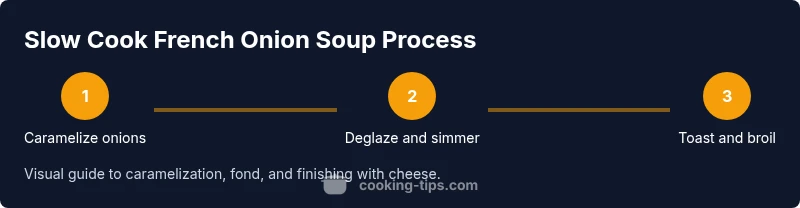
By using the slow cook french onion soup technique, you’ll transform a simple onion base into a deeply caramelized, savory broth enriched with beef stock and a splash of wine. The key steps are caramelizing onions low and slow, deglazing the pan, simmering with stock, then finishing under a broiler with toasted bread and melted cheese. This method rewards patience with complex flavor.
What is slow cook french onion soup?
Slow cook french onion soup is a classic dish where onions are caramelized to a deep copper color, creating a natural sweetness that forms the backbone of a savory broth. The long, gentle cooking process concentrates flavors, and when combined with stock, wine, and aromatics, yields a rich, comforting soup perfect for chilly evenings. This approach emphasizes technique over shortcut methods, ensuring depth with each bite. According to Cooking Tips, the act of patient caramelization unlocks the onion's natural sugars, which is essential for authentic flavor development. The method also primes the fond in the pan, which is later deglazed to capture every bit of browned flavor. The result is a velvety soup where each spoonful carries a chorus of savory notes, from onion sweetness to wine’s acidity and the nutty cheese finish on top.
Why caramelize onions slowly?
Caramelization is the process that turns simple onions into a flavor powerhouse. A slow cook allows sugars to brown evenly and develop complexity without burning. When you rush this step, you risk a harsh, bitter edge rather than a deep, rounded sweetness. The onions should soften gradually, releasing moisture and concentrating flavor, which forms the foundation of the final soup. The Cooking Tips analysis notes that patience during caramelization yields significantly richer depth, aligning with traditional French technique and home-cook practicality. Keep the heat steady, stir occasionally, and watch for an even, mahogany hue rather than a rush to dark brown.
The role of deglazing and fond
Deglazing lifts the flavorful browned bits (fond) stuck to the bottom of the pot, which would otherwise stay trapped in the pan. After onions reach color, add a small amount of liquid (stock, wine, or sherry) to loosen the fond, then scrape gently to incorporate those browned bits back into the soup. This step is what links caramelized onions to a robust, cohesive broth. The fond contributes nuanced roast notes, toastiness, and a subtle mineral zing that rounds the soup. Deglazing is quick, but the payoff is a noticeably richer base that carries through to the finish. The technique is simple, yet its impact on depth is profound.
Choosing the right stock and aromatics
Stock quality sets the stage for your soup. A rich, low-sodium beef stock is traditional, but you can blend with mushroom or vegetable stock for lighter variations. Salt levels are easier to control with low-sodium stock. Aromatics such as thyme, bay leaves, and a clove of garlic add fragrant notes without overpowering the onion sweetness. If you prefer a wine accent, a dry white or a splash of sherry can lift the broth without tipping it over into sweetness. Cooking Tips analysis highlights that stock choice and careful seasoning are pivotal to achieving a balanced depth.
Building flavor with wine and herbs
Wine adds acidity and brightness, counterbalancing the sweetness of caramelized onions. Use a dry white wine or a modest amount of sherry to keep the soup from becoming flat. Add herbs like thyme and bay leaves early so their flavors have time to perfume the broth. Remove the bay leaves before finishing to avoid any overpowering herbal notes. The wine should be reduced slightly during simmering to meld flavors and prevent a watery finish. This stage is where the soup starts to resemble a refined, slowly built dish rather than a simple onion soup.
Assembly, finish, and serving
When the soup is deeply flavorful, portion into oven-safe bowls, top with toasted bread, and cover with grated Gruyère or Swiss cheese. Broil just until the cheese is bubbly and lightly browned. Serve immediately to preserve the contrast between the hot soup and the crisp, cheesy croutons. For serving, you can float a thin cheese lid across the surface for dramatic presentation. A drizzle of olive oil or a fresh herbs sprig can add a final touch of aroma and color. The result is a classic, comforting dish that shines in both flavor and technique.
Variations and substitutions
If you’re dairy-free, use dairy-free cheese alternatives or skip the cheese topping and finish with a crisp, olive-oil-drizzled crostini. For gluten-free meals, choose gluten-free bread or skip the bread layer, relying on the depth of the soup itself. You can experiment with different wines or add a splash of balsamic vinegar at the end for a subtle acidity twist. These variations help you adapt the dish to dietary needs while maintaining the core technique of slow caramelization and careful simmering.
Common mistakes and how to fix them
Common pitfalls include browning onions too quickly, which leads to bitterness, or not deglazing enough, which leaves behind fond that is difficult to integrate. Salt too early and you risk oversalting the broth; taste and adjust at the end. If the soup seems thin, simmer a bit longer to concentrate flavors, or reduce with an extra splash of stock before serving. If the cheese browns too quickly, switch to a higher rack in the oven or reduce the heat to avoid burning. These fixes help you consistently deliver a rich, well-balanced bowl.
Final tips for perfect soup every time
Consistency comes from timing and temperature control. Use a heavy-bottom pot to ensure even conduction and prevent scorching. Keep onions sliced evenly to ensure uniform caramelization. Taste at key moments: after onions caramelize, after deglazing, and after the final simmer to calibrate salt and acidity. Memory-friendly steps like preparing bread and cheese ahead of time streamline service. With patience and attention, slow cook french onion soup becomes a dependable, comforting staple.
Tools & Materials
- Large heavy-bottom pot (5-6 quart)(Prefer enameled cast iron for even heat)
- Sharp chef's knife(For precise onion slices)
- Wooden spoon(Stirs without scratching)
- Measuring cups and spoons(Accurate stock and wine amounts)
- Beef stock or broth (low-sodium)(Flavor base; adjust salt later)
- Dry white wine or sherry (optional)(Depth and brightness)
- Fresh thyme & bay leaves(Aromatics for aroma)
- Toasts or baguette slices(Topping for the finished soup)
- Gruyere cheese, grated(Traditional creamy melt)
- Oven or broiler-safe bowls(For finishing under heat)
Steps
Estimated time: Estimated total time: 2 hours 45 minutes
- 1
Prep onions
Peel and thinly slice onions; set up mise en place with butter, oil, and spices. The goal is uniform slices to promote even caramelization. Have stock warming on the back burner to stay ready for the next steps.
Tip: Uniform slices ensure even browning; use a mandoline if available. - 2
Caramelize onions
Cook onions slowly in butter and a neutral oil over medium-low heat, stirring occasionally. Keep the color in the copper-to-amber range, not burnt. This step often takes 25–40 minutes depending on onions and pan heat.
Tip: Patience is essential—lower heat yields deeper sweetness. - 3
Deglaze the pan
Once onions are richly colored, pour in a small amount of stock or wine to loosen the fond. Scrape with a wooden spoon to lift browned bits and reincorporate into the broth for depth.
Tip: Avoid splashing; add liquid gradually to prevent over-agitation. - 4
Add stock and aromatics
Pour in the warm stock, add thyme and bay leaves, and bring to a gentle simmer. Allow flavors to meld for at least 20–30 minutes; longer simmering yields more concentrated notes.
Tip: Skim any foam for a clean broth surface. - 5
Season and reduce
Taste and adjust salt, pepper, and acidity. If the broth seems flat, a splash more wine or a touch of vinegar can brighten without overpowering sweetness.
Tip: Salt gradually; you can always add more, but can’t remove excess quickly. - 6
Prepare crostini and cheese
Toast bread slices until crisp and set aside. Grate Gruyère cheese so it melts evenly over the top. This prepares the topping to deliver a bubbly, golden finish.
Tip: Coat the bread lightly with olive oil before toasting for extra crunch. - 7
Assemble and broil
Ladle hot soup into bowls, top with a bread slice, and crown with cheese. Broil until cheese is melted and lightly browned. Serve immediately to maintain contrast between hot soup and melted cheese.
Tip: Use oven-safe bowls on a sheet pan for safe transfer to and from the hot oven. - 8
Make-ahead and storage
Soup can be made and stored chilled for up to 2 days; reheat gently before serving. Toasts and cheese can be prepared in advance and added just before broiling.
Tip: Cool soup quickly and refrigerate in shallow containers to preserve flavor integrity.
Quick Answers
What makes slow-cooked onion soup better than faster methods?
Slow cooking develops deep caramelized sweetness and a cohesive broth. The extended simmer allows flavors to meld, producing a richer, smoother soup than rushed versions.
Slow-cooked onions bring out natural sweetness, and the longer simmer blends flavors into a richer broth.
Can I make this ahead of time?
Yes. The soup stores well in the fridge for 1–2 days. Reheat gently and top with fresh crostini and cheese just before serving to preserve texture.
You can make it ahead; just reheat slowly and add the topping when serving.
What cheese works best for finishing?
Gruyère is traditional for its melt and flavor. You can use Swiss or a sharp cheddar as alternatives, but Gruyère gives the classic profile.
Gruyère melts beautifully and gives that classic, savory topping.
Can I use vegetable stock instead of beef?
Vegetable stock can work, especially for a lighter version, but it won’t have the same depth as beef stock. Add extra aromatics to compensate.
Vegetable stock can substitute, but it won’t be as rich; boost flavor with herbs.
Is this dish gluten-free?
Traditionally no, because of the bread topping. You can make it gluten-free by using gluten-free bread or skipping the topping entirely.
You can adapt with gluten-free bread or skip the topping.
Watch Video
Top Takeaways
- Caramelize onions slowly for depth
- Deglaze to capture fond and flavor
- Balance stock, wine, and salt carefully
- Finish with toasted bread and cheese for classic texture