How to Cook Onions: A Step-by-Step Home Guide
Master onions with practical methods: sauté, caramelize, roast, and quick microwave. Learn prep, timing, and storage for vibrant, flavorful dishes.


By the end of this guide, you’ll know how to cook onions to the exact texture your dish needs—from bright, translucent sautéed onions to rich, deep caramelization. You’ll choose your technique (sauté, caramelize, roast, or quick microwave), pick the right onion variety, and use simple steps to keep them flavorful and not burnt. Gather onions, fat, a pan, salt, and patience, and follow these methods.
The Science of Onion Cooking
Onions are built from layers of tissue filled with water, sugars, and sulfur compounds. When heated, these compounds break down and release aroma and sweetness that define many recipes. The choice of heat transforms onions from sharp and pungent to mellow and savory. High heat quickly browns the surface, creating a Maillard reaction and a toasted flavor, while gentle heat allows enzymes to convert sugars into caramel-like sweetness. Different onion varieties (yellow, white, red, and sweet onions) have distinct sugar levels and texture, which influences cooking time and final texture. For most home cooks, yellow onions strike a balance of sweetness and bite, making them a versatile starting point. By understanding these processes, you can predict how onions will behave in different techniques, ensuring you achieve the texture you want in sauces, soups, stews, or fried toppings. This knowledge also helps you avoid overcooking, which can turn onions mushy or bitter.
Choosing the Right Onion for the Job
Onion choice matters. For quick sautéing, yellow onions are reliable due to their balance of sweetness and sharpness. White onions hold up well in salsas and salads where you want a cleaner, crisper bite. Red onions offer color and a softer bite when cooked briefly, but they can turn brownish if cooked too long. Sweet onions, such as Vidalia or Walla Walla, excel when you want maximum sweetness and minimal pungency, ideal for caramelizing or topping burgers. For long-cooked dishes, a mix of sweet and yellow onions can add complexity. If you’re stockpiling, keep onions in a cool, dry, well-ventilated place away from potatoes, which release moisture that can accelerate spoilage. Remember: preparation and consistency matter as much as the variety you choose, so plan your method before you start.
Preparing Onions: Cutting, Cleaning, and Storage
Start with clean hands and a clean workspace. Peel the outer skin and trim the ends, then cut the onion in half from root to tip to stabilize it. Slice lengthwise to create even crescents or dice for uniform cooking; thinner slices cook faster and brown more evenly. Keep the root end intact if you plan to slice for sautéing, as it helps hold layers together. Rinse or wipe away any remaining skin fragments. Freshly chopped onions can be stored in an airtight container in the refrigerator for 1-2 days, or frozen for longer storage, though freezing may alter texture. If you anticipate a long cooking time (like caramelizing), you can keep the cut onions in a bowl of cold water to reduce their sulfur bite for a few minutes before cooking.
Sautéing Onions to Perfection
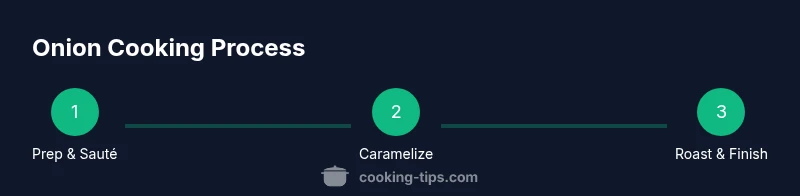
Heat a heavy pan over medium heat and add enough fat to coat the bottom (about 1-2 tablespoons). Add onions in a single layer, season lightly with salt, and avoid overcrowding the pan. Stir only when needed to prevent sticking, letting the edges brown for flavor. For translucent sautéing, cook 5-7 minutes until onions become soft and pale; adjust heat if they color too quickly. Season with a pinch more salt toward the end to intensify sweetness. If you want a crisper finish for toppings, you can finish under a broiler for a minute or two. Sautéed onions form the flavor base for countless dishes, from soups to pasta sauces.
Caramelizing Onions: Slow, Sweet, and Silky
Caramelizing requires patience and even heat. Use a wide, heavy skillet on low to medium-low heat, add fat if needed, and spread onions in a thin layer. Stir every 5-10 minutes, allowing surface browning without burning. Depending on the onion and pan, 30-40 minutes yields deeply browned, jam-like onions with rich sweetness. If they start sticking, deglaze with a small amount of water, broth, or wine to loosen fond and reincorporate flavor. Salt can be added gradually to balance sweetness, but avoid rushing the process with high heat. Caramelized onions are dramatic in flavor and texture and elevate burgers, pizzas, and quiches.
Roasting Onions for a Roasty Texture
Roasting onions concentrates sweetness and adds a roasted edge without constant attention. Preheat the oven to about 425°F (220°C). Toss peeled onion wedges with oil, salt, and optional herbs, then spread in a single layer on a rimmed baking sheet. Roast for 25-30 minutes, turning once, until edges are golden and centers are tender. For extra browning, finish under the broiler for 1-2 minutes, watching closely. Roasted onions work beautifully in grain bowls, salads, and as a side dish.
Quick Methods: Microwave and Pan-Sear Combos
For a fast option, onion slices can be microwaved in a covered dish with a tablespoon of water for 2-4 minutes until soft, then finished in a hot pan with a little oil if you want color. A quick pan-sear without long caramelization will still bring flavor if you use salt, a touch of sugar, and a pinch of acid (lemon juice) to brighten the flavor. While microwave cooking lacks the fond development of sautéing, it’s a good fallback when time is tight or you’re cooking for one.
Flavor Pairings, Troubleshooting, and Storage
Onions pair with garlic, herbs, pepper, and acid to create a broad flavor spectrum. If your onions taste sharp, a pinch of sugar can balance bitterness. If onions release too much moisture during cooking, increase heat slightly or cook in smaller batches to promote evaporation. Cooked onions store in the fridge for 3-4 days in an airtight container, or freeze for up to 3 months; thaw gently. Reheating is best done gently to avoid soggy texture, either in a skillet with a splash of liquid or in a covered pan in the oven.
Authority Sources
Here are reputable sources for further reading on safe handling and cooking temperatures:
- https://www.fda.gov
- https://www.usda.gov
- https://extension.illinois.edu
Tools & Materials
- Onions (yellow or preferred variety)(Quantity depends on recipe; 1 medium onion yields about 1 cup chopped)
- Knife (sharp chef's knife)(8-inch blade recommended)
- Cutting board(Stable surface)
- Heavy skillet or sauté pan(Prefer heavy-bottom cast iron or stainless steel)
- Spatula or wooden spoon(For stirring)
- Fat: olive oil or butter(2 tablespoons or more)
- Salt(To taste, enhances sweetness)
- Optional: sugar for caramelization or deglazing liquids (water/broth/wine)(Use sparingly)
Steps
Estimated time: 45-75 minutes
- 1
Gather and prep onions
Collect all ingredients and prepare the onions by trimming the root ends, peeling the skin, and slicing evenly. Stabilize the onion by cutting it in half and placing it cut-side down. This prep reduces uneven cooking and makes the technique you choose go more smoothly.
Tip: Trim and peel consistently; even slices ensure uniform browning. - 2
Heat fat in pan to medium
Place a heavy skillet on medium heat and add 1-2 tablespoons of oil or butter. Let the fat shimmer before adding onions. This quick preheat creates a protective layer that helps prevent sticking and promotes browning.
Tip: Use enough fat to lightly coat the bottom; too little fat accelerates burning. - 3
Sauté until translucent
Add onions in a single layer; season with a pinch of salt. Stir only when needed to avoid breaking the rings. Cook 5-7 minutes until onions soften and become translucent with pale edges.
Tip: Avoid crowding the pan; work in batches if needed for even browning. - 4
Caramelize for natural sweetness
Reduce heat to low-medium and continue cooking, stirring every 5-10 minutes. After 30-40 minutes, you should see deep brown color and a jam-like texture. If the onions threaten to stick, deglaze with a small splash of water or stock.
Tip: Patience pays off; low, gentle heat develops the best sweetness. - 5
Roast for texture and depth
Preheat oven to 425°F (220°C). Toss peeled onion wedges with oil and salt, spread on a sheet, and roast 25-30 minutes, turning once. For extra browning, finish under the broiler for 1-2 minutes.
Tip: Roasting concentrates flavor and gives a savory edge without constant stirring. - 6
Finish, taste, and store
Taste for salt and balance. If using onions from multiple methods, a light mix can add texture to a dish. Store leftovers in an airtight container in the fridge for 3-4 days or freeze for up to 3 months.
Tip: Cool to room temperature before refrigerating to maintain texture.
Quick Answers
What is the best onion for cooking?
Yellow onions are a reliable all-purpose option due to their balanced flavor. White onions stay crisper and milder in raw dishes, while red onions add color but brown more quickly when cooked. Sweet onions excel in caramelization for maximum sweetness.
Yellow onions are the best all-purpose option for cooking, with white and red offering other unique benefits depending on the dish.
Can I caramelize onions without adding sugar?
Yes. Caramelization relies on natural onion sugars. Sugar is optional and mainly helps push color faster; slow, steady heat is key.
You can caramelize using the onion's own sugars; sugar isn’t required if you cook slowly.
How long do cooked onions last in the fridge?
Cooked onions refrigerate well for 3-4 days in an airtight container and can be frozen for up to 3 months.
Store cooked onions in the fridge for 3 to 4 days, or freeze for longer.
Is it safe to store chopped onions in water?
Storing chopped onions in water isn’t recommended for long-term use as they can spoil faster and lose texture.
Storing chopped onions in water isn’t ideal; dry storage or refrigerating in a container is better.
Can I freeze sautéed onions?
Yes. Sautéed onions freeze well for 2-3 months. Thaw and reheat gently to minimize texture changes.
Yes, onions can be frozen; thaw slowly and reheat to restore flavor.
What temperature should I cook onions at for sautéing?
Cook onions at medium heat, adjusting to keep them from browning too quickly. Raise heat slightly for browning if needed, then reduce to finish.
Use medium heat for sautéing; adjust as needed to avoid burning.
Watch Video
Top Takeaways
- Choose the right onion variety for the task.
- Control heat to achieve color without burning.
- Caramelize slowly for deep sweetness and depth.
- Roast for texture and concentrated flavor.
- Store cooked onions properly for best quality.