Slow Cook Pot Roast: A Complete Step-by-Step Guide
Master a tender slow cooker pot roast with this practical guide. Learn ingredients, browning, timing, and make-ahead tips to ensure flavorful beef and a rich gravy.


With this recipe for slow cook pot roast, you will produce a fork-tender roast with deeply developed flavor using a slow cooker. Gather a sturdy chuck roast, aromatics, vegetables, and beef stock, then set the cooker to low for 8–10 hours or high for 4–6 hours. This approach requires patience but rewards hands-off convenience.
Why the recipe for slow cook pot roast is ideal for busy kitchens
A recipe for slow cook pot roast fits the rhythms of modern life. It turns a simple cut of beef into a deeply flavored, never-dry main dish with minimal hands-on effort. By letting heat do the work over several hours, you free time for prep or other meals while the oven or stove stays quiet in the background. The slow-cooking method also helps develop tenderness through collagen breakdown, which is especially welcome for tougher cuts. For home cooks seeking reliability, this method reduces the risk of ending up with a dry roast and inconsistent results. According to Cooking Tips analysis, planning a single braise can feed a family with leftovers that reheat well, making it a practical centerpiece for weeknight dinners. The recipe for slow cook pot roast is flexible enough to accommodate variations in seasonings, vegetables, and stock, so you can tailor it to your pantry and dietary needs without sacrificing flavor. If you’re new to slow cooking, start with a basic version and gradually add aromatics, herbs, and a splash of acidity to brighten the sauce.
Choosing the right cut and pantry basics
The foundation of a great slow cooker roast is selecting the right cut and keeping pantry staples on hand. A well-marbled chuck roast is ideal for slow braising, since the intramuscular fat melts during cooking and keeps the meat moist. If chuck isn’t available, look for well-trimmed shoulder roasts or cross-cut roasts with visible marbling. For the vegetables, a mix of potatoes, carrots, and onions adds sweetness and texture. In terms of liquids, beef stock or broth provides body, while a splash of wine or balsamic can add brightness. Salt and pepper are essential, and bay leaves or thyme can elevate the aroma without requiring many fresh ingredients. The recipe for slow cook pot roast adapts to what you have on hand; just keep the ratio of liquid to meat consistent so the roast braises rather than stewing. Planning the ingredient list the night before helps you start cooking promptly the next day.
Flavor foundations: aromatics, liquids, and browning
Flavor builds in layers before braising begins. Start with aromatics such as onions, garlic, and celery to create a fragrant base. Browning the meat in a hot skillet before transferring it to the slow cooker is a small step that yields big flavor, thanks to the Maillard reaction. Deglaze the pan with a bit of broth, wine, or water to lift flavorful browned bits and pour them into the cooker. The braising liquid should come about halfway up the roast; this keeps the meat moist while preventing the vegetables from turning to mush. If you want a thicker, more luxurious gravy, reserve a portion of the braising liquid and whisk in a slurry of cornstarch or a beurre manié at the end. For a balanced pot roast, aim for a touch of acidity from a splash of wine or a teaspoon of tomato paste, which brightens the overall profile without overpowering the beef.
Slow cooker setup: browning, layering, and timing
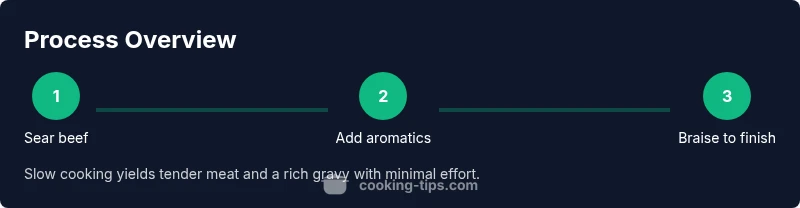
The actual cooking flow is simple but precise. Heat a skillet over medium-high heat, add oil, and brown the roast on all sides until a rich crust forms. Remove the meat and sauté the aromatics directly in the same pan to maximize flavor. Place the beef in the slow cooker along with vegetables, scatter herbs, and pour in the braising liquid. Position the meat so it sits above the vegetables rather than buried under them to ensure even heating. If you want ultra-tender meat, set the cooker to low and allow 8–10 hours; for a faster finish, use high for 4–6 hours. Check the pot halfway to redistribute vegetables if needed, and avoid lifting the lid too often, which can extend cooking time. When the roast is finished, let it rest briefly before slicing to preserve juices.
Common mistakes and how to avoid them
Even small missteps can affect tenderness and flavor. Avoid crowding the pan when browning, as overcrowding traps moisture and prevents a proper crust. Don’t add too much liquid; the meat should braise in a concentrated sauce, not boil in a pool. Keep the lid on during cooking to maintain heat and moisture. Reserve some braising liquid to finish the gravy, instead of thinning it with extra broth after the fact. If the meat ends up stringy, let it rest and slice against the grain; this short rest helps the fibers reabsorb moisture. Finally, choose a roast that has good marbling; lean cuts tend to dry out under long simmering times.
Variations and make-ahead options
With a reliable base, you can adapt this recipe for different diets and schedules. To keep gluten-free, skip any flour-thickeners and use a starch slurry to tighten the sauce instead. For a lighter version, reduce added fat and use low-sodium stock; rely on onions and celery to provide depth. If you’re meal-prepping, portions freeze well after cooking; reheat gently in a microwave or on the stove, with a splash of broth to restore moisture. You can also finish the dish in the oven after slow cooking by braising uncovered at 375°F for 15–20 minutes to re-crisp the edges. The recipe for slow cook pot roast can be adjusted to include root vegetables, mushrooms, or even a splash of beer for a deeper, malty note.
Authority sources
This section provides external references to support safe cooking practices and standard braising techniques. Use these trusted resources to learn more about beef cuts, braising theory, and food safety guidelines.
- https://www.fsis.usda.gov/food-safety
- https://www.fda.gov/food
- https://extension.illinois.edu
Tools & Materials
- Slow cooker (6-8 quart capacity)(For even cooking and space for vegetables.)
- Large heavy skillet or cast-iron pan(For browning the meat to develop flavor.)
- Sharp chef's knife(For trimming and chopping vegetables.)
- Cutting board(Stable surface with a clean edge.)
- Tongs(To turn meat without piercing it.)
- Measuring cups and spoons(For stock, wine, and seasonings.)
- Beef stock or broth(Adds body to braising liquid.)
- Onions, carrots, potatoes(Classic base vegetables.)
- Instant-read thermometer(Check final internal temp for safety.)
Steps
Estimated time: 8-10 hours on low or 4-6 hours on high
- 1
Sear the beef to develop flavor
Season the roast generously with salt and pepper. Heat oil in a skillet over medium-high heat and brown the roast on all sides until a rich crust forms, about 3–4 minutes per side. This step seals in juices and adds deep color that later enhances the gravy.
Tip: Do not crowd the pan; sear in batches if needed to maintain a hot surface. - 2
Prep aromatics and vegetables
While the meat browns, chop onions, carrots, and potatoes into chunky pieces. Dice garlic if using. These aromatics form the flavor base and will cook alongside the beef in the slow cooker.
Tip: Keep vegetables roughly uniform in size to ensure even cooking. - 3
Deglaze and build the braising base
Pour a small amount of broth or wine into the hot skillet and scrape up all browned bits. Transfer these flavorful drippings into the slow cooker to enrich the braising liquid.
Tip: This step captures the Maillard flavors sealed on the pan. - 4
Arrange in slow cooker and add liquid
Place the seared beef on top of the vegetables in the slow cooker. Pour in enough stock to come halfway up the roast; add herbs like thyme or bay leaves for aroma.
Tip: Keep the roast partially above the vegetables for even heat exposure. - 5
Cook on low or high
Set the slow cooker to low for 8–10 hours or high for 4–6 hours. Avoid lifting the lid during cooking to preserve moisture. The goal is a tender roast with a glossy pan sauce.
Tip: If you’ll be away all day, choose the low setting for maximum tenderness. - 6
Rest and finish the gravy
Remove the roast and vegetables, tent with foil and rest for 10–15 minutes before slicing. Skim fat from the braising liquid and whisk in a cornstarch slurry or a beurre manié to thicken into a silky gravy.
Tip: Slice against the grain for tenderness and spoon the sauce over the meat when serving.
Quick Answers
What cut is best for a slow cooker pot roast?
Chuck roast is ideal due to its marbling and connective tissue, which breaks down during braising for tenderness.
Chuck roast is the best choice for a slow cooker pot roast because of its marbling that tenderizes during cooking.
Should I brown the meat before slow cooking?
Yes. Browning adds texture and depth of flavor that you can’t get from braising alone.
Yes, brown the meat before slow cooking to boost flavor and color.
Can I use different vegetables or omit potatoes?
Absolutely. Root vegetables like parsnips or turnips work well, and you can omit potatoes if you prefer a lighter dish.
You can swap in other firm veggies if you like.
How do I fix a bland pot roast?
Adjust with salt, pepper, and a splash of acid like wine or vinegar; finish with a gravy made from the braising liquid.
Boost flavor with salt and a splash of acid, then finish with a glossy gravy.
How long can leftovers be stored?
Store refrigerated leftovers for 3–4 days or freeze for up to 3 months.
Leftovers stay good for a few days in the fridge or several months if frozen.
Is this recipe gluten-free?
Yes, as written it is gluten-free; just avoid flour-thickening methods unless you use a gluten-free slurry.
Yes, it can be gluten-free with careful thickening.
Watch Video
Top Takeaways
- Sear for depth of flavor and color.
- Keep braising liquid concentrated for rich gravy.
- Cook low for tenderness or high for speed, then rest before slicing.
- Use a balanced mix of aromatics to brighten the dish.