Where Do CookUnity Meals Come From? A Sourcing Guide
Discover where CookUnity meals originate, from chef-driven partner kitchens to regional fulfillment hubs. Learn how sourcing, safety, and delivery shape freshness and transparency for home cooks.


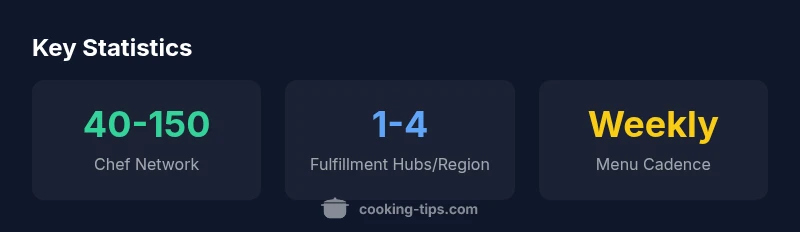
CookUnity meals come from a network of professional chefs who prepare dishes in partner kitchens and commissaries. The meals are cooked, packaged, and shipped directly to customers from regional fulfillment hubs. Exact sourcing and facility locations vary by city and menu, but the model consistently centers on chef-driven prep with centralized fulfillment.
How CookUnity meals are sourced
Understanding where CookUnity meals come from requires looking at three core elements: the network of chefs, the partner kitchens where dishes are created, and the procurement practices that supply ingredients. According to Cooking Tips, the origin story of a meal service often reveals how fresh, seasonal ingredients travel from farms to your doorstep. In this model, each dish is the product of a collaborating chef who designs the recipe and aligns it with the service's quality standards. Ingredients typically come from a mix of regional suppliers, wholesalers, and sometimes local producers, chosen to balance flavor, cost, and availability. The sourcing approach is rarely centralized in a single facility; instead, it relies on a constellation of kitchens and supply partners that support a rotating menu. This structure aims to deliver meals that feel personal and chef-driven while maintaining consistent safety and labeling practices for every box.
The role of partner kitchens and contract chefs
A cornerstone of CookUnity style is the use of partner kitchens and contract chefs rather than a single centralized kitchen. Each chef operates under a shared standard set of recipes and quality controls, but retains some autonomy to adjust flavors, textures, and plating to their local equipment. The partner kitchen model enables chefs to work with familiar suppliers and produce in a way that aligns with regional tastes, dietary needs, and seasonal availability. From a management perspective, this arrangement reduces risk tied to food safety or production bottlenecks because multiple kitchens can run concurrently. For home cooks, this often translates to a more diverse menu without sacrificing consistency in nutrition labeling, portion sizes, and allergen declarations.
Ingredient sourcing and supplier diversity
The ingredients that go into CookUnity meals reflect a broad supplier network. Across menus, teams typically mix regional produce, standard staples, and specialty ingredients to achieve the desired flavor profiles. Diversifying suppliers helps mitigate price swings and supply disruptions, while giving chefs access to seasonal produce. Transparency around origin and processing steps is essential for most meal services, including line items like allergen controls and cross-contamination precautions. In practice, this means suppliers are vetted for safety certifications, traceability, and compliance with labeling requirements. The end result is a curated pantry of ingredients that can be reconfigured quickly to accommodate menu variations and customer preferences.
Menu development and seasonal strategy
Menu planning in a service like CookUnity balances chef creativity with data on what customers crave. Chefs propose weekly or biweekly rotations that reflect seasonality, regional agriculture, and the availability of specialty ingredients. From a quality perspective, workers aim to keep core proteins consistent while rotating spices and finishing sauces to maintain variety. This cadence allows the platform to test new dishes, retire underperforming items, and adjust sourcing needs without large-scale restructuring. For customers, it means a sense of discovery in each delivery while maintaining the trust that the meals are prepared in controlled facilities with established safety protocols.
City-by-city network: scale and deployment
A key feature of CookUnity style is deploying a city-by-city kitchen network. This approach reduces shipping times and preserves freshness by allocating regional hubs and partner kitchens near major populations. It also allows chefs to collaborate with local suppliers who understand regional flavors, while still adhering to uniform guidelines for nutrition, labeling, and allergen management. Deployment strategies vary by market, influenced by population density, distribution infrastructure, and local regulatory requirements. The net effect for diners is a balance of consistency and locality, with menu options that reflect local tastes without sacrificing the recognizable standards of the platform.
Production, packaging, and fulfillment workflow
Dishes move from recipe concept to consumer plate through a structured workflow. Prepared meals are cooled or flash-frozen as appropriate, packaged in portion-controlled containers, and labeled with standard information such as ingredients, allergens, and nutritional data. Regional fulfillment hubs coordinate packaging and shipping to customers, aiming to minimize transit time while maintaining food safety. In many programs, meals ship in refrigerated or frozen formats, using insulated packaging and reliable couriers. The overarching goal is to preserve texture, aroma, and color from kitchen to doorstep, so that the eating experience matches the chef's intention.
Quality assurance, safety, and traceability
Quality assurance sits at the heart of any meal delivery system. Recipes go through standardized testing, cooking temperature checks, and time-temperature controls to ensure food safety. Routine audits inspect facility cleanliness, cross-contact prevention, and proper labeling. Traceability features—such as batch codes and supplier lot numbers—help track ingredients if issues arise. Training programs for partner kitchen staff emphasize hygiene, allergen segregation, and recall readiness. Collectively, these measures protect consumers and support accountability across a dispersed production network.
Sustainability and waste reduction practices
Sustainability concerns influence sourcing, packaging, and waste management. Many services pursue strategies like minimizing single-use packaging, selecting recyclable or compostable materials, and optimizing packaging to reduce overall waste. In addition, the choice of ingredients often weighs environmental impact, favoring seasonal produce and responsibly sourced proteins where possible. Transparent communications about a product's environmental footprint—such as sourcing practices, transport distances, and packaging life cycle—help home cooks make informed choices. The outcome is a greener supply chain that still prioritizes taste, portion control, and on-time delivery.
What varies by region and how to verify origin
Because meals are produced across multiple kitchens and jurisdictions, origin details can differ by region. Customers should review menu notes, packaging labels, and any visible batch codes to understand where their meals were prepared and which suppliers were used. If you need deeper provenance information, reach out to customer support or consult the brand's official sourcing statements. In practice, regional menus can reflect local farms, specialty producers, and unique spice blends, while still upholding the same standards for safety and nutrition.
Overview of sourcing and fulfillment for CookUnity-style meals
| Aspect | What it Means | Typical Variability |
|---|---|---|
| Sourcing Model | Chef-driven network using partner kitchens | City-by-city variation |
| Kitchen Network | Commissaries and partner facilities | Number of facilities per city (varies) |
| Fulfillment | Regional hubs coordinate packaging and shipping | Delivery times vary by region |
| Menu Cadence | Weekly rotations and seasonal adjustments | Frequency varies by menu cycle |
Quick Answers
Where do CookUnity meals originate geographically?
CookUnity meals originate from a network of partner kitchens located in multiple cities. Dishes are created by contract chefs who follow shared quality standards, with regional hubs supporting fulfillment. The exact kitchen locations may vary by menu and city.
Meals come from partner kitchens in several cities, with contract chefs following shared standards.
Are ingredients sourced locally or regionally?
Ingredients come from a mix of regional suppliers and sometimes local producers, depending on the dish and season. This diversity helps with flavor, pricing, and availability.
It's a mix of regional and local suppliers depending on the dish and season.
Are meals prepared in-house or by independent chefs?
Meals are prepared by independent or contract chefs in partner kitchens, not in a single centralized facility. This allows for menu variety while maintaining standard safety and labeling.
They’re prepared by partner chefs in contract kitchens, not one central facility.
How can I verify the origin of ingredients in my CookUnity meals?
Review menu notes and packaging for origin details. If you need deeper information, contact customer support or consult official sourcing statements.
Check menu notes and packaging; ask support for more details.
Do CookUnity meals ship fresh or frozen?
Most meals ship frozen or refrigerated depending on the dish and delivery method. Packaging is designed to preserve texture and nutrition during transit.
They can ship frozen or refrigerated, depending on the dish.
“A clear view into where meals come from helps consumers evaluate freshness and trust. A chef-driven network with partner kitchens is a common, transparent model in modern meal services.”
Top Takeaways
- Expect chef-driven meals from a network of partner kitchens.
- Origins and supplier mix vary by city and menu.
- Packaging and labeling emphasize safety and origin notes.
- Regional fulfillment hubs support timely delivery.
- Check menu notes for detailed origin information.