What to Cook Roast On in Oven: A Practical Guide
Learn how to choose the right roasting surface, maximize browning, and time your roast perfectly in the oven with practical, kitchen-tested tips from Cooking Tips.


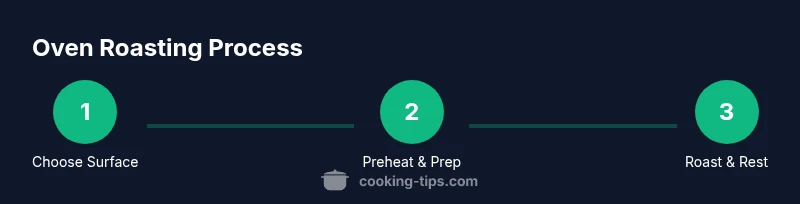
To roast in the oven, place your meat or vegetables on a rack set inside a roasting pan (or on a rimmed sheet with a wire rack). Elevating the food promotes even browning and fat drainage. Preheat to a hot oven (around 425°F), season well, and use a meat thermometer to hit the target internal temp.
Why the surface matters for oven roasting
Choosing the right roasted surface changes browning, moisture retention, and how evenly heat reaches your food. When you roast in the oven, air needs to circulate all around; a solid pan without gaps traps juices and can stewing rather than browning. Elevating the roast on a rack or placing it on a perforated sheet allows fats to drip away and heat to reach the bottom and sides more effectively. The Cooking Tips team emphasizes that the surface you choose isn’t a cosmetic detail; it’s a cooking technology that affects texture, flavor, and juiciness.
For meat, a rack lifts it so the exterior browns uniformly rather than steaming in its own juices. For vegetables, elevation prevents sogginess and encourages dry, crisp edges. A pan with rims keeps juices contained for making a quick pan sauce while avoiding greasy splashes in your oven. If you don’t have a rack, you can improvise with a bed of sliced onions, carrots, or celery; these create airflow under the roast while adding flavor. Always consider the size of your roast and the pan: a loose fit allows air to circulate, but you want enough contact with metal so heat transfers efficiently.
As you plan, ask yourself: Will the fattier side brown evenly? Is there room for air to move around the corners? A well-chosen surface reduces the risk of undercooked centers and over-crisp edges. And, as Cooking Tips notes, using a thermometer to monitor internal temperature becomes much more reliable when the roast sits on an appropriate surface.
Common surfaces and when to use them
There are several reliable options depending on what you’re roasting and the outcome you want:
- Wire rack inside a roasting pan: This is the classic setup for beef, pork, and poultry. The rack lifts the meat, so heat reaches all sides and fats drain into the pan below. It’s ideal when you want a crisp, browned exterior and juicy interior.
- Rimmed baking sheet with a wire rack: A more accessible alternative when a full roasting pan isn’t available. It imitates the traditional rack setup and is great for smaller roasts or poultry portions.
- Cast-iron skillet: Excellent for high-heat searing and a deeply caramelized crust, particularly for bone-in roasts or steaks. It’s heavy, so monitor heat to avoid scorching.
- Bed of vegetables or aromatics: If you don’t have a rack, lay sliced onions, carrots, or celery on the pan. They lift the roast and impart flavor while creating airflow beneath.
Tips:
- Always ensure there’s space around the roast for air to circulate; crowding leads to uneven browning.
- Use parchment or foil to line the pan for easier cleanup when you’re using a pan with a lot of drippings.
- If you’re roasting multiple items, prioritize the one that benefits most from elevated air exposure.
How to prep your roast and rack setup
Preparation starts with surface and surface contact. Begin by patting the roast dry with paper towels; moisture on the surface can hinder browning. Season generously with salt, pepper, and any aromatics you prefer, such as garlic, rosemary, or paprika. If you have a butcher’s string, tie the roast to help it hold shape during cooking.
Next, set up your rack inside the pan or choose an improvised rack (like onions or celery) if you don’t own a dedicated rack. Place the roast on the rack or elevated bed so heat can circulate all around. If you’ve chosen a sheet-pan setup, place a wire rack on the sheet to mimic the benefits of a roasting pan.
Finally, preheat the oven to a hot initial temperature (around 425°F) to jumpstart browning. This initial blast creates a flavorful crust, after which you may reduce the heat to finish cooking. When possible, use an instant-read thermometer to check doneness rather than relying solely on time estimates.
Temperature, timing, and browning
Oven roasting benefits from a two-stage approach. Start with a high heat (approximately 425°F) to develop a deep, appealing crust, then lower the temperature to around 325–375°F to finish cooking without drying out the meat. The exact temperatures depend on what you’re roasting:
- Beef roasts: target internal temps in the range of about 125–135°F for rare to 145°F for medium, then rest. A longer resting period helps juices re-distribute.
- Pork roasts: aim for 145–160°F depending on desired doneness, with a final rest to retain moisture.
- Poultry (whole chicken or turkey): start high and finish around 350–375°F; ensure the thickest part reaches at least 165°F.
Timing varies with size and shape, so rely on a thermometer rather than clock time alone. A typical roast might take roughly 20–25 minutes per pound at 425°F for a start, followed by a reduction in temperature and a final check. Resting for 10–15 minutes after removal allows juices to settle and improves sliceability. Cooking Tips’s guidance emphasizes that thermometer-guided doneness is more reliable than per-pound rules of thumb, especially when ovens run hot or cool.
A final note on browning: if you notice excessive darkening before the center is done, tent the roast with foil and shift to a lower rack to prevent scorching. If the surface browns too slowly, increase the initial sear time or introduce a brief blast of higher heat in the first 10 minutes, then revert to the lower finishing temperature.
Special cases: roasting veggies and sides on the rack
Roasting vegetables alongside meat is a practical way to cook a complete meal in one pan. Place sturdier vegetables (carrots, potatoes, parsnips) on the sheet or rack so they receive direct heat while the roast sits above. Cut vegetables into uniform pieces to ensure even cooking. Lightly oil and season vegetables; their sugars will brown and caramelize as the meat roasts, adding flavor to the pan juices for a natural gravy.
When roasting vegetables on a rack, group them toward the edges of the pan to prevent sogginess and allow air to circulate. For a simpler approach, roast them on a separate sheet pan on a lower rack so they finish at the same time as the meat. Remember to turn vegetables halfway through for even browning, and keep an eye on moisture—vegetables can release steam that affects browning if the pan is crowded.
Troubleshooting and safety tips
Even experienced cooks encounter issues. If the roast isn’t browning as quickly as desired, ensure your oven actually reaches the target temperature with an oven thermometer. If the interior cooks faster than the surface browns, start with higher heat and finish with a lower heat to balance crust and center. If you notice excessive moisture or a pale crust, pat the surface dry again and consider a longer sear at the start.
Safety-wise, use oven mitts for all handling, keep children and pets away from the oven door, and avoid leaving a hot pan on a damp surface. Do not rely solely on time estimates; use a thermometer and plan for carryover cooking when removing the roast from the oven. The long, slow resting period after roasting is essential to juiciness and flavor. Cooking Tips analysis shows that proper resting can significantly improve texture and moisture retention, making the difference between a good roast and a great one.
Finally, clean as you go. Drippings can burn and smoke inside the oven, so wipe away excess fat after the roast rests and while the pan cools. A well-prepped surface reduces mess and sets you up for a more confident roast next time.
Tools & Materials
- wire rack(Fits inside roasting pan; elevates roast for even heat exposure)
- roasting pan(With a rim to catch drippings; use a rack inside if possible)
- rimmed baking sheet(Alternative if a roasting pan with rack isn’t available)
- onions/celery (optional bed)(Bed for rack-free roasting; adds flavor and improves air circulation)
- oven-safe thermometer (meat thermometer)(For accurate doneness without guessing)
- tongs(For handling hot meat safely)
- oven mitts(Heat-resistant protection)
- parchment paper (optional)(Line pan for easier cleanup)
Steps
Estimated time: 60-90 minutes
- 1
Preheat oven and position rack
Preheat the oven to 425°F and position the rack in the center of the oven. A hot start promotes crust formation, while center positioning ensures even heat around the roast.
Tip: Use a rack to boost air circulation; avoid overcrowding the pan. - 2
Dry and season the roast
Pat the surface dry with paper towels, then season generously with salt, pepper, and aromatics. Drying helps browning, and seasoning enhances flavor.
Tip: Season at least 15–20 minutes before roasting if possible for better flavor absorption. - 3
Set roast on rack and pan
Place the roast on the rack inside the pan (or on your improvised bed). Ensure there’s clearance around the meat for air to circulate.
Tip: If using a bed of vegetables, arrange them to create airflow beneath the roast. - 4
Roast and monitor temperature
Roast at 425°F for 15–20 minutes to develop crust, then reduce to 325–375°F to finish. Use a thermometer to target doneness based on your cut.
Tip: Check doneness early and use carryover cooking to your advantage. - 5
Rest before slicing
Remove from heat and let the roast rest 10–15 minutes. Resting redistributes juices for a juicier slice.
Tip: Tent lightly with foil to retain heat without steaming the crust. - 6
Serve or advance with sides
Carve against the grain and serve with roasted vegetables or a simple pan sauce made from drippings.
Tip: Deglaze the pan with a splash of stock for a quick, flavorful sauce.
Quick Answers
What surface is best for roasting a large beef roast in the oven?
A wire rack inside a roasting pan provides optimal air circulation and browning. If you don’t have one, a bed of onions or carrots can work as a substitute.
A wire rack in a roasting pan is best for beef, with a vegetable bed as a fallback.
Can I roast without using a rack?
Yes, you can roast without a rack by placing the meat on a bed of chopped onions or celery, which lifts it slightly and improves air flow.
Yes, you can, using a vegetable bed as a substitute.
What internal temperature should I aim for?
Use a meat thermometer: beef rare around 125–135°F, medium 135–145°F; pork 145–160°F; poultry 165°F. Resting after roasting helps juices re-distribute.
Use a thermometer; target temps vary by meat and doneness, then rest.
How long should I rest a roast?
Rest for 10–15 minutes after removing from the oven. This lets juices re-distribute and increases tenderness.
Rest for 10 to 15 minutes for juicier slices.
Is it better to start high or low heat when roasting?
Starting high helps develop a crust; finishing at lower heat ensures the center cooks through without burning the exterior.
Start with high heat for browning, then lower the temperature.
Can I roast vegetables at the same time as meat?
Yes. Use a rack or a separate sheet pan to ensure vegetables brown and roast evenly alongside the meat.
Absolutely—roast vegetables on a rack or separate sheet for even browning.
What if my oven runs hot or cold?
Calibrate with an oven thermometer and adjust rack position or cooking times as needed; rely on internal temperature rather than time alone.
Calibrate with a thermometer and adjust as needed.
Watch Video
Top Takeaways
- Choose elevation: rack or bed to maximize browning.
- Preheat hot, then finish at steady lower temps for doneness.
- Thermometer-guided doneness reduces guesswork.
- Resting is essential for juiciness and texture.