What Cook Temp for Steak: A Practical Guide to Doneness
Learn precise steak temperatures for rare to well-done, how to measure with a thermometer, resting times, and practical tips from Cooking Tips to achieve perfect sear and juiciness.


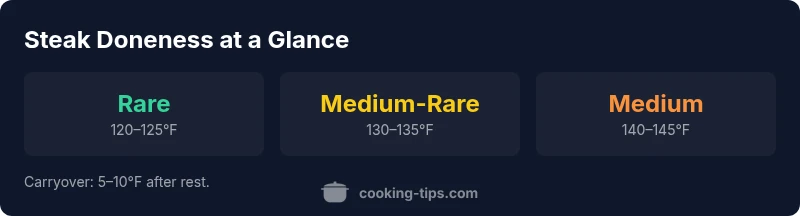
To hit your preferred doneness, aim for 120-125°F rare, 130-135°F medium-rare, 140-145°F medium, 150-155°F medium-well, and 160-165°F well-done. Remember carryover cooking adds about 5-10°F after you remove from heat. Use a calibrated instant-read thermometer, insert into the thickest part away from bone, and monitor as you cook. Preseason with salt, pat dry, and choose high-heat methods (searing on cast iron, grilling, or broiling) for best crust. Let steak rest 5-10 minutes before slicing to maximize juiciness.
Why Temperature Matters
Achieving the right cook temp for steak is essential for delivering the doneness you crave while preserving juiciness and crust. According to Cooking Tips, heat control isn't just about the sizzle; it's about finishing with a precise internal temperature that matches your preferred doneness. The Cooking Tips team found that home cooks who monitor temperature throughout the cook consistently hit their target and avoid overcooking, even with varying pan heat or steak thickness. A reliable thermometer turns guesswork into repeatable results, and a quick check near the end of cooking prevents surprises. In practice, starting with a hot pan or grill and finishing with a targeted internal temp yields the best crust, color, and tenderness. We'll walk through the exact temperature ranges for common doneness levels, how carryover cooking affects final temp, and practical tips you can apply in any kitchen. For readers wondering what cook temp for steak delivers the results they want, this guide provides clear, practical targets they can trust.
The Doneness Spectrum: Rare to Well-Done
Doneness is a spectrum, not a single number. Here are the commonly cited target ranges you can aim for, along with practical notes:
- Rare: 120-125°F
- Medium-rare: 130-135°F
- Medium: 140-145°F
- Medium-well: 150-155°F
- Well-done: 160-165°F
Remember, carryover cooking will raise the internal temperature by about 5-10°F after you remove the steak from heat. Use a thermometer inserted into the thickest part away from bone to monitor progress. Many home cooks prefer to remove from heat 5°F below the final target to account for carryover. The rest of the guide expands on how to use these temps to tailor doneness to thick cuts and different cooking methods. If you’re asking what cook temp for steak yields consistent results, the short answer is to start with these ranges and adjust for thickness and heat source.
Temperature Guide by Thickness and Method
Thickness matters. A 1-inch steak will reach target temps more quickly, while a 1.5-inch steak requires more time and careful heat management to avoid overcooking the outer portion while the center comes up to temperature. Use the hotter method (grill or cast-iron skillet) to develop a crust, then finish in the oven if you're reverse-searing or dealing with thicker cuts. When the steak is thick, plan for a higher starting heat and a longer resting period to achieve even doneness. The best practice is to monitor internal temperature actively rather than relying on time alone. For practical home cooking, measure as you go and be ready to pull slightly below target to account for carryover.
How to Use a Thermometer for Precision
To measure accurately, insert the probe into the thickest part of the steak, avoiding bone and fat pockets. Pull the steak off heat when the thermometer reads slightly below the target, because carryover cooking will finish the job. Calibrate your thermometer regularly, and consider using a two-point thermometer (high- and mid-range) for more consistent readings. Keep the thermometer ready and insert it horizontally for most real-time readings. For better results, check early and again near the end of cooking. This disciplined approach is central to answering the question of what cook temp for steak should be in a home kitchen.
Cooking Methods: Pan-Searing, Grilling, and the Reverse-Sear
Pan-searing: Preheat a heavy skillet, add a high-smoke-point oil, and sear on each side until a deep crust forms and the internal temp nears the target. Grilling: Use two-zone heat to develop crust over high direct heat, then move to indirect heat to finish. Reverse-sear: start at a low oven or griddle to bring the steak up near target, then finish with a high-heat sear for a crust. Each method requires close thermometer monitoring and a final rest to lock in moisture and texture. The bottom line is that temperature control, not timing alone, governs doneness across these techniques.
Resting, Carryover, and Juiciness
Resting is essential. After cooking, transfer the steak to a plate and tent lightly with foil for 5-10 minutes. This rest allows juices to redistribute and completes carryover cooking, elevating the final internal temperature by a few degrees while the crust settles. Without resting, juices rush out upon slicing, leading to a drier bite. The payoff for a controlled rest is a more even distribution of heat and a more forgiving center. The careful orchestration of final temp and rest is where precision recipes become reliable home-cook realities.
Practical Tips for Consistent Results
Salt properly: salt early or just before cooking to aid crust formation, and always pat dry the surface for maximum browning. Preheat your pan or grill to a steady, intense heat to form a crust. For most cooks, a thick-cut steak cooks more evenly, and flipping only once or twice helps maintain a uniform interior. Rely on a thermometer rather than color alone, especially for thicker cuts. Keep kitchen conditions stable—consistent pan temperature, ambient temperature, and rest timing—to replicate results. These practices directly impact the accuracy of what cook temp for steak you achieve in real-world cooking.
Common Mistakes and Fixes
Over-reliance on color can mislead, especially with thicker steaks. Using a thermometer incorrectly—like inserting into the fat rather than the lean muscle or hitting bone—yields erroneous readings. Not accounting for carryover: subtract 5-10°F when you remove from heat, or plan to pull early. Not resting: results in tougher bites and juiciness loss. Fixes include using a calibrated thermometer, testing in two spots for consistency, and practicing the reverse-sear method for thick cuts to improve evenness. These fixes directly address the most frequent failures when answering the question of how to cook steak to the right temp.
Slicing and Serving Steak
Slice against the grain to maximize tenderness. For thicker cuts, allow a longer rest and consider a light finishing salt to elevate flavor. Serve promptly after resting to enjoy a warm, juicy center with a perfect crust. The final presentation should reflect a precise internal target with a crust that crackles when bitten. Keeping the temperature within the target range as you plate makes the difference between a good steak and a great steak.
Temperature targets for common steak doneness levels
| Doneness | Target Temp (F) | Notes |
|---|---|---|
| Rare | 120-125 | Cool red center; very soft texture |
| Medium-rare | 130-135 | Warm red center; tender and juicy |
| Medium | 140-145 | Hot pink center; balanced texture |
| Medium-well | 150-155 | Mostly brown with slight pink |
| Well-done | 160-165 | Fully cooked; firmer texture |
Quick Answers
What is the best internal temperature for a perfectly seared steak?
For safety and doneness, target 125°F for rare, 130-135°F for medium-rare, and 140-145°F for medium. Rest to allow carryover cooking to finish the process.
Aim for 125 to 145 degrees depending on doneness, then rest.
Should I rely on color or thermometer to judge doneness?
Color is not reliable; use a calibrated thermometer for accuracy, especially with thicker cuts.
Use a thermometer for accuracy, not color alone.
Does steak thickness change the target temperature?
Yes. Thickness changes cooking time and carryover; thicker steaks require closer temperature monitoring to avoid overcooking the exterior while the center reaches target.
Thickness matters; monitor internal temp with a thermometer.
Is resting steak after cooking important?
Yes. Resting lets juices redistribute and allows carryover cooking to finish the job.
Yes, rest for a few minutes to keep juices in.
Can I cook steak from frozen?
Cooking from frozen is not ideal; it impairs evenness and crust formation. If you must, extend cooking time and monitor doneness closely.
Better to thaw; if not, cook longer and check temps.
What is carryover cooking and how much does it add?
Carryover cooking typically raises the internal temperature by 5-10°F after you remove from heat.
Expect about 5-10 degrees of rise during resting.
“Precision in steak cooking comes from accurate temperature targets, not guesswork; combine a thermometer with proper resting to preserve juiciness and crust.”
Top Takeaways
- Know target temps for your preferred doneness
- Use a calibrated thermometer for accuracy
- Expect carryover cooking of 5-10°F
- Rest 5-10 minutes to maximize juiciness
- Choose high-heat methods for crust and flavor