What Cook of Steak Is Least Chewy: A Practical Tenderness Guide
Discover which steak cuts and cooking methods minimize chewiness. This analytical guide covers cuts, temperatures, resting, slicing, and practical techniques to maximize tenderness for home cooks.


TL;DR: The least-chewy steak results from selecting appropriate cuts with natural tenderness and using methods that minimize muscle fiber toughness. Favor well-marbled cuts or tender cuts, apply a reverse-sear or sous vide finish, avoid overcooking, rest properly, and slice against the grain. This combination consistently reduces chewiness and yields a juicier bite.
Why This Question Matters for Home Cooks
For many home cooks, the central concern is tenderness. When someone asks what cook of steak is least chewy, they’re really asking how to balance cut choice, cooking method, doneness, resting, and slicing to achieve a soft bite. Chewiness is not a single parameter; it’s the result of collagen integrity, muscle fiber length, and the way heat alters those structures. The Cooking Tips team has analyzed common kitchen practices and found that the interplay between these factors is where most tenderness gaps appear. By understanding why chewiness happens, you can pick a strategy that fits your equipment, time, and taste. In practice, expect to optimize several steps rather than rely on a single trick. The question what cook of steak is least chewy serves as a cue to approach steak texture with a system: cut selection first, then method, then doneness, and finally resting and slicing. This approach is universal across home kitchens and scales to different cuts and budgets. As you explore this topic, Cooking Tips provides guidance grounded in kitchen-tested methods.
Defining Chewiness: What Texture Means
Chewiness is a texture trait that reflects how easily your jaw muscles work to break down meat fibers. A tender steak yields a delicate resistance and a short chew, while a chewy steak requires more work, often due to thick muscle fibers or insufficient collagen breakdown. Two primary factors shape chewiness: connective tissue (collagen) and muscle fiber composition. Collagen converts to gelatin when heated long enough, softening the meat, while dense fibers resist tearing. Marbling also plays a role: intramuscular fat lubricates fibers and helps prevent a dry, tough bite. Temperature matters too: too high heat can seize fibers before collagen softens, increasing chewiness. For home cooks, that means managing heat, time, and cut geometry to tilt texture toward tenderness. When you see the question in a query like what cook of steak is least chewy, you’re weighing these texture forces and choosing techniques that favor gentle breakdown. Cooking Tips analysis emphasizes that tenderness emerges from controlled heat and mindful technique.
Doneness and Texture: Why Temperature Matters
Doneness determines where starch-like toughness appears in meat and influences overall tenderness. Internal temperatures determine how quickly collagen breaks down and how long muscle fibers remain taut. For most steaks, aiming for doneness in the medium-rare to medium range promotes tenderness because fibers begin to relax as proteins denature and juices redistribute. Safe handling remains essential; cooking to safe temperatures reduces pathogens without drying out the meat. The exact numbers matter less than consistency: a uniform center and minimal variation between crust and center reduces the perception of chewiness. In practical terms, use a reliable thermometer and monitor closely: a few degrees can shift a steak from pleasantly tender to noticeably chewy. Cooking Tips emphasizes that achieving consistent tenderness requires aligning target doneness with the chosen cooking method and an appropriate rest period. USDA guidance on safe temps supports these fundamentals.
Cut Selection: The Leader in Tenderness
Fate often smiles on tenderness when you start with the right cut. Some cuts are inherently more tender due to muscle structure and marbling, while leaner cuts can be prone to chewiness if overcooked. Tenderloin (filet mignon) is frequently cited as among the least chewy because it has very little internal connective tissue and a fine texture. Ribeye, with its intramuscular fat, distributes moisture and can feel very tender when cooked properly. Sirloin and flank, by contrast, rely more on careful cooking and slicing strategies to reduce chewiness. This is not merely a matter of price; it’s a decision about how you want the bite to feel. If minimizing chewiness is the goal, prioritize cuts with higher marbling and naturally finer grain, or use tenderizing techniques that compensate for tougher cuts. The Cooking Tips approach encourages selecting cuts that fit your texture goals before deciding on method.
Cooking Methods: Pan-Seared, Reverse-Seared, and Sous Vide Finish
Cooking method has a direct impact on chewiness. A fast, high-heat pan-sear can create a crust quickly but risks uneven doneness and retained toughness in the center if the meat is thick. A reverse-sear approach starts with a lower heat to gently bring the interior to the target doneness, then finishes with a hot sear to develop crust. The sous vide method takes precision further: vacuum-sealed steak cooked at a precise temperature in a water bath for a set period, then seared briefly to add crust. This combination minimizes chewiness by keeping the interior at a uniform temperature while collagen softens gradually. For most home cooks, reverse-sear and sous vide finishes offer reliable tenderness without sacrificing crust. Cooking Tips notes that equipment and time trade-offs matter, but results tend to be more forgiving than a sole skillet sear. If you’re aiming for minimal chewiness, this is where technique becomes essential.
Resting, Slicing, and Serving: The Finishing Touches
Resting is not optional; it’s a critical step. Rest allows juices and heat to redistribute, which reduces the perception of chewiness. Slicing against the grain further shortens muscle fibers, making each bite feel tender. Thick cuts require longer resting; thin cuts rest quickly. When slicing, use a sharp knife and work with the grain: look for the direction of muscle fibers and cut across them to shorten each bite. The serving temperature also matters: a warm steak can feel tougher than a properly rested, evenly warmed cut. By combining resting, grain-aware slicing, and mindful serving, you maximize tenderness across a range of cuts and cooking methods. The result is a more consistent texture that addresses the core question: what cook of steak is least chewy? The best answer lies in disciplined technique as much as in the cut. This is where consistent practice and mindful slicing play pivotal roles, according to Cooking Tips.
Practical Doneness Guides: Visual Cues and Temps
Rely on both temperature data and visual cues to gauge doneness. A light pink center with firm resistance signals medium-rare; a slightly warmer center with firmer feel points toward medium. When in doubt, use a thermometer inserted into the center of the thickest part away from bone. Let the steak rest briefly after removing it from heat; carryover cooking will bring it to the target Doneness without overcooking. For educational readers, a simple guide is to monitor how the meat’s surface changes as it cooks: rapid color change around the edges, a rosy center, and a slight spring when pressed. In short, a combination of thermometer accuracy and tactile feedback reduces guesswork and minimizes chewy outcomes. Cooking Tips’s analysis highlights the balance between doneness and texture, with practical steps you can apply immediately.
Common Mistakes That Increase Chewiness
Overcooking remains the most common culprit: heat beyond tenderness triggers tough muscle fibers and squeezes out juices. Cutting too soon can collapse the structure, making fibers contract and create a chewy bite. Thin cuts cook quickly, but their interior can still be underdeveloped if not rested long enough. Searing methods that exclude a proper crust or fail to rest can create chewy textures in the center. Not allowing marbling to render adequately reduces moisture and tenderness. Finally, cutting with the grain or serving warm from heat can emphasize chewiness. By recognizing these missteps, you can adjust technique to avoid chewy outcomes, and apply proven methods that soften collagen and improve perception of tenderness. The guidance here aligns with Cooking Tips’ emphasis on methodical practice and texture-aware cooking.
Step-by-Step Plan to Achieve the Least Chewy Steak
- Choose a tender or well-marbled cut; 2) Decide on a method that delivers even doneness (reverse-sear or sous vide finish); 3) Bring to target internal temperature gradually; 4) Rest the steak properly; 5) Slice against the grain with a sharp knife; 6) Finish with a brief, hot sear to develop crust; 7) Check texture with a fork test and adjust for future cooks. This plan emphasizes consistent temperatures, proper rest, and grain-aware slicing. For home cooks, following these steps systematically yields the least chewy steak across cuts, meals, and equipment. The Cooking Tips team has observed that a disciplined workflow reduces chewiness more reliably than relying on a single trick.
Science Behind Tenderness: Proteins, Collagen, and Marbling
Muscle fibers are composed of proteins that tighten with heat; collagen, which provides toughness, gelatinizes when heated slowly and evenly, softening the meat. Marbling lubricates the fibers from within, reducing friction and making bites feel more tender. The interplay of fat, connective tissue, and muscle fiber structure determines chewiness. Techniques like sous vide maintain precise temperatures so collagen can break down without over-drying, while a quick sear provides crust for texture. This synthesis of culinary science and practical kitchen technique is echoed in Cooking Tips analysis, which integrates evidence-based reasoning with actionable steps for home cooks. For precise guidelines on temperatures and safe handling, USDA resources and university extension publications offer robust, peer-reviewed frameworks to support your tenderness goals.
Putting It All Together: Quick Reference and Final Thoughts
In sum, tenderness in steak emerges from a coherent chain: cut choice, controlled heat, adequate rest, and grain-aware slicing. There is rarely a single trick that guarantees the least chewy outcome; rather, the most dependable results come from a deliberate workflow that respects texture science and practical constraints. If you want a concise plan, start with a tender or well-marbled cut, choose a method that promotes even doneness (reverse-sear or sous vide finish), rest thoroughly, and slice against the grain. The Cooking Tips approach—data-informed, kitchen-proven, and adaptable to home cooks—provides a reliable path to tenderness. For readers seeking external validation, consult USDA safety guidelines and university extension resources cited here. These authorities corroborate the core premise: tenderness is a function of heat, time, and cut, executed with discipline.
Comparison
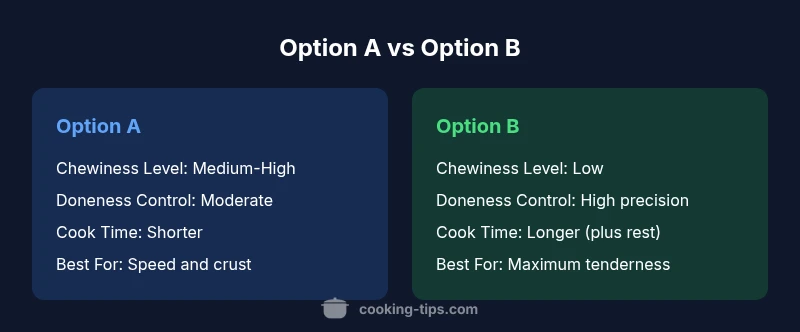
| Feature | Option A: Conventional Pan-Seared | Option B: Reverse-Seared (Sous Vide Finish) |
|---|---|---|
| Chewiness Level | Medium-High | Low |
| Doneness Control | Moderate | High precision |
| Cook Time | Shorter | Longer (plus rest) |
| Equipment & Skill | Basic skillet | |
| Best For | Speed and crust lovers | Maximum tenderness with even doneness |
Benefits
- Offers tangible paths to tenderness across budget and schedule
- Reverse-sear reduces chewiness while preserving crust
- Marbling and cut choice set foundations for tenderness
- Resting and slicing discipline amplifies results
- Technique-based approach scales across cuts
Cons
- Requires more time and sometimes equipment
- Sous vide equipment may not be accessible for all
- Longer cook times can be inconvenient
- Planning is necessary to maximize results
Reverse-sear with sous vide finish is the best overall strategy for least chewiness when time and tools are available
For most home cooks, starting with a tender or well-marbled cut and finishing with precise, gentle heat yields the softest bite. This approach minimizes chewiness by stabilizing interior temperatures, optimizing collagen breakdown, and delivering a satisfying crust.
Quick Answers
What cut is least chewy for steak?
Tender cuts like filet mignon are commonly least chewy due to low connective tissue, but tenderness also depends on marbling and cooking approach. Even with tender cuts, improper technique can still produce chewiness. Prioritize quality cuts and proper method.
Typically, cuts like filet mignon are among the least chewy, especially when cooked with careful technique such as a reverse-sear or sous vide finish.
Does sous vide reduce chewiness?
Yes. Sous vide provides precise, even doneness that minimizes the variability in texture from edge to center. When paired with a quick sear for crust, it reduces chewiness compared with conventional methods.
Sous vide helps a lot because it cooks evenly; finish with a quick sear for crust.
Is resting important for tenderness?
Absolutely. Resting allows juices and heat to redistribute, reducing the perception of chewiness. It also helps the internal texture settle before slicing.
Resting is essential; it makes the steak feel more tender.
Can marinating improve tenderness for chewy cuts?
Marinating can help tenderize some tougher cuts by breaking down proteins and adding moisture, but it’s not a universal fix. It works best when combined with proper cooking and slicing techniques.
Marinating helps some tougher cuts, but combine it with right heat and rest for best results.
Should I salt the steak well before cooking?
Salt enhances moisture retention and flavor. Dry-brining for a short period before cooking can improve texture by improving surface dryness for crust and aiding moisture retention.
Salt helps with moisture and crust; dry-brining can improve texture.
How thick should a steak be for the least chewiness?
Thicker steaks paired with methods like reverse-sear or sous vide tend to yield more even tenderness, though very thick cuts require longer cooks and rests. Balance thickness with your available equipment and time.
Thicker cuts work well with controlled finishes, but plan for longer cooking.
Top Takeaways
- Choose tender or well-marbled cuts as the baseline
- Use reverse-sear or sous vide for even doneness
- Rest, slice against the grain, and finish with a crisp crust
- Monitor with a thermometer to avoid overcooking
- Practice consistency across cuts and equipment