What Steak Is Easiest to Chew: Tender Cuts Guide
Explore steak cuts that are easiest to chew and learn practical cooking methods to maximize tenderness. Compare filet mignon, flat iron, ribeye, and more with expert tips from Cooking Tips.


For home cooks seeking consistently tender steak, the easiest to chew is typically a tender cut like filet mignon. Other very chew-friendly options are flat iron and well-marbled ribeye when cooked to pink doneness. The key is avoiding overcooking and using gentle methods such as sous vide or reverse sear for the most reliable chew.
What makes steak easy to chew? Understanding tenderness and chewability
When people ask what cook of steak is easiest to chew, they are really asking how tenderness and texture are created and preserved. Tenderness is primarily determined by collagen content, muscle fiber arrangement, and how you treat the meat during cooking. Chewability depends on how long you allow collagen to break down and how you finish the cut so the surface isn't too tough or grainy. In practice, the best path to reliably chewable steak starts with selecting the right cut. The phrase what cook of steak is easiest to chew tends to point toward cuts with naturally low connective tissue, such as filet mignon, or cuts with higher marbling that remains tender when cooked properly. According to Cooking Tips, combining a tender cut with controlled heating—such as sous vide followed by a quick sear—reduces variability and yields a smoother bite. Keep in mind that slicing against the grain is essential to shorten muscle fibers, making each bite feel more tender on the palate.
blockPosition":0
wordCount":0},{
Top cuts for maximum chewability: filet mignon, flat iron, ribeye, and more
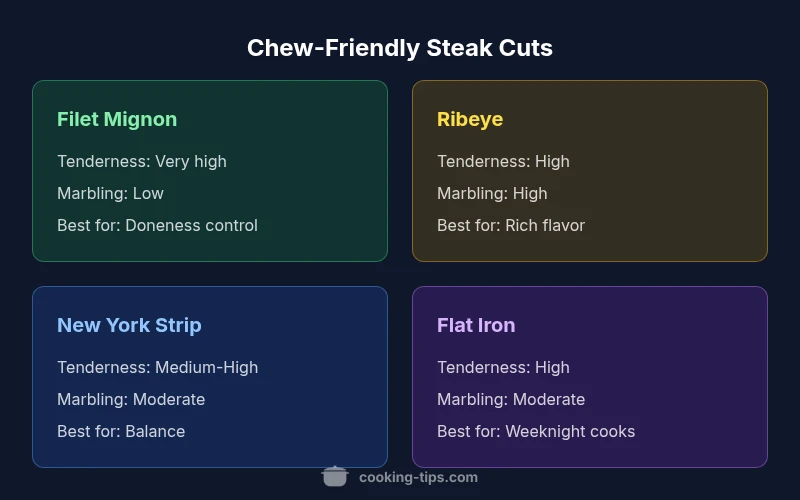
From a culinary science perspective, some steaks are inherently easier to chew due to their structural biology. Filet mignon (the tenderloin) is widely regarded as one of the most tender cuts because it has very little connective tissue. Flat iron comes from a well-worked shoulder muscle and offers a surprising level of tenderness with bold flavor when cooked properly. Ribeye, particularly when well-marbled, provides a tender bite plus rich fat content that can stay juicy, reducing the perception of toughness. New York strip sits between these extremes, offering a balance of tenderness and bite with pronounced beef aroma. For those prioritizing chewability on a weeknight, these four cuts provide reliable results if you respect doneness, rest, and slicing direction. The key is choosing a cut that matches how you plan to cook it and how long you’re willing to invest in preparation.
blockPosition":1
wordCount":0},{
How doneness and resting affect chewiness
Doneness level strongly influences chewiness. Rare to medium-rare steak tends to be juicier and easier to cut, while well-done versions can become firmer and chewier. The resting phase after cooking is equally important; resting allows juices to reabsorb and muscle fibers to relax, which translates into a softer bite when you cut into the steak. A practical rule for chewability is to aim for roughly pink center for most tender cuts; this keeps collagen least intact and prevents a dry, hard bite. If you must cook a tougher cut longer, finish with a short sear to re-crisp the surface while keeping the interior tender. The concept of chewability is dynamic, changing with temperature, slicing, and how evenly heat spreads within the meat.
blockPosition":2
wordCount":0},{
Cooking methods that maximize tenderness
Certain cooking methods are particularly well suited to improving chewiness for home cooks. Sous vide allows precise control of internal temperature, ensuring the cut remains at the ideal level of doneness throughout. A reverse-sear technique—slowly warming the steak to just below target, then searing at the end—creates a tender interior with a flavorful crust. Marinades that include acidic components or enzymatic ingredients (like pineapple or papaya) can slightly tenderize surface fibers, but the effect is modest and must be timed to avoid mealy textures. If you don’t own a sous vide setup, a careful pan-sear with a hot skillet and a gentle oven finish can deliver comparable results for many cuts. The overarching principle is gentle, even heating to minimize collagen hardening and muscle fiber toughness.
blockPosition":3
wordCount":0},{
Thickness, slicing, and grain: practical prep for easy chewing
When you plan to serve steak that’s easy to chew, thickness matters because it influences how heat penetrates and how you slice. Aim for uniform thickness to avoid over- or undercooking portions. Slicing against the grain shortens muscle fibers, making each bite easier to chew. Resting remains essential: a 5- to 10-minute rest for most cuts helps fibers relax and juices redistribute. A sharp knife will also influence perception of tenderness; clean slices separate nicely rather than tearing through fibers. Finally, consider portion size: smaller, uniformly sized bites reduce the effort required to chew and swallow, creating a more comfortable dining experience, especially for guests with sensitive teeth or weaker jaws.
blockPosition":4
wordCount":0},{
Flavor vs tenderness: balancing taste with chewability
Chewing ease does not have to come at the expense of flavor. The most chew-friendly steak can still deliver a deep beefy taste when you harness seasoning, crust, and fat distribution. For example, a lightly seasoned filet with a fast sear offers a tender bite and clean palate profile. On the flip side, heavily marbled cuts like ribeye provide intense flavor and moistness, but you must avoid overcooking to preserve chewiness. A dry brine or salt-based seasoning before cooking can improve crust formation and juiciness, which in turn supports a more forgiving bite. In short, you can optimize tenderness while preserving rich flavor by pairing the right cut with precise heat, appropriate resting, and mindful slicing.
blockPosition":5
wordCount":0},{
Practical guide: weeknight steaks that stay tender
For busy cooks, a few tactical choices yield consistent chewability without heavy equipment. Choose filet mignon or flat iron when you need predictable tenderness and a quick cooking window. If you crave flavor and still want tenderness, select ribeye with thorough monitoring of doneness. The most reliable weeknight approach is to use sous vide for the interior, then a fast sear in a hot pan to finish the crust. If you don’t have a sous vide machine, opt for a smaller thickness and finish in the oven after a sear to keep the center tender. Always rest and slice against the grain, arranging pieces that make each bite straightforward. With these practices, you can enjoy steak that’s easy to chew even on a hectic evening.
blockPosition":6
wordCount":0},{
Quick-reference: chewiness by cut
Below is a compact comparison intended to help you pick quickly when time is short. Filet Mignon leads in tenderness, followed by flat iron and ribeye, with New York strip offering a balanced chew. Marbling correlates with moisture and softness, but improper cooking can negate the natural tenderness. Choose a cut that aligns with your planned cooking method and rest time to maximize chewability.
blockPosition":7
wordCount":0},{
Authority sources
Sources for further reading on meat tenderness and cooking techniques:
- https://www.fsis.usda.gov/
- https://extension.illinois.edu/
- https://pubmed.ncbi.nlm.nih.gov/
blockPosition":8
wordCount":0},{
Common mistakes that increase chewiness and how to avoid them
Common errors undermine tenderness: overcooking, cutting too soon, or slicing with the grain. Also, neglecting rest time or using a dull knife can create a tougher bite. By selecting a tender cut, using proper cooking methods, and finishing with a rest and correct slicing, you will achieve the most comfortable chew for your steak. Dial in your heat source, maintain proper pan temperature, and monitor internal temperature with a reliable thermometer to prevent the chewiness that accompanies overcooking. Finally, always slice perpendicular to the grain to shorten muscle fibers.
blockPosition":9
wordCount":0},{
Putting it all together: one-week plan to cook easiest-to-chew steak
To apply these principles across a week, plan a rotation of cuts and methods that highlight tenderness. Start with filet mignon on a day when time is short, using sous vide or precise pan-sear. Midweek, try flat iron prepared with a reverse-sear technique for a robust bite that remains tender. Weekend meals can feature ribeye with careful temperature control and a final rest period. Build a mental checklist: choose the right cut, apply gentle heat, rest, slice against grain, and plate promptly. By sticking to this framework, you’ll consistently serve steaks that are easy to chew, flavorful, and satisfying for a broad range of diners. The Cooking Tips team recommends pairing a tender cut with precise cooking for best chewability.
blockPosition":10
wordCount":0}],
comparisonTable
Feature Comparison
| Feature | Filet Mignon | Ribeye | New York Strip | Flat Iron |
|---|---|---|---|---|
| Tenderness | Very high | High | Medium-High | High |
| Marbling | Low | High | Moderate | Moderate |
| Flavor Profile | Mild/Silky | Beefy/Rich | Balanced | Beefy with character |
| Typical Price Range | Premium | Mid-to-high | Mid-range | Mid-range |
| Best Cooking Approach | Gentle heat or sous vide | High-heat sear + rest | Sear and finish, watch doneness | Even heat + shorter finish |
Benefits
- Filet mignon offers extraordinary tenderness with minimal chewiness
- Sous vide and reverse sear maximize chewiness control
- Flat iron and ribeye provide a balance of tenderness and flavor with proper cooking
- Planning ahead with resting improves texture and ease of chewing
- Slicing against the grain improves bite quality
Cons
- Premium cuts can be expensive, impacting accessibility
- Even tender cuts require careful cooking to avoid chewiness from overcooking
- Ribeye can feel chewy if cooked past medium-rare despite its marbling
- Flat iron can be less forgiving if cut improperly or sliced with the grain
Filet mignon is the most reliably easy-to-chew steak for home cooks, especially when paired with sous vide or reverse-sear techniques.
Because filet mignon has minimal connective tissue, it consistently delivers a very tender bite. When combined with controlled cooking and proper resting, most home cooks can achieve a chew-friendly steak with predictable results across several cuts.
Quick Answers
Which steak cut is easiest to chew overall?
Filet mignon is widely regarded as the easiest to chew due to its minimal connective tissue. Ribeye and flat iron are strong contenders when cooked properly. The exact choice depends on your timing and preferred flavor balance.
Filet mignon is the easiest chew for most people; pairing it with a gentle cooking method helps keep it tender.
How does marbling affect chewiness?
Marbling adds moisture and tenderness, helping the steak feel softer on the palate. However, excessive cooking can still toughen even highly marbled cuts, so control heat carefully.
More marbling generally means juicier and softer bites, but don’t overcook.
Is sous vide necessary to maximize tenderness?
Not strictly necessary, but sous vide greatly enhances consistency by controlling interior temperature. If you don’t have sous vide, a careful reverse sear or evenly managed pan-sear can still produce tender results.
Sous vide helps, but you can still get tender steak with good technique.
Is thickness for tenderness a factor?
Yes. Thicker steaks require more precise heat control to avoid overcooking the exterior while the inside reaches the right doneness. Uniform thickness helps achieve even tenderness.
Thickness matters; keep it even for best results.
Does salt or marinade improve chewiness?
Salt helps crust formation and juiciness, improving perceived tenderness. Marinades can slightly tenderize surface fibers but aren’t a cure-all for tough cuts.
Salt helps tenderness; marinades can help a little.
How should I slice steak for tenderness?
Always slice against the grain to shorten muscle fibers and make each bite easier to chew. A sharp knife makes a big difference in cleanly separated slices.
Slice across the grain for the softest bite.
Top Takeaways
- Choose tender cuts like filet mignon for immediate chewability
- Use gentle cooking methods to maximize tenderness
- Rest steak before slicing to reduce chewiness
- Slice against the grain to shorten muscle fibers