Slow Cook Whole Chicken: A Practical Guide for Home Cooks
Learn how to slow cook a whole chicken for tender, juicy meat with minimal hands-on time. This guide covers prep, timing, flavors, safety, and practical tips for reliable weeknight dinners in 2026.


Slow cooking a whole chicken yields tender, juicy meat with minimal hands-on time. Use a properly sized bird, add aromatics and liquid, then cook on low until the thickest part reaches 165°F (74°C); finish with a brief rest for best moisture. Whether you’re preparing weeknight dinners or a weekend feast, this approach keeps results consistent across chicken sizes. The Cooking Tips guidance emphasizes patience and safe temperatures to maximize flavor while minimizing effort.
Why slow cooking a whole chicken works
Slow cooking a whole chicken leverages low, steady heat to gently break down connective tissue while keeping the breast and thighs moist. The result is tender, pull-apart meat with flavorful juices that collect in the pot. Because the chicken cooks in its own moisture plus added liquid, you spend less time actively monitoring the pan and more time with other tasks. For home cooks, this is a reliable way to produce a comforting dinner without sacrificing texture, even when you start with a larger bird.
According to Cooking Tips, this technique is particularly forgiving when you’re working with a slightly chilled or partially thawed bird. The slow, even heat helps minimize the risk of dry edges that sometimes occur with quick roasting. The method also makes it easier to infuse flavor through aromatic add-ins rather than relying on heavy marinades. You’ll notice that the meat remains evenly cooked from breast to bone, which is especially helpful if you’ve got a busy family schedule and need predictable results. A well-planned setup—liquid in the bottom, aromatics around the chicken, and a covered vessel—keeps the cooking environment stable and reduces the chance of scorching on the bottom.
Choosing the Right Chicken and Prep
Selecting the right chicken sets the foundation for slow-cooked success. Aim for a bird in the 3 to 5 pound range (approximately 1.4–2.3 kg). A chicken with skin on yields more moisture during braising, but you can remove the skin if you prefer a lighter finish. Before cooking, remove giblets, pat the bird dry with paper towels, and season generously with salt and pepper. Let the chicken sit at room temperature for 15–25 minutes to promote even cooking. This step helps the meat reach a uniform temperature more quickly once it begins to cook. If you plan to use stuffing, approach with caution: stuffing inside a slow cooker can lead to uneven cooking, so it's safer to cook stuffing separately.
For best results, trim excess fat and any loose skin around joints. If you’re using the oven variation later, a roasting rack can elevate the chicken and prevent it from sitting in pooled liquid, which promotes better browning. Finally, confirm you have enough liquid to create a gentle braising environment—liquid should come up the sides of the pot but not submerge the chicken entirely.
Time and Temperature: Low vs High
The key to tenderness in slow cooking is temperature control. Cooking on low over several hours allows collagen to soften gradually, producing fall-off-the-bone meat without drying out the breast. The exact time varies with bird size and your appliance, but a typical range is 4–6 hours on low or 2–3 hours on high for a 3–4.5 pound chicken. Always verify doneness with a meat thermometer; the thickest part of the thigh should reach 165°F (74°C). If the breast reads significantly under 165°F after the thighs have reached goal temperature, continue cooking and check again every 15 minutes. Do not rely solely on time—internal temperature is the reliable safety measure.
Keep the lid closed as much as possible during cooking to maintain a stable environment. If you choose to use a Dutch oven in the oven, you can braise at a low temperature (around 300–325°F / 150–160°C) for a similar total time, flipping once for even browning. The goal is evenly cooked meat and moist juices, not scorched bottoms or dry patches.
Flavor enhancers: aromatics and liquids
Aromatics are the secret to built-in flavor without overcomplicating the process. Layer onions, garlic, lemon slices, herbs (such as thyme or bay leaves), and a splash of broth or wine at the bottom of the cooker before adding the chicken. A 1–2 cup liquid helps maintain moisture and creates a flavorful pan sauce. If you’re using a slow cooker, place the aromatics in the bottom and set the bird on top; for oven braising, you can scatter aromatics around the chicken, then cover tightly to trap steam. A modest amount of salt at the start helps the meat season evenly, with the option to adjust saltiness after cooking by adding a splash of broth to your sauce.
For a deeper finish, brush the chicken with a small amount of melted butter or olive oil before sealing the lid. The fat carries flavor and helps protect the meat from drying out. If you like a more subtle finish, skip the butter and rely on the braising liquid to impart moisture and depth. Finally, avoid acidic marinades that can break down the meat’s structure too aggressively in a slow cooker—keep acids to a light cook time if you must use them.
Method variations: slow cooker vs oven-braised vs Dutch oven
Slow cooking the whole chicken can be done in multiple ways depending on your kitchen setup. The classic method uses a slow cooker with a tight-fitting lid to maintain moisture and prevent evaporation. If you prefer a crustier finish, you can finish under the broiler for 2–3 minutes after cooking, but this breaks the “slow” approach and should be used sparingly. An oven-braised version uses a heavy, covered pot like a Dutch oven; the chicken sits on a rack or parchment to lift it off the bottom, and the pot is kept at a low simmer to mimic slow cooker conditions. In all cases, ensure the lid is firmly in place to trap heat and moisture. The choice depends on equipment, time, and the texture you desire—tender pulled meat versus a recognizably intact roast with a moist interior.
A useful tip is to rotate the chicken halfway through cooking if your appliance has uneven heat. This helps the legs and breast cook at a similar rate, reducing the chance of overcooking one part while another remains underdone. If you’re new to this method, start with a smaller bird and a simple aromatics lineup to build confidence before scaling up.
Safety, handling, and storage
Food safety starts long before dinner is plated. Thaw the chicken completely before cooking, and keep raw poultry separate from ready-to-eat foods to prevent cross-contamination. Use a clean cutting board and knife for poultry tasks, wash hands thoroughly after handling raw meat, and dispose of any packaging promptly. After cooking, check the internal temperature in the thickest part of the thigh and breast; 165°F (74°C) is the safe target. Let the chicken rest for 8–15 minutes before carving to allow juices to redistribute. When storing leftovers, refrigerate within two hours and reheat to 165°F before serving. If you plan to freeze portions, label with the date and use within 3–4 months for best texture.
Always taste the sauce or braising liquid before serving; adjust salt and seasoning after it’s reduced slightly in the last portion of cooking. Storage containers should be airtight to retain moisture and flavor. With proper handling, slow-cooked chicken can be a reliable component for future meals, including soups, salads, and wraps.
Troubleshooting and common issues
Even with a forgiving approach, issues can arise. If the chicken ends up dry, it’s usually because the cooking time was too long for your specific bird size, or the lid was removed too often during cooking. If the meat looks pale or lacks flavor, check the aromatics and liquid level; you may need to add a splash of broth and more herbs. Uneven cooking happens when the bird is too large for the cooker or when the skin is left on the bottom. To mitigate, trim extra fat, use a rack, and consider finishing with a brief broil to brown the skin. If there’s an excess of liquid at the end, remove the bird, simmer the liquid to reduce, and spoon it over the sliced meat for a richer finish. Finally, trust the thermometer—time alone is not a reliable indicator of doneness in a slow cooker.
Quick serving ideas and leftovers
Serve the sliced meat with the braising liquid spooned over, accompanied by roasted vegetables, mashed potatoes, or a fresh green salad. The leftover bones and scraps can be used to make a quick homemade stock for soups, sauces, or risotto. Store leftovers in shallow containers so they cool quickly and evenly, then refrigerate within two hours. For longer storage, freeze portions in freezer-safe bags, laying them flat for easy stacking. Reheat gently on the stove or in the microwave, adding a splash of broth to restore moisture if needed.
Tools & Materials
- Slow cooker (6-7 quart)(Best for a 3-5 lb chicken; ensures even heat distribution)
- Meat thermometer(Target 165°F (74°C) in the thickest part of thigh)
- Kitchen shears or sharp knife(Remove giblets and trim skin as needed)
- Liquid for braising(1–2 cups broth, water, or wine to maintain moisture)
- Aromatics (onions, garlic, herbs, lemon)(Optional to boost flavor without a heavy marinade)
- Roasting rack (optional for oven/Dutch oven method)(Elevates the chicken above liquid for better browning)
- Aluminum foil (optional for resting)(Tent during resting if needed to retain heat)
Steps
Estimated time: 4-7 hours
- 1
Pat dry and season
Pat the chicken dry with paper towels and season generously with salt and pepper. Letting the surface dry helps moisture retention inside the meat. If using, rub with a little oil or butter for a touch of flavor and easier browning later, though this is optional for slow cooking.
Tip: Dry skin equals better moisture retention; a light oil boosts flavor without overwhelming the meat. - 2
Choose your cooking vessel
Select a slow cooker large enough to accommodate the bird without crowding. If you prefer oven-based braising, place the chicken on a rack inside a heavy pot. The key is avoiding direct contact with the bottom, which helps prevent scorching and uneven cooking.
Tip: A rack creates space for heat to circulate and keeps the chicken above its braising liquid. - 3
Add aromatics and liquid
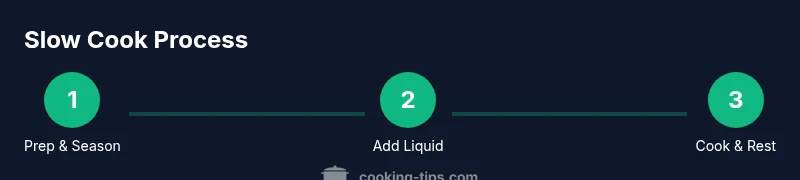
Scatter aromatics in the bottom of the vessel and pour in 1–2 cups of liquid. The liquid acts as a braising medium, keeping the meat moist and forming a flavorful base for pan juices. Place the chicken on top, breast side up if possible.
Tip: Avoid overfilling; the liquid should raise the bottom but not submerge the bird entirely. - 4
Set heat and cook
Program the slow cooker to a low setting and cook for 4–6 hours, or 2–3 hours on high, depending on bird size. If using an oven method, braise at a low simmer (about 300–325°F / 150–160°C) until the thermometer reads 165°F.
Tip: Don’t rush; consistent low heat yields juicier meat. - 5
Check internal temperature
Probe the thickest part of the thigh and, if possible, the breast. Temperature should reach 165°F (74°C). If not, continue cooking in 15-minute increments and recheck.
Tip: Rely on thermometer readings rather than time alone for safety. - 6
Rest and carve
Transfer the chicken to a cutting board and let it rest for 8–15 minutes before carving. Resting redistributes juices for a moister slice. Carve gently and serve with pan juices or your preferred sides.
Tip: Resting is as essential as cooking—plan the meal so you can serve hot, juicy slices. - 7
Store leftovers safely
Cool leftovers quickly in shallow containers, then refrigerate within two hours. Reheat to 165°F and enjoy within 3–4 days, or freeze for longer storage.
Tip: Label with date and reheating instructions to preserve texture and flavor.
Quick Answers
Can I use a frozen chicken for slow cooking?
No. Use a fully thawed chicken to ensure even cooking and safe results. Frozen meat can cook unevenly in a slow cooker and may remain unsafe in the center.
No, use thawed chicken to ensure even cooking and safety.
How long does it take to slow cook a 3-4 lb chicken on low?
Typically 4–6 hours on low, depending on the exact size and your cooker. Always verify with a thermometer rather than relying only on time.
About 4–6 hours on low; check the temperature with a thermometer.
Is the skin crispy after slow cooking?
Skin may stay pale when using only slow cooking. For crisp skin, briefly broil the carved meat or finish under a hot oven for 2–3 minutes.
The skin isn't crispy with slow cooking; you can broil briefly afterward.
Can I stuff the chicken for slow cooking?
Stuffing inside a slow cooker is not recommended due to uneven cooking and safety concerns. Cook stuffing separately if desired.
Stuffing inside is not advised in slow cookers; cook it separately.
Can I use this method in the oven instead of a slow cooker?
Yes. Transfer the seasoned chicken to a covered Dutch oven or a roasting pan with liquid and braise at a low temperature (roughly 300–325°F / 150–160°C) until 165°F is reached.
You can braise in the oven at a low temperature until done.
What if the chicken finishes early but isn’t hot inside?
If the center isn’t at 165°F, continue cooking and recheck every 10–15 minutes. Don’t rush the process, as safety is essential.
If it isn’t done, continue cooking and check again soon.
Watch Video
Top Takeaways
- Choose the right bird size (3–5 lb) for even cooking.
- Pat dry, season, and add aromatics for depth.
- Cook on low for best texture and safety; temperature matters more than time.
- Rest before carving to maximize juiciness.
- Store leftovers promptly and reuse components creatively.