Is Cooked or Raw Meat Better for Dogs? A Practical Comparison
An analytical, evidence-informed comparison of cooked versus raw meat for dogs, covering safety, nutrition, digestion, cost, and practical feeding strategies for home cooks and dog owners.


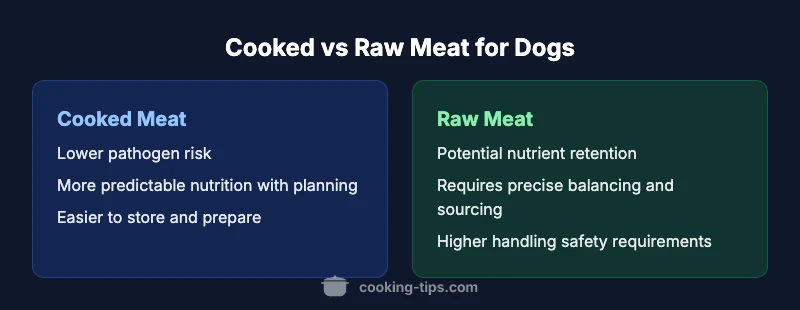
Cooked meat offers lower pathogen risk and simpler handling, while raw meat preserves certain nutrients. The best choice depends on your dog's health and your ability to maintain a balanced diet safely. See our detailed comparison chart for practical guidance.
Introduction to the Debate: is cooked or raw meat better for dogs?
The question of whether cooked or raw meat is better for dogs is one many owners ask, especially when trying to balance safety, nutrition, and practicality. In this article, we explore how cooking affects protein quality, fat composition, minerals, and digestibility, and we weigh those factors against the risks of raw meat, including pathogens and inconsistent nutrient balance. Throughout, we ground guidance in practical steps home cooks can take, with a focus on reliable, evidence-based recommendations. According to Cooking Tips, the best approach for most dogs combines careful meal planning with safe food handling, and it emphasizes balancing protein with essential micronutrients. The Cooking Tips team found that individual dogs vary in their responses to different diets, so owners should monitor weight, energy, stool quality, and overall health when trying a new feeding plan. The aim is to help you decide, with confidence, whether cooked or raw meat fits your dog's needs and your kitchen setup, while avoiding unnecessary risk.
0
Comparison
| Feature | Cooked meat diet | Raw meat diet |
|---|---|---|
| Pathogen risk | Lower risk with cooked meat | Higher risk with raw meat |
| Digestibility & nutrient availability | Often higher digestibility with cooked meat; nutrients can be more bioavailable when properly prepared | Potentially higher retention of some nutrients in raw meat; requires careful balancing |
| Bone safety | Cooked bones are prone to splintering | Raw bones carry their own risks but can be safer for splintering; still pose choking/tooth hazards |
| Food safety handling | Easier to store and handle safely | Raw diets require strict hygiene and dedicated prep areas |
| Convenience & cost | Generally simpler to prepare and store; cost varies by ingredients | Often higher cost and logistical effort for sourcing and handling |
| Veterinary guidance | Widely supported with caution; many vets favor cooked meals as a baseline | Raw diets demand ongoing veterinary supervision and specialized planning |
Benefits
- Lower infection risk when using cooked meat
- Easier to balance with standard pets foods
- Safer for households with kids or other animals
- Simpler food safety handling and storage
- More predictable nutrient profile when planned correctly
Cons
- Potential nutrient loss with cooking if not balanced
- Some dogs may prefer the texture or taste of raw meat
- Requires careful recipe planning to avoid deficiencies
- Raw diets may be chosen for perceived palatability or ancestral alignment when properly supervised
Cooked meat diets are generally the safer default for most dogs; raw diets can work for some dogs under strict veterinary supervision and careful nutrient balancing.
For most households, cooked meat provides safer handling and more predictable nutrition. Raw diets may suit certain dogs with qualified oversight, but they demand rigorous sourcing, preparation, and monitoring to ensure balance and safety.
Quick Answers
Is cooked meat safer for dogs than raw meat?
Yes, cooked meat generally reduces exposure to pathogens and parasites that can be present in raw meat. However, safety also depends on proper handling, storage, and ensuring the meal is nutritionally complete. Always consult a veterinarian when changing diets.
Cooked meat is typically safer because it reduces dangerous pathogens; however, safe handling and ensuring complete nutrition remain essential.
Can dogs thrive on a raw meat diet?
Some dogs can thrive on a well-balanced raw diet, but it requires meticulous planning, sourcing, and veterinary oversight to prevent nutrient gaps or contamination. It isn’t suitable for every dog, especially puppies or immunocompromised pets.
A raw diet can work for some dogs with careful planning and vet supervision, but it isn’t right for every dog.
What nutrients require attention when feeding dogs meat?
Protein quality, fats, calcium, phosphorus, and certain vitamins are essential. Balance is crucial, and the method of meat preparation can influence nutrient availability. A veterinary nutritionist can help tailor supplementation as needed.
Key nutrients to balance include protein, fats, calcium, and phosphorus; vitamins also matter, and some may need supplementation.
How should I transition between diets?
Transition gradually over 7–10 days by mixing increasing portions of the new diet with the old. Monitor stool, appetite, energy, and weight. If issues arise, slow the transition or consult a veterinarian.
Transition slowly over about a week, watch for any GI or energy changes, and adjust as needed.
Are there age considerations when choosing meat form for dogs?
Puppies and pregnant dogs have different nutritional needs and require careful planning to ensure proper growth. Seniors may tolerate cooked meals more easily if digestion slows with age. Always tailor to life stage under veterinary guidance.
Life stage matters; puppies and pregnant dogs need specific balance, while seniors may benefit from easier-to-digest options.
What kitchen practices reduce risk with raw meat diets?
Use separate gear for raw meat, sanitize surfaces and hands, store meat properly, and work with a veterinary nutritionist to ensure balance. Avoid cross-contamination with human foods and pets.
If you pursue raw diets, separate tools, sanitize thoroughly, and get professional nutrition guidance.
Top Takeaways
- Start with cooked meat as a baseline for safety and consistency
- Only pursue raw diets under veterinary supervision and with strict hygiene
- Monitor health indicators closely when changing diets
- Balance protein, fats, minerals, and vitamins regardless of the form
- Prioritize safe sourcing and proper food handling to protect the household