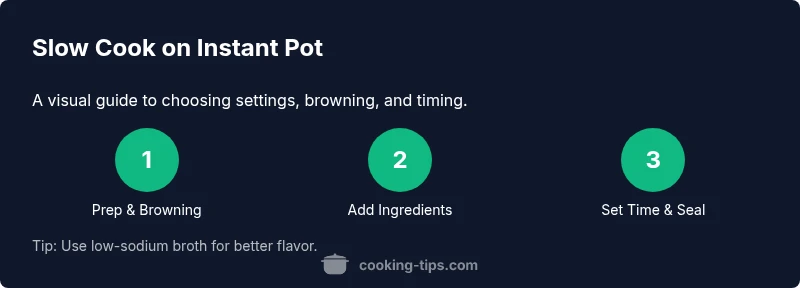
How to Use Slow Cook on Instant Pot
Learn how to use the slow cook setting on the Instant Pot with practical steps, timing guidance, safety tips, and expert insights from Cooking Tips. Perfect for tender, flavorful meals with minimal effort.


You're about to master the slow cook setting on your Instant Pot. In this guide, you’ll learn how to choose recipes, brown ingredients if needed, set the correct low or high slow cook mode, and adjust timings for tender results. With practical steps and safety tips from Cooking Tips, you’ll produce flavorful, hands-off meals every time.
Understanding the Slow Cook Function on the Instant Pot
The slow cook function on the Instant Pot uses a low, steady heat to transform tougher cuts into tender, flavorful meals over hours. It mimics a traditional slow cooker, but with the convenience of a single electric device that can also pressure cook, sauté, or steam other dishes. The principle is simple: heat is applied gradually and consistently, allowing collagen to break down and flavors to meld. The exact temperatures under slow cook vary by model, yet the outcome is common: you can set it and forget it while your meal gently develops depth. According to Cooking Tips, the Slow Cook feature mirrors a traditional slow cooker, using the inner pot's heating element to maintain low temperatures. This means you’ll want to think in terms of long, low simmering rather than a quick boil. When you first start, plan for braises, stews, pulled meats, and similar meals that benefit from extended cooking times. A major advantage of the Instant Pot is that you can brown aromatics and proteins using the sauté function before slow cooking, which adds color and flavor. The Cooking Tips Team notes that browning meat before slow cooking improves texture and depth of flavor, especially with tougher cuts. If you’re new to this method, begin with a simple beef stew or chicken thighs recipe to learn how moisture, acidity, and seasoning interact over several hours. Remember: you are slow simmering, not pressure cooking, so keep the lid on to maintain a stable cooking environment.
Planning Your Recipe for Slow Cooking
When you plan a slow-cooked meal, think about dishes that benefit from long, gentle heat: braises, stews, pulled meats, chili, and some root vegetables. The goal is to achieve deep flavor with minimal hands-on time. You may need to adjust liquid amounts, since evaporation occurs during long cooks. In general, use enough liquid to cover ingredients by about 1/2 to 1 inch, which helps prevent scorching and ensures even cooking. Protein choices like chuck roast, pork shoulder, or chicken thighs work well for slow cooking because collagen breaks down with time, producing tenderness. Cut vegetables into larger chunks so they hold up during hours of simmering, and consider adding delicate greens toward the end to preserve texture. If a recipe calls for dairy or delicate greens, add these near the end to avoid curdling or overcooking. The Cooking Tips team recommends starting with 8–10 hours on low for deeply braised recipes and adjusting based on schedule and tenderness you desire. For a faster pace, you can use the high setting for 3–6 hours, but monitor liquid levels and texture more often. Always taste and adjust salt after cooking, as slow cooking can intensify flavors.
Step-by-Step Setup for Slow Cooking
To use the Instant Pot in slow-cook mode, prepare your ingredients and equipment first, then follow a simple sequence that keeps flavors intact while preventing pan-scorching. (Note: this section explains the setup; the formal step-by-step actions are detailed in the dedicated Step-by-Step block below.)
First, gather your ingredients and equipment so nothing interrupts the cooking rhythm. A clear mise en place helps you avoid rushing mid-cook, which can lead to uneven results. If you plan to brown ingredients, have a sauté pan ready and nearby. Next, position the inner pot in the base and add a binder (oil or fat) to enhance browning when you use the sauté function. Finally, inspect that you have enough liquid to cover ingredients and that you’re within the pot’s minimum and maximum fill lines. The brand Cooking Tips emphasizes that consistent heat and moisture are key to reliable slow-cooked results, so setting up with patience is part of the process.
This section also covers how to pace the cooking so you don’t over-reduce liquids. If your recipe uses dark soy, wine, or tomato products, remember that acids can boost tenderness but also thin sauces; plan to adjust later. The goal is steady heat for several hours, not a quick, aggressive boil. If you’re unsure about a particular step, start with a simpler recipe and gradually introduce variations. The main idea when learning how to use slow cook on instant pot is to build flavor gradually while protecting texture and moisture.
Timing, Temperature, and Recipe Adaptations
Timing is everything in slow cooking. The Instant Pot can operate on Low or High, and the choice depends on the size and toughness of the ingredients, as well as the time you have available. Low settings are ideal for longer braises; High settings shorten the cook time but can risk tougher textures if misused. When adapting a traditional slow-cooker recipe for the Instant Pot, reduce the total time by about 25–30% as a starting point, then test texture and moisture. Liquids should not completely cover food; aim for a little more than halfway up the ingredients, allowing space for expansion and evaporation. If you notice the sauce is too thin near the end, you can remove the lid and simmer on Sauté for a few minutes to reduce. The Cooking Tips team recommends planning ahead by combining liquids that complement one another—broth with a touch of acidity from wine or tomatoes can deepen flavor without overpowering the dish. Remember: safety comes first. Keep the lid on during the cooking process and ensure your pot stays within the recommended fill line for best results. Always allow for a natural release period if a recipe instructs it, as this helps tenderize meat without overcooking.
Safety, Cleaning, and Maintenance
Safety is essential whenever you use any kitchen appliance, including the Instant Pot. Always read your model’s manual to understand its slow-cook limitations, lid position, and vent settings. Use oven mitts when handling the pot after browning or long cooks, as the exterior and handles can get very hot. Keep the LSIs (low-sodium liquids) available to balance flavors and avoid scorching. After cooking, allow the pot to cool slightly before washing; remove the inner pot and wash with warm, soapy water to remove any residue. If you notice white mineral deposits or staining, it’s usually harmless and can be removed with a gentle scrub. Use non-abrasive sponges and avoid soaking electronic components. Regular maintenance helps ensure consistent performance. The Cooking Tips Team recommends a quick wipe-down of the exterior after each use and periodic thorough cleaning of the inner lid and gasket to prevent odors and ensure tight sealing.
Troubleshooting Common Issues and Mistakes
Slow cooking with the Instant Pot can be forgiving, but a few common issues can arise. If you find the dish too watery, it usually means the liquid ratio was excessive or the lid was removed too often during cooking. If the texture is chewy or underdone, give it more time on Low or increase the heat setting slightly with careful monitoring. A common mistake is not browning meat before slow cooking; browning adds flavor and improves texture, especially with tougher cuts. Another frequent issue is scorching due to insufficient stirring or improper deglazing when you switch from sauté to slow cook. Deglaze the pot with a small amount of liquid to lift browned bits off the bottom before continuing. Always keep the lid in the sealed position while slow cooking, and avoid opening frequently, which interrupts the cooking cycle and can extend total time.
Flavor Extensions: Leftovers and Make-Ahead Meals
One of the advantages of slow cooking is that leftovers can taste even better the next day as flavors continue to mingle. Store cooled leftovers in airtight containers in the refrigerator for up to 3–4 days or freeze for longer storage. Reheat gently on the stove, in the microwave, or in the Instant Pot on a low slow cook setting with a splash of broth to restore moisture. You can also repurpose leftovers into new dishes, such as turning braised beef into tacos or using shredded chicken in sandwiches. The key is to maintain moisture and balance; a small amount of acidity or herbs added after reheating can brighten flavors and refresh the dish.
Tools & Materials
- Instant Pot with Slow Cook function(Any model with a Slow Cook feature; ensure your lid and gasket are in good condition)
- Sauté pan or skillet(For browning aromatics and meat before slow cooking)
- Measuring cups and spoons(Accurate liquids and seasonings matter)
- Thermometer (instant-read)(Check internal temperature for safety of certain proteins)
- Heat-safe spatula or spoon(For deglazing and stirring without scratching the pot)
- Oven mitts(Handle hot containers safely)
- Liquid (broth, water, tomato sauce)(Ensure enough liquid to prevent scorching)
- Trivet or rack (optional)(Keeps ingredients elevated when needed)
Steps
Estimated time: 4-8 hours
- 1
Gather ingredients and equipment
Collect all ingredients, measuring tools, and the pot’s lid. Confirm you have enough liquid for the planned cook time and that spices and aromatics are ready to use. This prevents mid-cook scrambles and helps ensure even results.
Tip: Pro tip: lay out ingredients in the order they’ll go into the pot to speed up the process. - 2
Brown aromatics and meat (optional but recommended)
Use the Sauté function to brown onions, garlic, and any meat you’re using. Browning adds color and deep flavor; this step can take 3–8 minutes depending on quantity. If you skip browning, the final dish will be lighter but still flavorful.
Tip: Pro tip: pat meat dry before browning to improve searing and reduce steaming. - 3
Add ingredients and liquids
Place browned ingredients into the inner pot and add liquids. Ensure there’s enough liquid to cover roughly half of the ingredients; this prevents scorching and ensures even cooking across all parts of the dish.
Tip: Deglaze the pan with a splash of liquid, scraping up browned bits to maximize flavor. - 4
Set Slow Cook mode and time
Close the lid and select Slow Cook, choosing Low for longer braises or High for quicker meals. Time will vary by recipe; use recipe guidelines as a starting point and adjust after tasting. Do not rush the timing—flavors develop with patience.
Tip: Pro tip: if a recipe calls for a long cook, plan for at least 4–6 hours on Low for tender results. - 5
Monitor and adjust as needed
Check liquid levels halfway through the cook if possible; add more liquid if the pot looks dry. Avoid opening the lid too often to prevent heat loss. Adjust seasonings after cooking, as slow simmering can intensify flavors.
Tip: Pro tip: reserve a small amount of salt until the end; salts can intensify during long cooks. - 6
Finish, rest, and serve
When the timer finishes, let the dish rest 10–15 minutes before serving to redistribute moisture. This helps avoid hot, uneven bites and allows flavors to settle. Serve with side dishes that complement the dish’s texture and seasonings.
Tip: Pro tip: taste one final time and adjust acidity or brightness with a squeeze of lemon or a splash of vinegar if needed.
Quick Answers
Can I brown meat before slow cooking in the Instant Pot?
Yes. Browning meat before slow cooking adds color and intensifies flavor, especially for tougher cuts. Use the Sauté function, then proceed with the slow cook step as directed by your recipe.
Yes. Browning meat before slow cooking adds flavor and improves texture; use sauté, then continue with slow cooking.
What is the difference between Slow Cook High and Slow Cook Low on an Instant Pot?
Low cooks longer and yields more tender results, ideal for braises. High cooks faster but can risk tougher textures if not monitored.
Low is for longer, gentler cooking; high is faster but watch texture closely.
Can I use frozen meat for slow cooking in the Instant Pot?
Frozen meat can be used but will take longer to cook through and may result in less even texture. If possible, thaw meat first or add extra cooking time and check internal temperature toward the end.
Frozen meat works but expect longer cooking; thawing is best when possible.
Should I keep the lid vent open or closed during slow cooking?
Keep the lid on in the sealed position during slow cooking. Venting is only used for certain inputs or fast releases and not for standard slow-cook applications.
Keep the lid sealed for steady heat and best results.
How can I prevent meat from turning tough in a slow-cooked dish?
Brown the meat, use adequate liquid, and avoid overcooking. For tougher cuts, longer cooking on Low with proper moisture tends to yield the best tenderness.
Brown it, keep moisture high, and don’t overcook; that’s the key to tenderness.
Can vegetables be cooked in slow cook mode, and when should I add them?
Yes. Add heartier vegetables earlier and more delicate ones later to avoid mush. Cut vegetables into appropriate sizes to withstand long cooking times.
Yes, but add tougher veggies early and delicate ones near the end.
Watch Video
Top Takeaways
- Choose Low or High based on recipe depth and time
- Brown ingredients to boost flavor before slow cooking
- Maintain adequate liquid to prevent scorching
- Let flavors rest a bit after cooking for maximum savor
- Follow safety practices and consult your manual for model-specific guidance